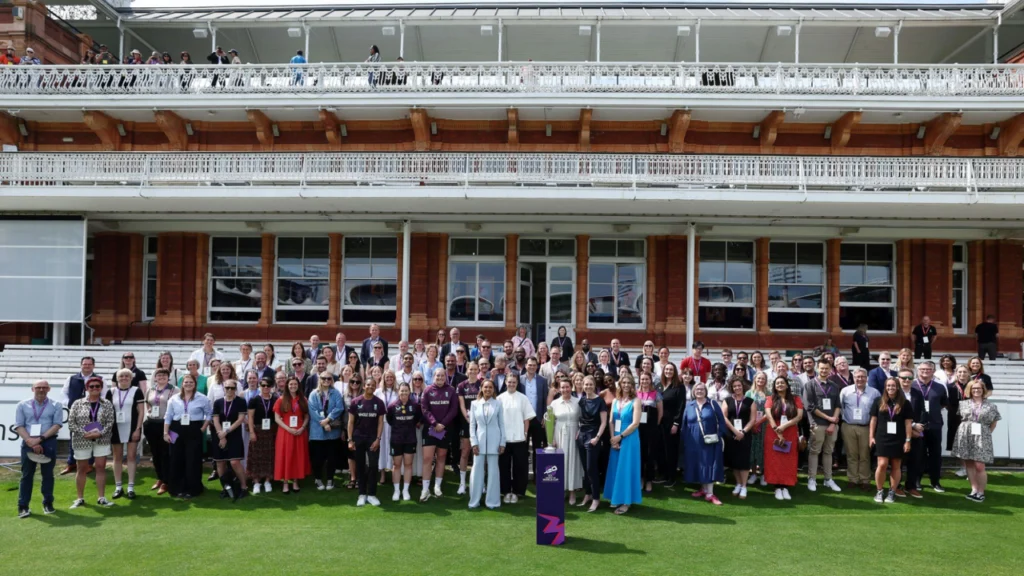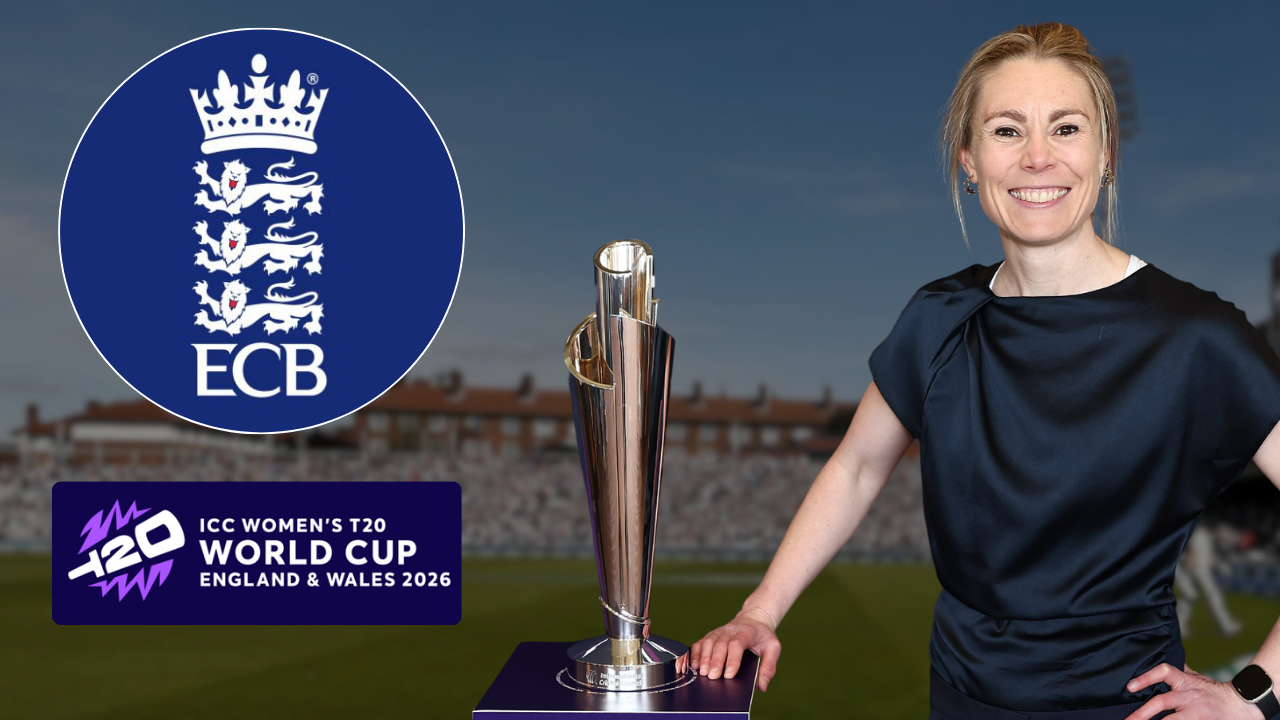
When Beth Barrett-Wild finished her geography degree at St Hilda’s College, Oxford in 2008, the choice in front of her was, by her own description, less a fork than a non-option. She had picked up a bat at ten and played at her local cricket club where she was, in her own words, “the only girl down in that environment.” She had carried that love through to university sport alongside hockey at a similar level, with under-21 international honours in both. But the idea of supporting herself as a professional cricketer was not, in the women’s game of 2008, a realistic proposition. A career in the sport had to be built somewhere off the pitch.
Almost two decades later, Barrett-Wild is Tournament Director of the ICC Women’s T20 World Cup 2026 and Director of the Women’s Professional Game at the England & Wales Cricket Board. Four weeks before the opening ball of the World Cup at Edgbaston, she announced that this will be her last summer at the organisation she joined in December 2013. “I’ve been incredibly fortunate to have an amazing spell at the ECB,” she told cricexec. “The game has truly transformed during that time from an amateur era when I joined back in 2013-14 through to fully fledged professionalism now.”

The arc of those thirteen years tracks, almost line for line, with the professionalisation of women’s cricket in England. The beauty, and the irony, of her story is that the pathway Barrett-Wild has spent her career constructing is, in large part, the one she could not walk herself.
From Rounders to Lord’s
Her university peers had clearer destinations than she did. “There was a moment actually when my parents were looking around saying ‘oh, Beth, your peers are off becoming lawyers and consultants,’” she said. Her own ambitions were in sport, even but playing either of her two best sports – hockey and cricket – did not seem feasible. So her first job after graduation was at Rounders England, the national governing body for the sport, where she worked as a Regional Development Officer. From there she moved to Marylebone Cricket Club as a Media and Public Affairs Officer at Lord’s, and in December 2013 to the ECB as Media Manager for the England women’s team.
She has been at the ECB ever since, in roles whose titles trace the trajectory of the women’s game itself. Media Manager became Strategic Planning Manager for the ICC Women’s World Cup 2017. That became Strategy Manager. That became Head of the Women’s Competition for The Hundred. That became Director of the Women’s Professional Game in 2023. In October 2024 she took on the additional brief of Tournament Director for the 2026 World Cup.
The mission, she said, has not changed. “I have a very core purpose, mission or ambition to create opportunities for women and girls to pursue a career in cricket that didn’t exist for me when I was falling in love with the sport.”
The 2017 catalyst
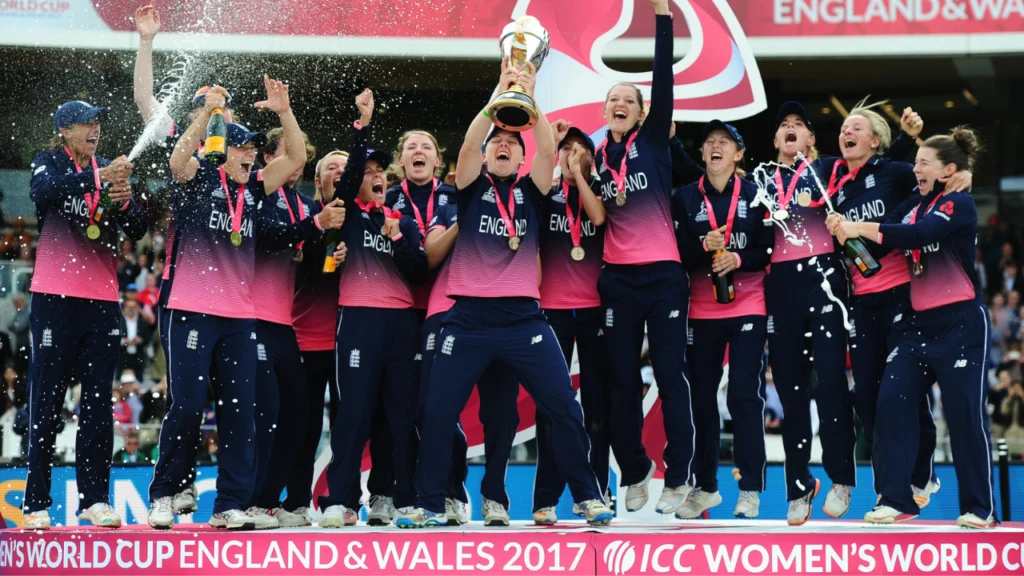
When Barrett-Wild was brought in as Strategic Planning Manager for the 2017 ICC Women’s Cricket World Cup, the event ran alongside the men’s Champions Trophy that summer, and the dedicated resourcing around it was, in her telling, “relatively limited at that point, because we hadn’t had that big breakthrough.” The breakthrough itself came at Lord’s, in a final the organising team sold out when, in her words, “nobody expected us to.”
She remembers it as the first proof of a thesis the wider sport had not yet bought. “It was the first demonstration that actually if you invest and you present Women’s Cricket at scale and with a proper marketing campaign behind it, a proper strategy for ticket sales, it can achieve great things,” she said. “It’s probably the catalyst actually for a lot of what we’ve seen since, across women’s sport.”
What followed was a sequence the ECB now treats as the foundation of its modern women’s strategy: the Transforming Women’s and Girls’ Cricket action plan, launched in 2018; the introduction of domestic professional infrastructure; and, in 2021, the launch of The Hundred.
The Hundred and the case for co-positioning
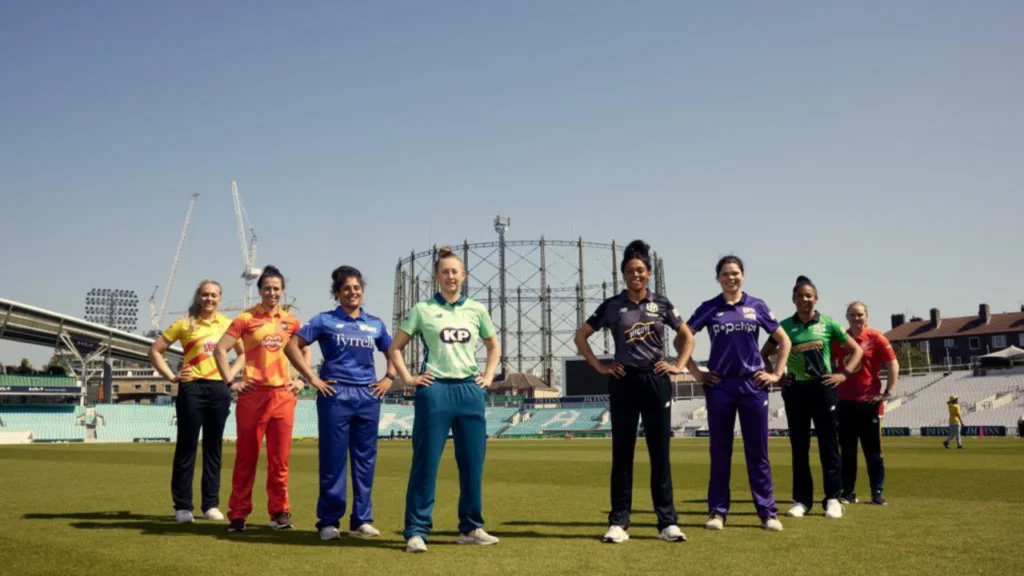
Barrett-Wild was part of the senior leadership team that developed and launched The Hundred, and from October 2018 to March 2023 she ran the women’s competition within it. The format — eight new teams, men and women on the same day, in the same venues, for the same prize money, in the same kit — was, she said, the rare instance in sport of a clean slate.
“There are very few occasions in sport where you get the chance to launch something completely new,” she observed. “That’s what The Hundred gave us… an opportunity to really shift those perceptions and present cricket in a truly gender-balanced way.”
The contrast with how women’s cricket had been positioned elsewhere was the point. “It tends to be that the women’s game is bolted on,” she said. “Whereas for The Hundred, it was very much baked in from the start.” Her own read on the impact is striking: “I project that it’s probably taken about 10 years off the growth curve for women’s cricket, just because of what we’ve been able to do with it.” Since the launch of the competition, more than a million fans have attended women’s matches at The Hundred.She is also clear that the perception challenge is not solved. “40% of UK sports fans still primarily view cricket to be a sport for men and boys as opposed to an equal sport for men and boys, women and girls,” she noted. “There’s still a perception gap there.”
Project Darwin and the less glamorous work
If The Hundred was the visible breakthrough, Project Darwin was the structural one. Barrett-Wild took on the women’s professional game brief in March 2023, and the most consequential piece of work in that tenure was a multi-year reshaping of the domestic system — the kind of governance and competition-structure work that, in her own words, was “less glamorous because there was a lot of work behind the scenes and not just by me, but lots and lots of people.”
The premise, she explained, was evolution rather than transformation. “Up until the point of Darwin, a lot of our initiatives were about transforming the women’s game and doing something to grow the women’s game. Darwin, as much as restructuring the women’s domestic game, was about the whole game evolving together because it was about utilising the existing infrastructure that has been around for hundreds of years through the counties in men’s cricket — to really elevate, embed and create equal levels of opportunity and access for women’s cricket.”
The outcome is a tiered pyramid. Tier one houses the professional sides: nine at present, expanding to ten next year when Glamorgan come online. Tier two sits beneath it with the semi-professional layer. Tier three creates a cohesive playing pathway through the recreational game. The original tier one allocation was challenging. “That was a quite contentious decision at the time because we were awarding eight tier one teams initially,” she acknowledged, as some clubs were disappointed not to receive a team. “But then we’ve had the additions this year with Yorkshire and then next year with Glamorgan.”
Her read on the result is that the standard has visibly lifted at every level, and that women’s cricket no longer operates outside the county structure. “It’s not seen as a separate add-on thing doing its own thing on the side – it’s very much embedded and elevated within the county structures,” she said. “There’s a clear element of accountability now that sits with the game so that everybody is responsible for growing women’s cricket. It shouldn’t be just sat elsewhere.”
She rates the project as one she will look back on with particular pride. “It had its moments. It was difficult… it wasn’t necessarily universally one of those things that everybody wanted to jump at, but I think what we’re seeing now in terms of the quality of the cricket being played, not just in tier one, but tier two, tier three as well… you can really see the improvements.”
Off the pitch
The conversation also turned to gender balance in cricket’s leadership ranks — a question that has not moved in step with what has happened on the field. Barrett-Wild was direct. “There is still a long way to go in terms of female leadership, especially at the very top,” she said. “One female chief executive across the 18 professional county clubs. There’s clearly work to be done there.” She pointed to Tracey Orr’s recent appointment as chair of Warwickshire — succeeding Mark McCafferty — to Dame Sarah Storey becoming Chair of Lancashire, and to the ECB’s minimum requirement of 40% female representation on the boards of its professional county clubs, a threshold she said is now being acted on. “That’s positive. That has and is now being acted upon by all of our professional county clubs.”
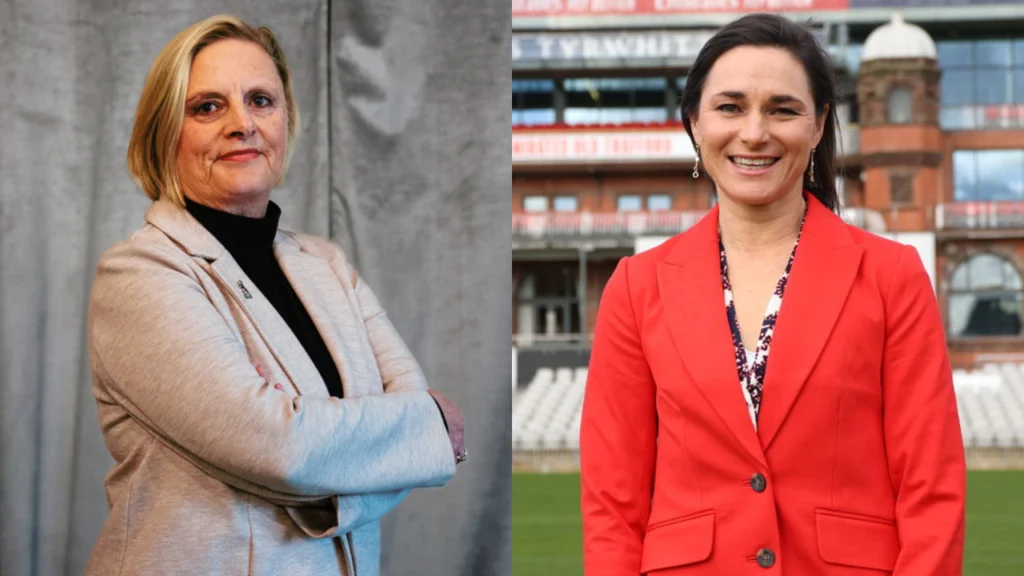
The grassroots piece is one the World Cup is positioned to advance. “As part of our Women’s T20 World Cup objectives and actions… one of those is very much around female leadership,” she said. “We’re looking to train over 300 female leaders in the grassroots of the game this summer.”
The underlying argument, in her telling, is that cultural change comes through social dissemination. “There is still a big cultural shift that I think needs to happen. And I think culture does come through people, and through leaders within those environments.”
Walking off
The closing moment Barrett-Wild has built toward is at Lord’s, on 5 July, when the final of the ICC Women’s T20 World Cup will be played. She has spoken about that day as a hinge — the conversion point, in her thinking, between a one-off blockbuster and a generational shift. “We are aiming to create a lifelong love affection for women’s cricket — that transition of one-off attendees into lifelong passionate fans,” she said.
She has also lined up what comes immediately after the tournament. The Lord’s final on 5 July rolls straight into the first women’s Test match ever staged at Lord’s, beginning 10 July, followed by Vitality Blast Women’s Finals Day and then the latest season of The Hundred. The point, in her telling, is that the audience has nowhere to drift to. “We’ve got these planned opportunities where people can continue to watch the women’s game after the T20 World Cup final.”
When that sequence is complete, Barrett-Wild will leave the ECB after almost thirteen years.
Somewhere in England, on the morning Beth Barrett-Wild walks out of the office for the last time, a young girl will be picking up a cricket bat for the first time. That girl may one day play for one of the counties. She may play in The Hundred. She may earn a good living from the game. She may play for England. She may, one day, captain England. If she does, she may never know the name Beth Barrett-Wild, because when Barrett-Wild came out of Oxford, she chose to create opportunities for others rather than try to become an athlete and household name herself. But the contract that future captain will sign, the tier of competition she will rise through, the stadium she will eventually fill, will exist in significant part because of the work Beth Barrett-Wild has done to build that pathway.