
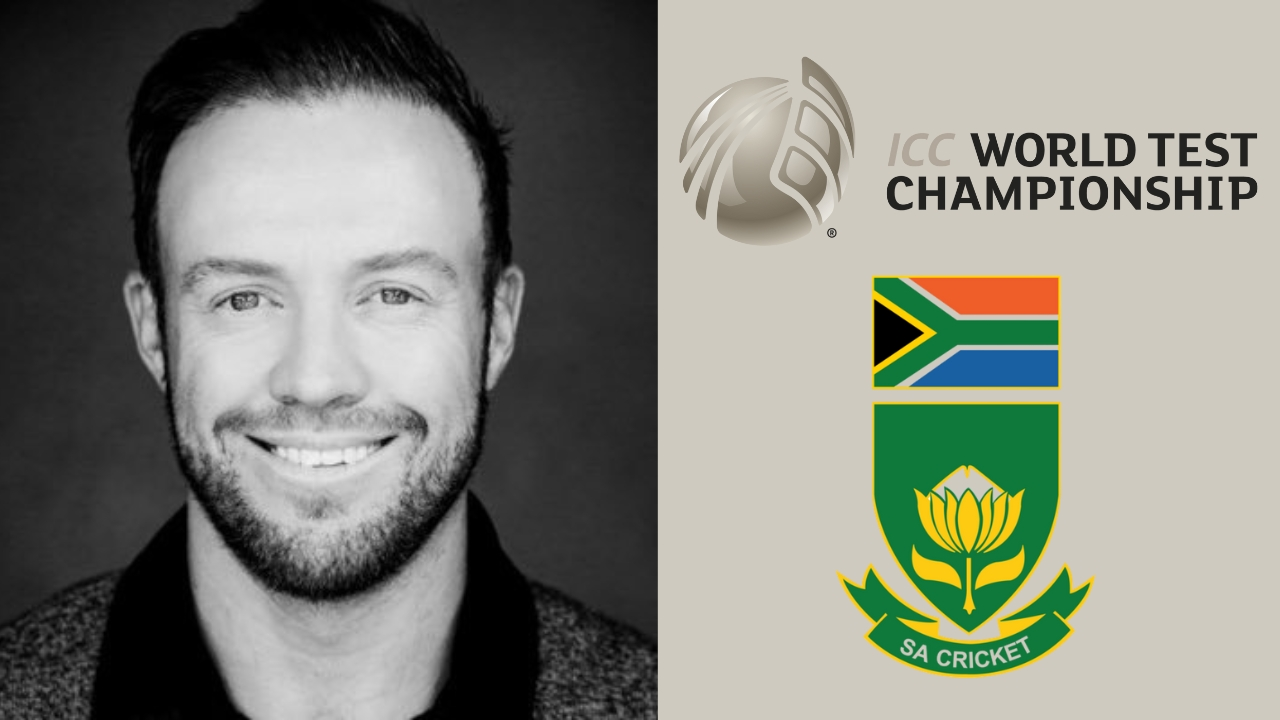
South Africa’s long-awaited World Test Championship (WTC) triumph has reignited national pride and hope—but for AB de Villiers, it’s also spotlighted deeper structural issues within the WTC format that need urgent attention.
The Proteas broke a 27-year drought for a men’s global title with a thrilling five-wicket win over Australia at Lord’s. The moment, etched into the nation’s sporting history, was not just a victory on the scoreboard but a symbolic end to decades of near misses and heartbreaks.
“We’ve had some very disappointing and sad ends to a lot of campaigns, especially the World Cups, but now it’s time to start believing that we can do this more often,” de Villiers told the BBC World Service Stumped podcast.
Inconsistent scheduling, unequal paths
But even amid the celebrations, the former South African captain raised concerns about the fairness and consistency of the WTC structure, particularly the scheduling disparities between teams.
“But yes, to a certain extent, something needs to be done,” de Villiers said, acknowledging that the issues can no longer be ignored.
South Africa reached the final having played just 12 Tests in the 2023–25 cycle—the joint-fewest among all nine WTC teams—while England played 22. Qualification was determined by percentage points, a metric that continues to spark debate over its accuracy in reflecting true performance.
“I saw the schedule that came out for the next cycle of the WTC and there is an improvement, but I still feel there’s work that needs to be done there to just to get it as consistent as possible and as fair as possible for all for all Test-playing nations,” said de Villiers.
Critics also noted that South Africa did not face either England or Australia during the qualification period, raising eyebrows about the balance and competitiveness of their path to the final.
“You want to get to that final feeling like you’ve played against all these nations,” de Villiers emphasized.
A call for a longer cycle
To address these imbalances, de Villiers floated a bold yet familiar idea: extend the WTC cycle from two years to four. This would not only allow each team to face all others, but also give governing bodies more flexibility to craft a more even-handed fixture list.
“Maybe a four-year cycle would be nice. We’ve done that in the past with one-day internationals, so why not in Test cricket?” he said. “It would make sense and it would give the organisers just so much more time to get a really fair, well-balanced system out there.”
Long wait ahead for Proteas fans
Despite being on top of the world, South Africa’s Test side faces a frustrating stretch. They’ll play only four Tests over the next 16 months—two in Zimbabwe that don’t count toward the WTC and two in India in November. The next home Test series won’t come until October 2026, when they’ll host Australia.
“It’s a long time until our next Test match, but there’s no doubt it won’t be forgotten,” de Villiers said. “[This moment] won’t be lost. It was too big and too special for all South Africans—it was a Test match no one will ever forget.”
For fans and players alike, the wait may be long, but the spirit is alive.
“I’ve absolutely no doubt the Proteas have sort of stirred the emotions of the South African cricketing fans and they will patiently wait for that next encounter,” he added.
The road ahead for Test cricket
As the 2025–27 WTC cycle begins—with a blockbuster five-Test series between India and England just days after the Lord’s final—the spotlight is again on cricket’s longest format. South Africa’s stirring win has delivered a high, but de Villiers’ critique serves as a reminder: if Test cricket is to thrive globally, its flagship championship must evolve to be fairer, broader, and more inclusive.


