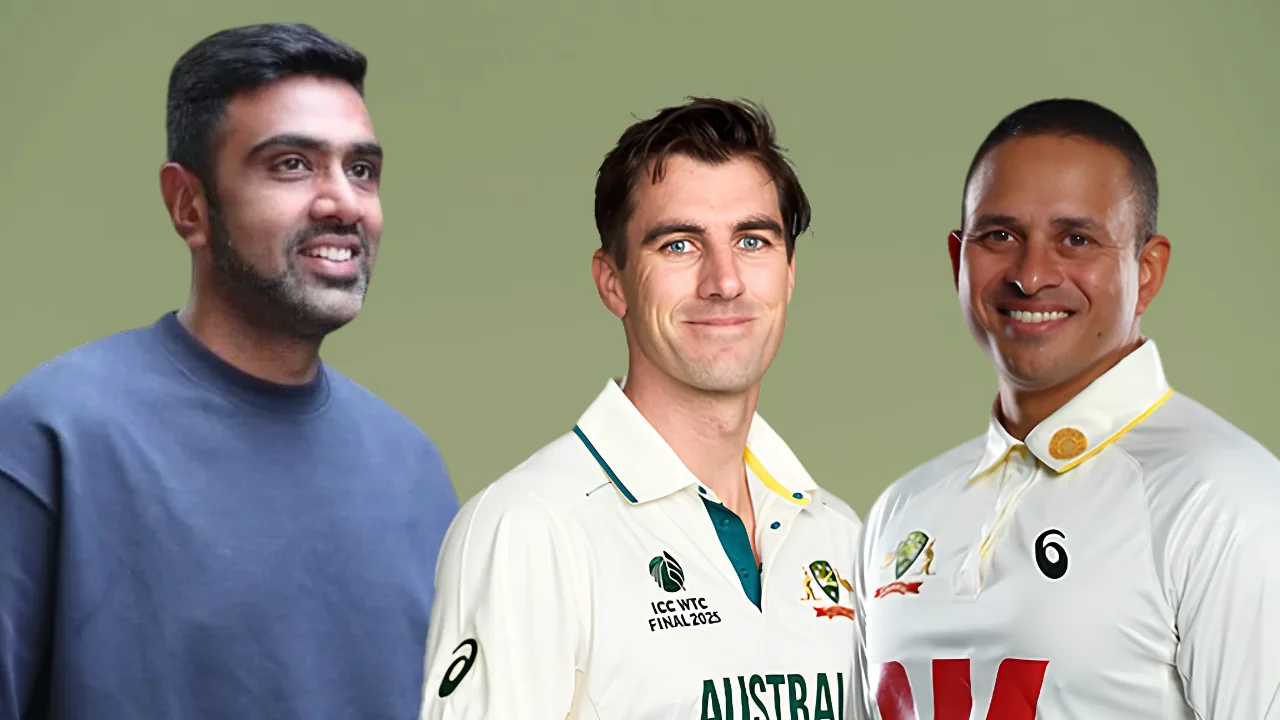
Australian cricket finds itself revisiting the Sandpapergate controversy, with Usman Khawaja and Pat Cummins offering contrasting perspectives as the team prepares for a big Border-Gavaskar Trophy tour to India, beginning on January 21, 2027. Speaking on JioStar‘s ‘Sandpapergate: The Unsettled Debate’, Matthew Hayden, Ravichandran Ashwin and JioStar expert Irfan Pathan discussed the debate around collective accountability, whether bowlers can tell if the ball has been tampered with and the lingering cracks within the Australian camp over the 2018 incident.
Speaking on JioStar’s ‘Sandpapergate: The Unsettled Debate’, Matthew Hayden highlighted questions of collective accountability surrounding the controversy:
“The fundamental question here is: what was damaged, and why is it relevant? And it’s as simple as this: it’s because when integrity is broken, trust then gets damaged, and all of these new accounts have just reopened the questions of accountability. So supporters, in my opinion, really deserve clear answers. Eight years passing doesn’t automatically resolve the hurt or the disagreement. So when it comes to the account itself, I don’t really necessarily want to take sides here. I take Usman’s account seriously. I take Pat’s denial seriously. And because I wasn’t in that dressing room, we need to distinguish what someone’s personally witnessed from what they actually believe others knew. And I can, however, condemn what has happened without pretending that I can settle every dispute over the facts.”
Speaking on JioStar’s ‘Sandpapergate: The Unsettled Debate’, JioStar expert Irfan Pathan shared his perspective on whether bowlers can tell if the ball has been tampered with when it starts reverse swinging:
“It’s not possible that, if the ball is reverse swinging and as a bowler, I won’t know if something has been done to the ball. I’ll know straight away. In my career, the only time I didn’t know the ball was reverse swinging was in Rajkot during the Duleep Trophy, because the conditions were so dry. It started reverse swinging around the eighth or 10th over. There was no grass on the ground, and the pitch was extremely dry, so reverse swing happened naturally. But if you put something on the ball around the 30th or 40th over, when its colour has changed, you will know as a bowler. The entire team knows what’s happening with the ball at any given time.”
On Cameron Bancroft and the investigation as a whole:
“I really feel bad for Cameron Bancroft because he lost everything. He played only two Test matches after serving a nine-month ban. It’s always the youngsters, the weaker ones, who get punished the most. Warner came back and played quite a few games. Even Steve Smith, who was stripped of the captaincy, got to lead the side again in Pat Cummins’ absence. But what about the youngster? No one is talking about Bancroft, who took the hit. The question is, should we be talking about it right now? I think it’s way past that. What has happened, happened. There was a four-day investigation by Cricket Australia, and it was done and dusted. I understand Usman Khawaja’s point of view because everyone deserves to write their book. You might question why he is bringing up these stories right now, but what else will he do? I also totally understand what Pat Cummins is trying to say as well. But if something has happened, and if Australian media and people want answers, then the investigation should start again.”
Speaking on JioStar’s ‘Sandpapergate: The Unsettled Debate’, Ravichandran Ashwin felt Australian players were not on the same page during the 2018 incident, and the cracks are still showing:
“What’s happened at the end of this book being written is that Usman Khawaja, while he has said all those statements and given his story, has made only one thing very clear, which is: he is asking for collective accountability. He is saying, which is pretty accurate in this case, that it was not only three people who knew about it; there were more. And with what we saw of Chadd Sayers and what Usman Khawaja is saying, that makes it five already. So he is right. But what I would be even more worried about is someone like Pat Cummins, who I really admire as a cricketer. He is the captain of Australia and, alongside Tim Paine, took on the new regime of trying to rebrand Australian cricket from that particular incident. He has come out and called what Usman Khawaja has said baseless, nonsense, and something that does not have proof. And now, that is a chalk-and-cheese statement where he’s actually gone on to say contrasting opinions to what Khawaja has given, and David Warner has continued on his own thread of saying what he believes is right. So, one thing is very crystal clear in this that there were cracks in that Australian dressing room in the past in terms of views and opinions on this, and I don’t think it is crackless even now.”
On Pat Cummins discrediting Usman Khawaja’s account of the incident:
“Firstly, when Usman Khawaja has mentioned certain things in his book, those are his accounts of the story and we need to respect that. But what happened at Pat Cummins’s press conference is that he didn’t discredit Usman Khawaja’s account of the story; he discredited the man himself. And that is the problem for me. When you can’t discredit someone’s information, you discredit the person. I know Usman Khawaja; I’ve played a lot of cricket with him, not on a personal front. He is a man of high integrity and really honest and up-and-straightforward person. Pat Cummins was just on his third tour when he went to South Africa in that particular instance. He couldn’t have been a part of the leadership group. Steve Smith, David Warner and maybe Tim Paine were, if I’m not wrong. I genuinely thought that this conversation would have centred around saying, “I wasn’t aware of what exactly was happening. I wasn’t a part of the leadership group.” It was very surprising for me that Pat Cummins had to come to the press conference and discredit the person himself. That was a little bit of a shock to me, watching from afar.”