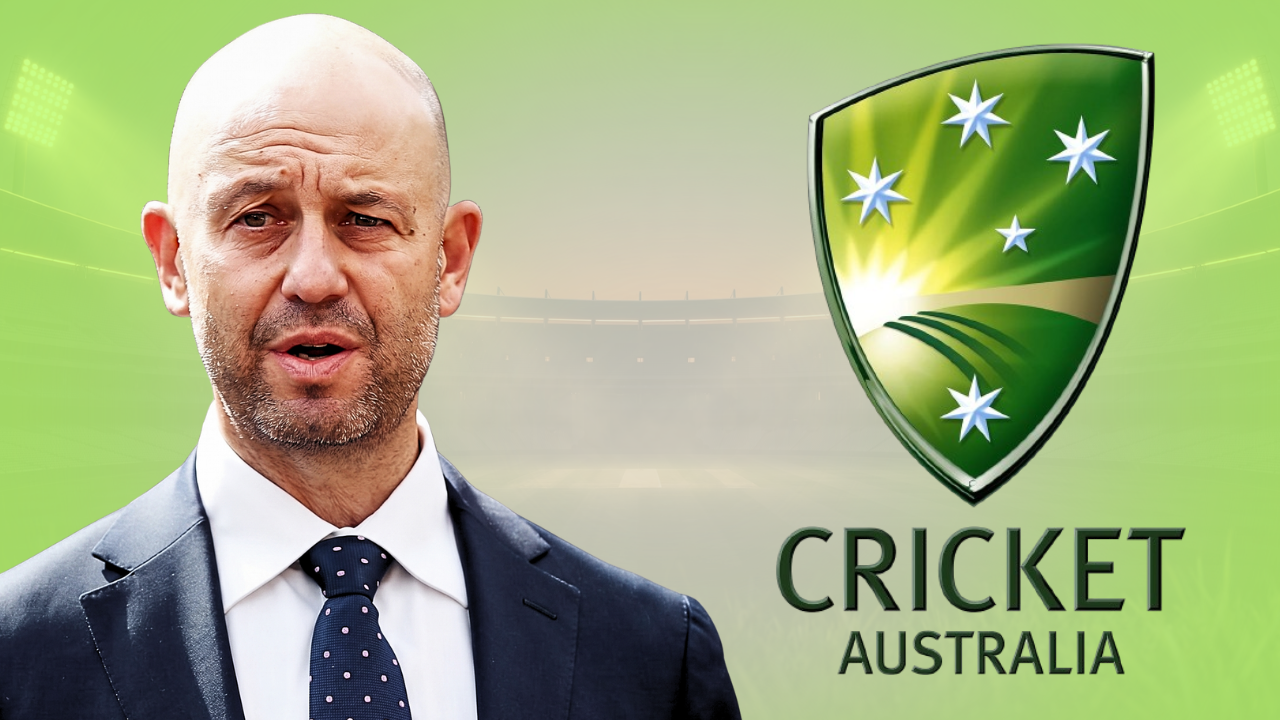
Cricket Australia (CA) Chief Executive Officer Todd Greenberg has backed efforts to give bilateral ODI cricket greater competitive significance but warned that reducing those fixtures creates a difficult commercial question for boards reliant on them for broadcast revenue. Greenberg raised the issue while speaking to media in Darwin during Australia’s first Test against Bangladesh.
The debate comes as administrators consider how bilateral cricket should fit into future international schedules, particularly when individual boards derive commercial value from matches included in the Future Tours Programme (FTP).
Greenberg highlights ODI revenue challenge
Greenberg supports the principle behind ICC Chief Executive Officer Sanjog Gupta’s call for international matches to carry clearer stakes within the calendar. “I think the principle of his comments are that the games that are played need to matter and have context and jeopardy,” he said, according to a report by Cricinfo’s Alex Malcolm
For CA, however, changing the volume or structure of bilateral ODIs cannot be considered separately from the media rights agreements that underpin the sport’s finances. Greenberg added: “We fundamentally believe that. But we’re also realists to know that bilateral ODIs make up a significant portion of our broadcast agreements, so we’ve got to find a way if we’re going to create more jeopardy and meaning, and we’re going to move them, what are we replacing them with, and how do you replace the revenues that go with those?”
The issue creates competing priorities for administrators: strengthening the sporting relevance of bilateral cricket while accounting for the commercial value already attached to those fixtures. “So there’s a fine balance here. Some of that’s short term, some of it long term. But the principle of what he’s saying is right. Creating jeopardy and meaning into the games we play is important. But it’s not an easy solve,” he noted.
Future Tours Programme puts debate into focus
Greenberg is part of the ICC working group finalising the FTP for 2028–31, giving CA a direct role in discussions that will shape the next phase of the international calendar. The group is also considering an early outline of how the subsequent 2032–35 period could be structured.
The scheduling discussions follow ICC Chief Executive Officer Sanjog Gupta’s call for a different approach to bilateral cricket. As previously reported by cricexec, Gupta has argued that international matches need stronger context as boards confront the financial and non-financial resources required to sustain the existing model.
Speaking to PTI, Gupta said: “The era of randomly scheduled bilateral series has to come to an end, because countries will not be able to sustain cricket without context, culture, competition and competitiveness, which require significant investment of resources, both financial and non-financial.”
Gupta has also maintained that the 50-over format can retain an important position within international cricket if its purpose is clearly defined. He added: “It’s important to stay focused on the four levers which drive attention and affiliation — context, culture, competition and competitiveness — and ODIs can continue not just to survive, but thrive.”
Australia pushes for larger World Cup squads
Beyond the bilateral calendar, Greenberg confirmed CA has taken another ODI issue to the ICC by supporting Australia Coach Andrew McDonald’s push for larger squads at the upcoming ODI World Cup.
“We’ve advocated strongly. Andrew’s made it pretty clear to me that’s a position he wants to carry. So we’ve passed that feedback on to the ICC. So we’ve got some conversations scheduled with them, and I think there’s a number of countries have said similar, given the change to it, that those squad sizes are important. So that’s an issue on their table.,” Greenberg added.
CA has not pushed as strongly for greater Associate representation at the ODI World Cup. Greenberg indicated Australia supports the broader approach of providing more opportunities for Associate teams through the T20 World Cup rather than expanding their presence at the 50-over event.
“I don’t know a lot of the background other than that was presented at the ICC conference. I assume it’s just about trying to extract commercial value for those World Cups. And I saw some recent comments that some of the Associates are unhappy. I get that. Hopefully, there’s a pathway for more Associates to look at the T20 World Cup as opposed to the ODI World Cup, so I think that’s what the ICC is planning will be,” he stated.
Greenberg added: “That’s how it was presented to us. We would support that strategy.”
As work continues on the next FTP, the question facing administrators extends beyond whether bilateral ODIs should carry greater meaning. Greenberg’s intervention places the commercial consequences alongside the scheduling debate, with any reduction or restructuring of the format requiring boards to confront the broadcast revenue currently tied to those matches.