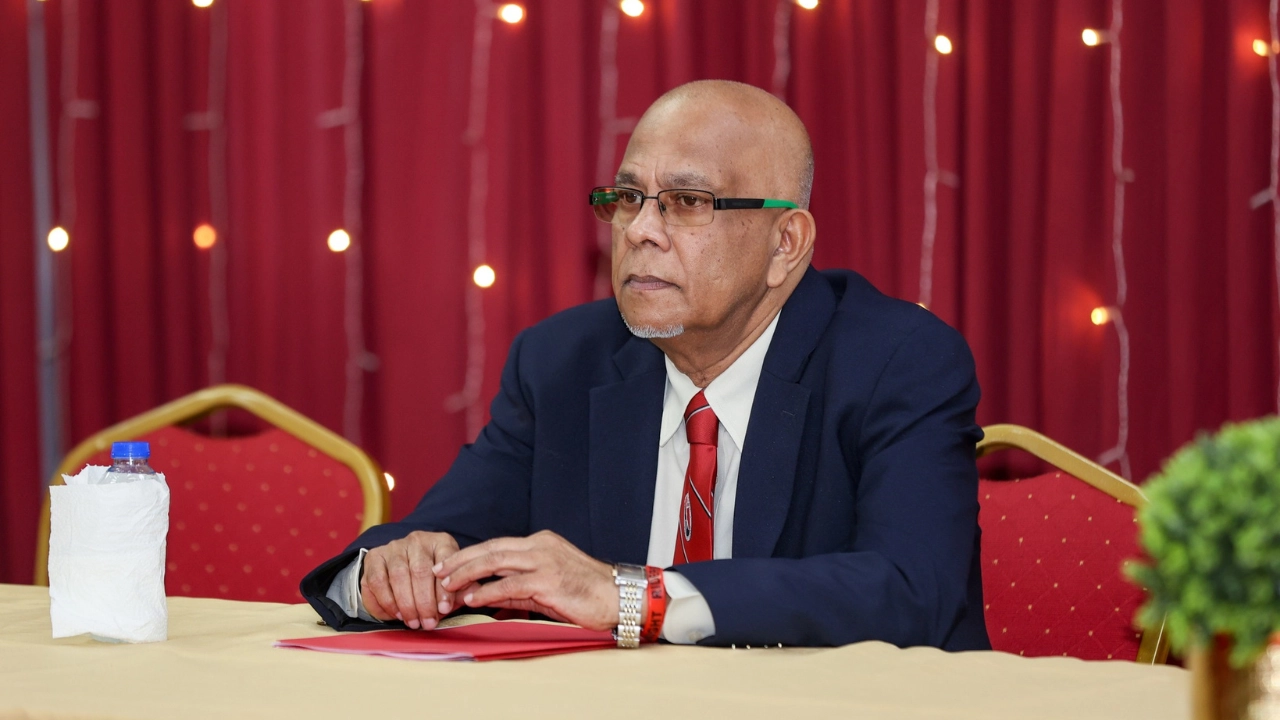
Cricket West Indies’ decision to exclude Barbados from a packed 2026 home schedule has triggered a sharp regional debate, but a new intervention from within the governing body has reframed the narrative, with CWI Vice President Azim Bassarath insisting that the outcome should not have come as a surprise to local stakeholders, raising questions over how a process that appeared settled internally evolved into one of the most contentious flashpoints in Caribbean cricket governance.
Inside the decision that reshaped the 2026 schedule
The allocation of fixtures across Guyana, Trinidad and Tobago, Jamaica, and Antigua was ultimately shaped by a combination of operational and financial realities, with Cricket West Indies prioritising cost management and logistical efficiency in a challenging economic environment. The board mapped out a structure that would see white-ball series and Test matches distributed strategically across territories, leaving Barbados without a fixture in the upcoming cycle.
That outcome, however, has taken on greater significance given the island’s historical position as a cornerstone venue in regional cricket.
Bassarath reveals prior alignment within CWI
Providing a detailed account of internal discussions, Bassarath indicated that the framework for venue allocation had been openly presented and accepted during board-level deliberations, with no objections raised at the time.
“Everyone knows the situation CWI is in at the present time financially. When the board sat and made the decision that we were going to host New Zealand in Guyana for all the white-ball games, we decided that the Pakistan tour would take place in Trinidad, we decided when Sri Lanka comes that they would play all the white-ball in Jamaica and the two Tests in Antigua…and Barbados’ representatives sat in the meeting and not a word of objection came from them,” Azim Bassarath, said during interview on iSports on I95.5 FM.
Surprise at backlash signals breakdown in alignment
The divergence between internal agreement and external reaction has become a central point of tension, with Bassarath pointing to a disconnect between what was discussed behind closed doors and what followed in the public domain.
“So it was very surprising to us to hear afterwards about this talk about no games in Barbados. At the end of the meeting we thought that all the board members were happy and they are satisfied with the recommendations made and I think that we went away from the meeting very comfortable, not knowing that a few months down the road that we were going to hear something of that nature,” Azim Bassarath added.
Barbados response reflects deeper strategic shift
The reaction from Barbados has extended beyond immediate disappointment, evolving into a wider conversation about the island’s long-term position within the regional cricket ecosystem. As previously reported by cricexec, the absence of fixtures has intensified concerns around economic impact, tourism flows, and the role of international cricket in sustaining the local sports economy.
At the centre of that response is Prime Minister Mia Mottley, who outlined a more proactive and diversified approach to cricket development. “It was clear to us that we could not only rely on Cricket West Indies for cricket in this country and that is why we made a deliberate decision to go after the CPL Finals here, and to be also able to see what else we can do to boost the opportunities for Bajans in the entire game of cricket – not just as players, but as umpires and as persons who are involved in the ecosystem, period,” she told Starcom Network.
Financial realities driving CWI’s approach
From the CWI perspective, the scheduling outcome reflects a broader effort to stabilise the organisation’s financial footing while maintaining competitive international commitments. As previously reported by cricexec, leadership has consistently framed venue allocation as part of a longer-term planning cycle rather than a single-year decision.
Defending the approach, President Kishore Shallow emphasised the importance of sustainability in determining hosting arrangements. “Yes, we are quite pleased with the level of interest, as always from the Government of Barbados, the people of Barbados, the supporters and lovers of cricket in Barbados, but we want you to understand that this is simply a case of managing cricket across the region and ensuring that it is financially affordable and sustainable. That is what really informed the decisions in terms of where these matches are played this year,” he said while speaking on Starcom’s Down to Brass Tacks.
A defining moment for regional cricket governance
The episode highlights a deeper structural tension within Caribbean cricket, where financial constraints, stakeholder expectations, and national priorities are increasingly intersecting in complex ways. While Bassarath’s remarks point to alignment at the decision-making stage, the subsequent fallout suggests gaps in communication and expectation management across the region.