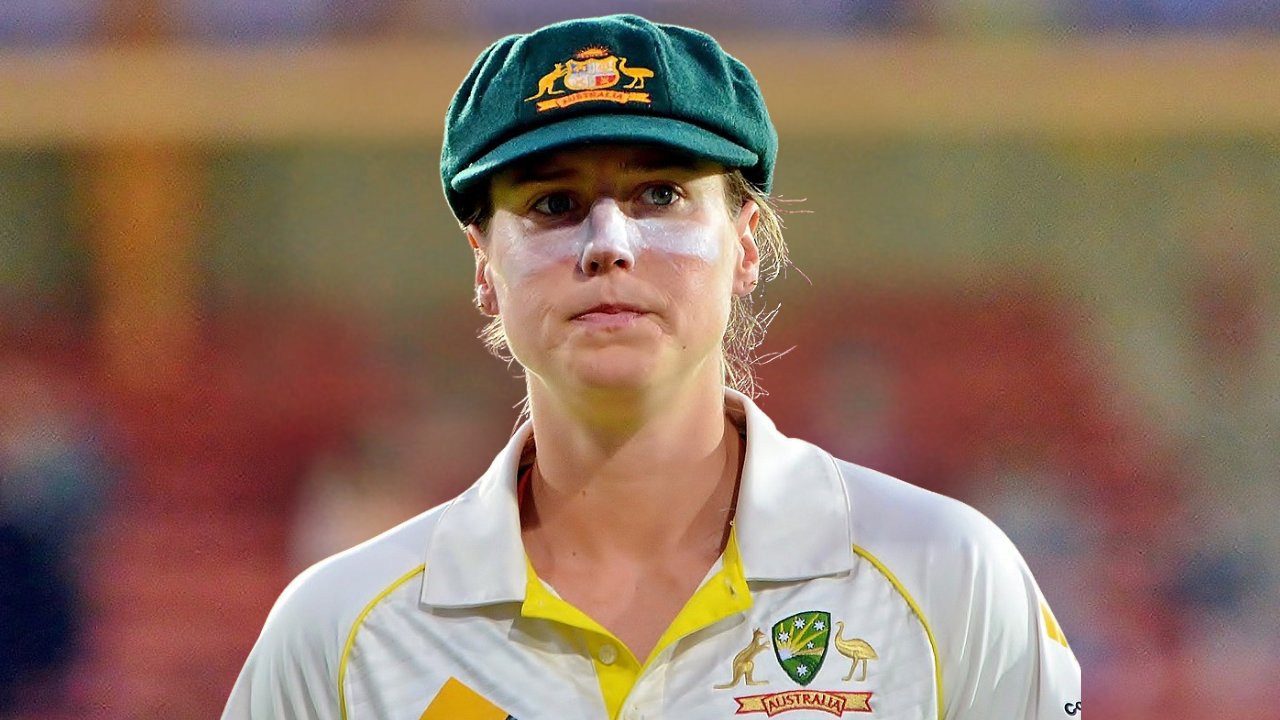
Ellyse Perry has called for Australia’s women’s team to secure a regular place in the heart of the domestic summer, arguing that greater visibility during the school holidays is important to the continued development of the game.
Australia’s home calendar highlights the challenge. The team will play nine white-ball matches against Bangladesh and New Zealand this summer, but those fixtures are concentrated in October and March rather than the peak holiday period.
Australia has not played a women’s international at home during the summer school holidays since January 2025, while the WBBL is now also staged entirely during the school term.
Perry told ABC News: “It’s the best time of year to play across that school-holiday window.”
She added: “People are at home, everyone’s head is in cricket too. There is a lot on the schedule in both the men’s and women’s game. It’s a nice time to go out and watch.”
Perry continued: “But also for them to be inspired to play themselves and be involved in cricket, it’s really important.”
Women’s cricket searches for a place in peak summer
Finding space in the calendar has become increasingly complicated by the growth of the global women’s game. India’s Women’s Premier League (WPL) has moved into January, with concerns that the competition could eventually occupy much of February as well.
Under Australia’s current program through the end of 2029, the only home internationals scheduled in the middle of summer are white-ball matches against Ireland during the first half of December 2028.
That leaves the second half of December, potentially before Christmas, as one of the limited school-holiday opportunities available around the WPL.
“I don’t know what the perfect window is, but I think somewhere in the peak of the Australian summer is important to carve out,” Perry noted.
She added: “Where and how you do that is more of a strategic planning opportunity that will take some time to find. But we should be prioritising that for the Australian team.”
Perry pushes for a recognisable annual window
Australian players have previously pushed for a regular place on the summer calendar, creating a period when supporters can expect the women’s national team to be playing at home each year.
The men’s Boxing Day Test in Melbourne and New Year’s Test in Sydney provide established fixtures around which audiences can build their summer viewing habits. Women’s cricket currently has no comparable recurring home window during the peak period.
Perry explained: “It’s not just for Australia and all the southern-hemisphere countries … to make sure we’re encouraging people to come along to matches.”
She continued: “It’s a really tricky one; the scheduling and planning is a matrix I would never want to look at.”
Perry added: “But it would be really nice for us to preserve a window there where people know the Australian women’s team is playing so they have the means and opportunity to come watch.”
Scheduling becomes a growth issue
The scheduling debate carries implications for how frequently families and younger supporters can watch the national team at home, particularly when school holidays provide greater opportunities to attend matches.
It also comes as Australia looks to sustain the profile generated by its dominant T20 World Cup campaign.
Perry stated: “That’s really important in terms of continuing to grow the game for young boys and girls. But also we want to play in front of a home crowd with good opposition each year.”
With the WPL occupying January and Australia’s existing program offering few peak-summer home fixtures through 2029, establishing a consistent window would require the scheduling trade-offs Perry acknowledged. The objective is to create a predictable period in which Australia’s women’s team can regularly play at home during the country’s peak cricket season.