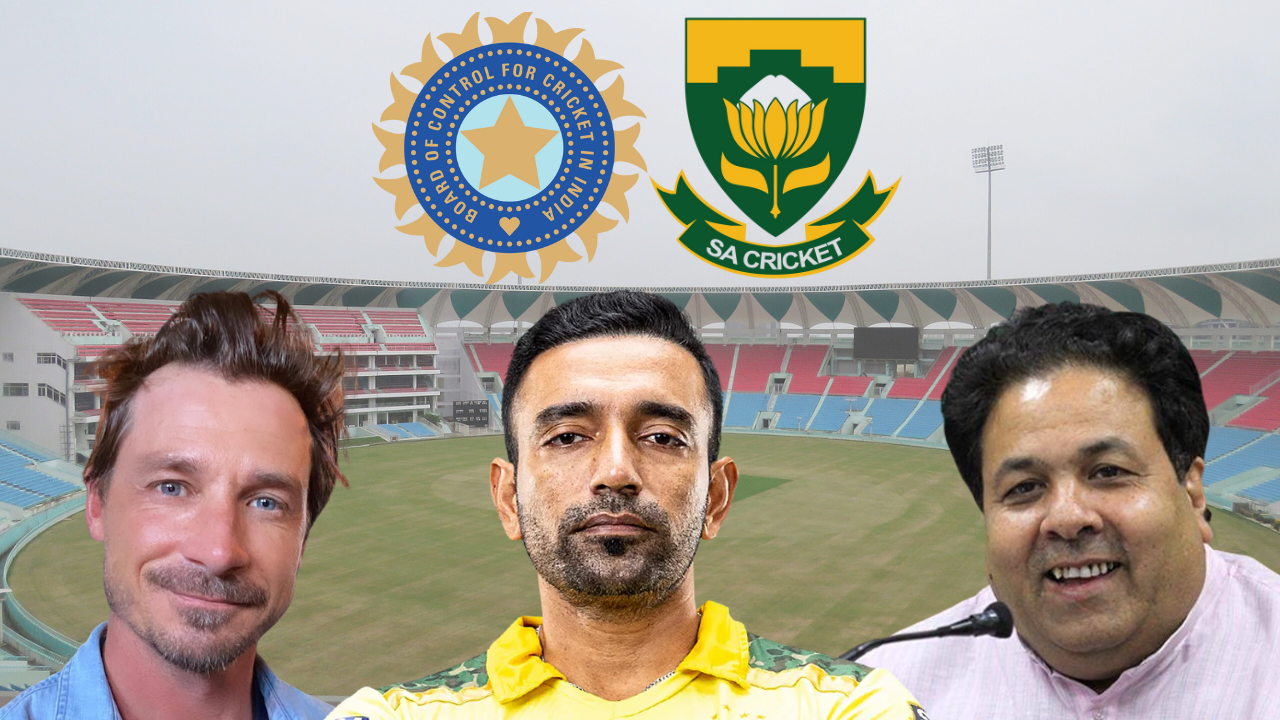
The lights were on, the crowd was ready, but the cricket never began. What was meant to be the fourth T20 International between India and South Africa in Lucknow devolved into a three-hour standoff with nature — one the game lost. With dense fog refusing to lift at the Ekana Stadium and match officials resorting to six separate inspections before eventually calling off the match, the night became a spectacle of confusion and public outrage.
Speaking on JioHotstar as events unfolded, former cricketers Robin Uthappa and Dale Steyn didn’t hold back in their assessment of the handling by the umpires.
Confusion builds over repeated inspections and unclear decisions
With visibility low and conditions deteriorating, match officials delayed the scheduled 6:30 pm toss. Over the next three hours, they conducted six separate visibility inspections — at 6:50 pm, 7:30 pm, 8:00 pm, 8:30 pm, 9:00 pm, and 9:25 pm — hoping for conditions to improve.
Uthappa was baffled by the logic of the delays. “I’m actually not even listening to you because I’m so befuddled by the umpire’s decision right now. How do they think it’s going to get better as the night wears on? It’s not going to get better, it’s only going to get worse. It’s counterintuitive. What are they actually thinking, and what do they think will happen in half an hour that hasn’t happened over the last hour and a half? It’s quite confusing that they’ve still decided to give it half an hour more.”
As the match officials continued their rounds of inspection, there remained little clarity on what exactly was being evaluated. Steyn questioned the lack of transparency behind the process.
“I was going to say I’d love to get one of the umpires. Sometimes they say there’s another inspection at 8:30, but I don’t know all the rules they’re looking at. As a player, you just play the game. It would be informative to know what they’re assessing and thinking. If they walk past again, we should grab them and ask for clarity. As a former player, I feel we could play in this, but obviously there’s something in the rules that I’m not fully aware of.”
Uthappa further pointed out that in his experience, similar or worse conditions had not stopped matches from going ahead. “I’ve played first-class games in far worse conditions, with a lot more fog. This is way better than that. I don’t see it getting better.”
Players idle as air quality worsens and officials deliberate
While match officials tried to make a call, players warmed up under dim conditions before heading indoors. India’s Hardik Pandya was seen wearing a surgical mask — a visible reflection of the worsening air quality, which had crossed a hazardous AQI level of 400. At one point, umpires conducted visibility drills, attempting to spot a ball held at long distances under the floodlights, only to find visibility still inadequate.
Fans inside the stadium grew restless. Chants faded into silence. Some spectators began leaving. The match — the first-ever T20I scheduled at night in Lucknow during December — was called off at 9:30 pm.
India remained 2-1 up in the series, securing an unassailable lead, with the fifth and final match set for Ahmedabad.
Furious fans demand accountability and refunds
For thousands in attendance, the game’s abandonment was more than a disappointment — it felt like betrayal. Speaking to ANI, several fans described the sacrifices they had made to be at the stadium, with many travelling long distances, spending heavily, and waiting for hours in the cold fog for a glimpse of India’s cricket stars. Instead, they left the venue in frustration, heartbreak, and anger.
One fan — a farmer — voiced his frustration over the money spent to attend. “I sold three sacks of wheat and came here to watch the match. I want my money back,” he told ANI.
Another fan was more upset by the lost experience than any refund. “It would have been better if the match had been scheduled earlier in the day. Tickets and reimbursement are irrelevant. We wanted to see the match, see our Indian Cricket Team,” the supporter said.
From emotional heartbreak to logistical exhaustion, the disappointment was widespread. “I am heartbroken,” one fan told ANI. Another said, “We are all fans of the Indian cricket team. I came from Agra to watch the match, and I’m extremely disappointed now. I left home early morning.”
Criticism wasn’t just emotional — it turned practical, too. One supporter speaking to ANI, “BCCI should not keep matches in Lucknow at this time, they should have better scheduling.” Another added, “The venue should have been changed, we know how bad the fog is around this time here.”
BCCI faces tough questions as scheduling backfires
The backlash wasn’t limited to the fans. The Board of Control for Cricket in India (BCCI) came under scrutiny for scheduling three matches of the series in North Indian cities during peak winter, including Dharamsala and New Chandigarh — both of which also experienced poor air quality during match days.
During one of the later inspections, BCCI vice-president Rajeev Shukla was seen speaking with umpires near the pitch, visibly vexed as discussions continued. The governing body now faces uncomfortable questions about why historical weather patterns or AQI data weren’t adequately considered in planning the series.
Spinner Varun Chakravarthy, reflecting on the night after the match was called off, summed up the extreme conditions. “I’ve never played at a ground this cold, so I did find it quite challenging,” he said after the match.
A missed opportunity and a night to forget
Instead of a thrilling night of cricket under lights, Lucknow witnessed a rare and disappointing chapter in Indian cricket — a T20I abandoned not due to rain or poor pitch, but fog. For fans who waited in the cold, for players who prepared to compete, and for broadcasters and administrators who scrambled for answers, the night offered little resolution.
The match might have ended without a toss, without a ball bowled, but the fallout has just begun.