Tactical delay or calculated diplomacy?
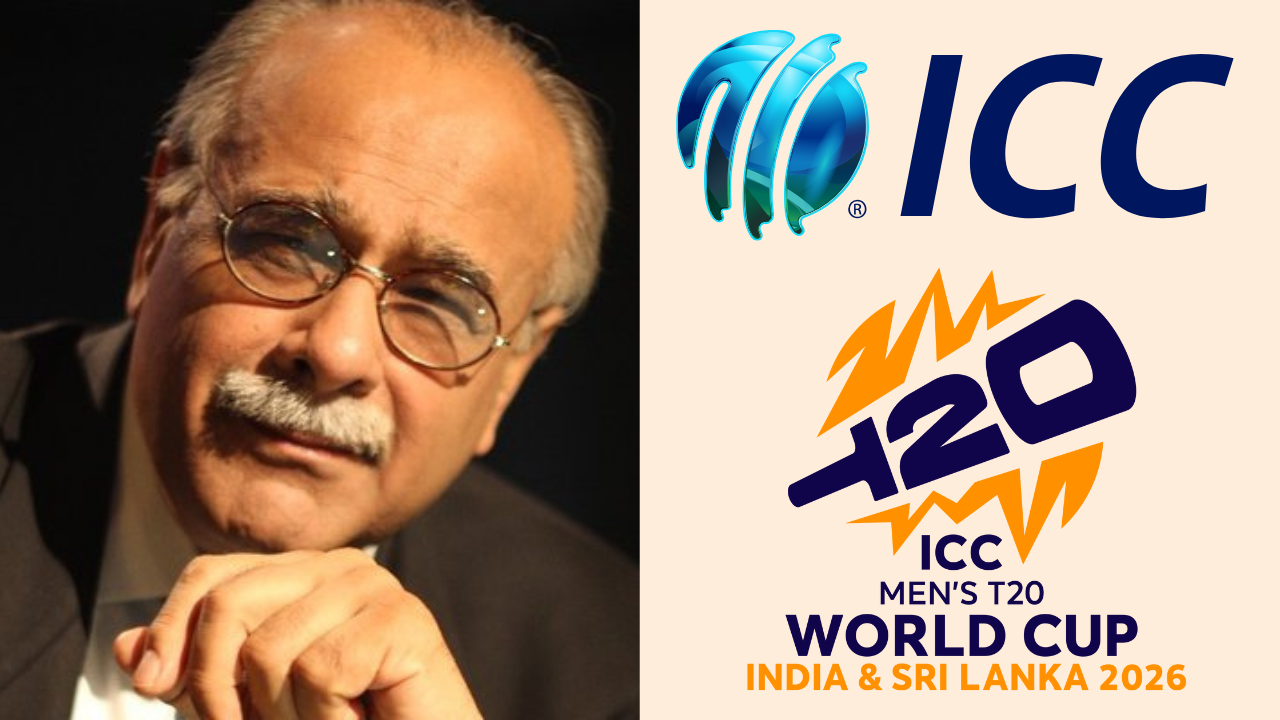
In the build-up to one of cricket’s most politically charged fixtures, Pakistan’s threatened boycott of the India clash in the 2026 T20 World Cup sparked widespread debate. While many interpreted the eventual U-turn as a backpedal under mounting pressure, former Pakistan Cricket Board (PCB) chairman Najam Sethi has presented a sharply different narrative.
‘It’s the ICC that stepped back’
Speaking in an exclusive interview with India Today’s consulting editor Rajdeep Sardesai, Sethi insisted Pakistan’s move was deliberate and well-calculated—not a capitulation.
“In fact, it’s the ICC that has taken a step back. I think the ICC has decided to back off a little bit, give Bangladesh some space. It was a very considered decision from Pakistan. They looked at all the angles. They knew that there could be no sanctions (for boycotting India match). They consulted the top lawyers at home and abroad.”
His remarks reflect a belief that Pakistan not only predicted the ICC’s limitations but used the situation to push its own diplomatic objectives, particularly in support of Bangladesh.
15-day notice wasn’t a threat—it was leverage
While critics viewed the boycott threat as a last-ditch tactic, Sethi framed it as a measured step intended to create space for negotiation.
“And I think one of the reasons that Pakistan gave a 15-day notice was that they wanted space with which to talk to the ICC and Bangladesh. And I think they had reason to believe that that would yield some results. And so I think the ICC has decided to back off a little bit, give Bangladesh some space. And I think Pakistan has achieved part of its objective, which was to get Bangladesh back in the game in one way or another, because the ICC was threatening them with all manner of sanctions. Pakistan knew that the broadcasters had the ICC, as it were, on a cold slab.”
The ICC had earlier announced that Bangladesh would not be sanctioned for their refusal to play in India and hinted at future hosting rights. That decision came after extensive behind-the-scenes discussions involving multiple cricket boards.
Financial leverage or independence?
As per a report by PTI, had the ICC’s governing board chosen to penalize the PCB for forfeiting the match, Pakistan could have risked a financial hit. Their projected share of the ICC’s 2024–27 revenue cycle stands at approximately $144 million—up to $38 million annually. However, Sethi dismissed the notion that money played a role in the final decision.
“And so as far as the question of resources is concerned, there was a time when Pakistan used to rely on ICC resources for sustenance like many of the other boards do, but not anymore. Now that the PSL has taken off in a big way, we get more money from the PSL than we get from the ICC. So Pakistan is well looked after by its own resources. So there was never an issue – never an issue. And I think, between you and me, going forward, maybe in March, you will see some other concessions that have been extracted from the ICC.”
According to the same PTI report, franchise fees from the Pakistan Super League—particularly after the inclusion of two new teams in its 11th edition—now contribute roughly $42 million to PCB coffers, rivaling ICC distributions.
Behind-the-scenes diplomacy and ICC overtures
Sethi also laid out the chain of events that he claims triggered the ICC’s response.
“And there are precedents that made it clear to them that they were on a very strong wicket. And at best, they would lose a point, no more than that. And I think the ICC also realised that, which is why then the ICC got into motion and made overtures. That’s how Imran Khawaja, the deputy chief, got into action. That’s how the Bangladeshis got into action. That’s how they came to Pakistan to negotiate so that Pakistan could play this match.”
According to sources familiar with the negotiations, Pakistan reportedly pushed several demands—including a call for resuming bilateral cricket with India and the proposal of a tri-nation series involving Bangladesh. While the ICC did not formally entertain those ideas—citing its non-involvement in bilateral matters—it did move swiftly to resolve the impasse surrounding Bangladesh’s participation.
With the diplomatic fog cleared and both teams ready to face off in Colombo on February 15, Sethi’s remarks have added yet another dimension to the narrative—a version in which Pakistan, not the ICC, held the upper hand.