
The scale of investment flowing into the Indian Premier League is no longer surprising those closest to the game—but the speed at which valuations are climbing still is.
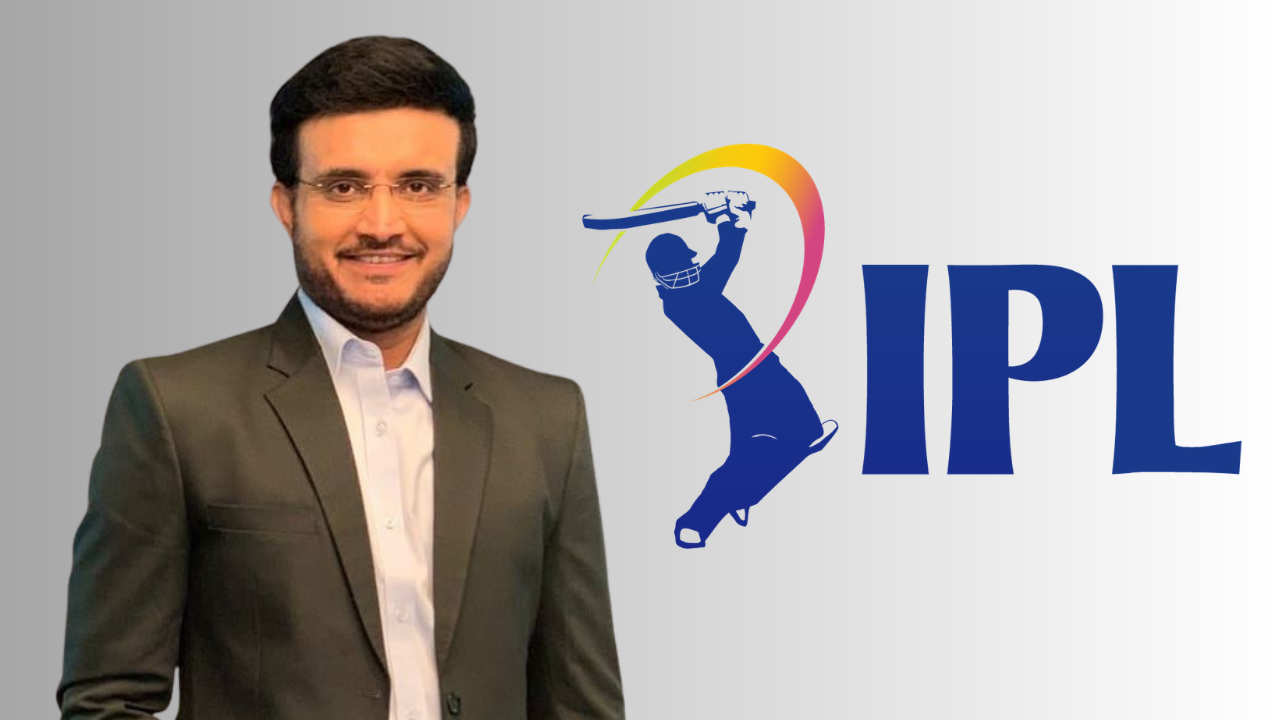
Speaking in Noida amid a wave of franchise deal activity, Sourav Ganguly offered a candid reflection on how dramatically the league has evolved, even as new ownership developments continue to reshape its commercial landscape.
VIDEO | Noida: “Great news for IPL, mind blowing numbers”, says former cricketer Sourav Ganguly on RR being sold for 1.63 Billion dollars.
(Full video available on PTI Videos – https://t.co/n147TvrpG7) pic.twitter.com/NYxB3uUK2H
— Press Trust of India (@PTI_News) March 24, 2026
Ganguly reflects on IPL’s transformation
Ganguly, who has witnessed the IPL’s journey from inception, pointed to both its financial expansion and its growing international pull—particularly from US-based investors—as defining features of its current phase.
“It (IPL) is only going to greater heights… It’s great news for IPL. I played the first ball of the IPL in 2008, RCB vs KKR. We smashed them at Chinnaswamy Stadium and I faced the first ball. To see IPL grow to these heights is phenomenal. It also goes to show the game expanding, and some of the buyers are from America, and the game is going to that part of the world with interest, especially Indian cricket, it is fantastic,” Ganguly said while addressing reporters at an event in Noida.
His remarks came shortly after a major ownership development involving Rajasthan Royals, where the inaugural champions were sold to a US-based consortium led by Kal Somani in a deal valued at US$ 1.63 billion (INR 15,322 crore). The transaction, expected to be completed after the 2026 season pending approvals, marked the largest franchise sales in IPL history at the time, until it was eclipsed later that day by the sale of RCB.
Franchise valuations enter new territory
While the Rajasthan Royals deal captured immediate attention, Ganguly’s reaction highlighted a broader shift—one where IPL franchises are increasingly being valued alongside the biggest assets in global sport.
“It’s mind-boggling numbers for a franchise and a cricket team which plays three months a year, but great news for Indian cricket and the way forward. I think it’s already as big as the NBA. The broadcast rights are as big as anywhere in the world, even compared to football,” he said.
The comparison reflects not just the league’s financial strength but also its ability to command global audiences within a relatively short seasonal window—an increasingly attractive proposition for international investors.
RCB deal sets new benchmark
Notably, Ganguly’s comments on Royal Challengers Bengaluru came before the franchise’s sale was formally confirmed later the same day.
As previously reported by cricexec, Royal Challengers Bengaluru has since been acquired for US$ 1.78 billion (approx. INR 16,732 crore), establishing a new record for IPL franchise valuations and surpassing the Rajasthan Royals deal.
The transaction saw United Spirits Limited exit ownership, with control transferred to a consortium led by the Aditya Birla Group alongside The Times of India Group, Bolt Ventures, and Blackstone. The deal represents one of the most significant ownership transitions in cricket history and signals continued upward pressure on franchise pricing.
A shifting investment landscape
Taken together, the back-to-back deals underline a rapidly evolving investment environment within the IPL, where both domestic conglomerates and global capital are competing for access to premium cricket assets.
The influx of international investors—particularly from the United States—has added a new dimension to the league’s ownership structure, reinforcing its positioning as a global sports property rather than a domestic competition.
What this means for the IPL’s future
With multiple franchises now crossing the US$ 1.5 billion threshold in quick succession, the IPL’s commercial trajectory appears firmly upward.
Ganguly’s remarks capture a moment where the league is no longer emerging but fully established among the world’s most valuable sports ecosystems. And with record-breaking deals now setting new benchmarks, the next phase of IPL growth may be defined not just by expansion—but by how high its ceiling can go.


