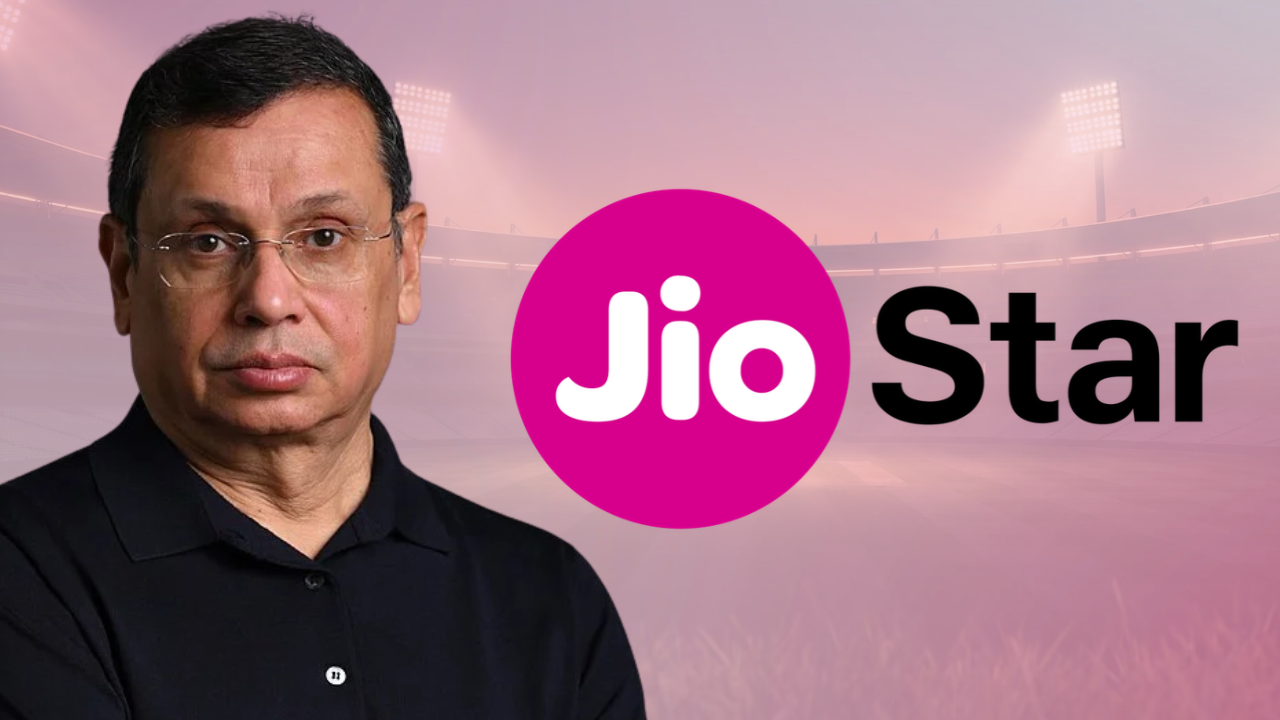
India’s sports industry faces a growing challenge in converting massive audiences into sustainable commercial returns, with escalating media-rights costs placing pressure on broadcasters and streaming platforms despite cricket’s continued popularity.
JioStar Vice Chairman Uday Shankar highlighted the disconnect between audience growth and financial returns during a fireside chat with Vivek Couto at APOS Sports Edge 2026, organised by Media Partners Asia. With the Indian Premier League (IPL) attracting approximately 650 million viewers, Shankar pointed to the difficulty of generating sufficient advertising and subscription revenue to support increasingly expensive sports properties.
Addressing the financial pressures facing the industry, Shankar said: “The real issue is that at some stage the economics of sport vs the excitement of sport need to align.”
Rising media-rights costs challenge broadcasters
India’s large television and streaming audience has not translated into equally strong revenue per subscriber. Limited consumer spending capacity continues to constrain subscription yields, while advertising income is increasingly divided among traditional broadcasters, streaming services and technology platforms.
The economics of premium sports rights have consequently become more difficult for media companies. Shankar noted that competition for sports broadcasting rights has narrowed considerably over the past 15–17 years, with some segments of the market moving from four or five bidders to almost one.
He also indicated that JioStar has adopted a more cautious approach to certain premium rights acquisitions. The company is assessing the relationship between rights costs and potential revenue more carefully, particularly as the industry approaches future IPL bidding cycles.
The commercial challenge extends beyond the amount broadcasters pay for content. Sports organisations must also develop stronger connections with audiences and identify additional ways to generate revenue rather than depending exclusively on advertising and conventional subscriptions.
JioStar looks beyond traditional sports broadcasting
JioStar’s own transformation reflects the changing economics of India’s media industry. Formed through the merger of Disney Star and Viacom18, the company brought together two previously competing businesses and their respective streaming services, Disney+ Hotstar and JioCinema.
The merger involved integrating businesses with different organisational cultures and operating approaches, alongside streaming services with distinct subscriber bases and pricing structures. Shankar said maintaining a seamless experience for consumers was a priority throughout the transition, with the combined company now operating Star Sports and JioHotstar.
For Shankar, the integration has reinforced the importance of combining content production with technological capabilities. Media companies can no longer depend solely on securing attractive programming when digital applications across multiple sectors are competing for the same advertising budgets.
Artificial intelligence forms part of this broader technological shift. Rather than viewing AI simply as a means of accelerating content production, Shankar sees opportunities to use it to transform media services and address challenges in how audiences are served and monetised.
JioHotstar has also experimented with integrating food-delivery platform Swiggy into its streaming experience, allowing cricket viewers to explore restaurants and order food without leaving the live broadcast.
The initiative offers an example of how streaming platforms could connect audience engagement with commercial transactions. However, Shankar acknowledged that the integration remains experimental and would need to develop into a repeatable, sustainable business model.
Another important shift is taking place across television distribution. While traditional satellite and cable television are contracting in India, connected television is expanding rapidly alongside mobile viewing, creating opportunities for media companies to develop new approaches to audience monetisation.
Cricket’s calendar faces a fan engagement test
The structure of cricket itself is another area Shankar believes requires reconsideration, particularly as administrators seek to maintain audience interest across international competitions and different formats.
High-profile fixtures continue to generate substantial attention, but matches between leading teams and considerably lower-ranked opponents do not necessarily offer the same competitive appeal. The challenge is therefore not simply the quantity of cricket being played, but whether individual fixtures provide compelling experiences for viewers.
Discussing the sport’s scheduling priorities, Shankar said: “The calendar is crowded. But that’s not the real problem. I think people love the sport. People want to watch it. The problem is that the calendar is oftentimes not designed keeping the fan in mind.”
Shankar also raised questions about whether cricket needs to maintain its existing number of formats. Although he expressed personal affection for Test cricket and acknowledged the skill, patience and discipline required in the five-day game, he identified T20 as a major driver of the sport’s expansion.
On the importance of entertainment in cricket, he added: “The shorter format is fun. The sports authorities don’t like this word, but at the end of the day, sport has to be fun, particularly in India. It has to excite people, it has to give them joy, it has to give them excitement.”
The discussion places cricket’s competitive structure alongside its commercial considerations, with administrators facing questions about how scheduling and format decisions affect the viewing experience.
Building sports beyond cricket requires infrastructure and investment
The opportunities in India’s sports economy extend beyond cricket, although other disciplines face different challenges in establishing sustainable professional competitions.
Shankar cited the Pro Kabaddi League as evidence that substantial audiences can be developed outside cricket. The competition has attracted an estimated 400–450 million viewers, compared with approximately 650 million for the IPL.
Its development required sustained efforts to establish a commercial sporting property in a market where cricket already enjoyed considerably stronger recognition and infrastructure.
Shankar also highlighted the importance of talent development and physical infrastructure. Cricket benefits from established systems for identifying and nurturing players, while several other sports lack comparable pathways for developing competitive athletes.
Football illustrates the difficulties that can emerge when investment in a professional league is not accompanied by corresponding progress in national-team performance. Shankar linked the commercial prospects of sporting competitions to their ability to develop athletes and teams that attract sustained fan interest.
International sports organisations seeking to expand into India face similar responsibilities. Acquiring distribution through a broadcaster does not automatically establish an audience, making investment in local talent, fan engagement and wider sporting infrastructure important to long-term development.
Women’s sport represents another area of opportunity. Shankar pointed to India’s untapped female sporting talent while arguing that governing federations must provide stronger support rather than treating women’s competitions as secondary priorities.
He also reaffirmed JioStar’s commitment to investing in women’s sports.
Sports businesses seek new ways to monetise audiences
Beyond developing sporting talent, Shankar identified opportunities for rights holders to make better commercial use of their existing relationships with fans.
Sports organisations often possess information through ticketing systems and audience interactions, but that data has not always been translated into meaningful fan communities or new commercial offerings.
The limitations of existing revenue models make such opportunities increasingly relevant. Advertising-funded access faces pressure as brand spending spreads across more digital platforms, while streaming subscriptions can be closely tied to individual sporting events or specific content.
Traditional television bundles, by contrast, have historically offered broadcasters more predictable recurring subscription revenue.
These differences are encouraging consideration of commercial models that extend beyond the live broadcast itself, including deeper fan engagement and transactions linked to digital viewing experiences.
For sports rights holders, the challenge involves developing audiences and commercial opportunities alongside broadcasters rather than treating the sale of media rights as the endpoint of their involvement.
Shankar urges investors to look beyond short-term returns
Despite the financial and operational challenges, Shankar remains optimistic about India’s sports market over the next 10–15 years, with potential growth across cricket, kabaddi and other individual and team sports.
He pointed to the IPL’s development as an example of how sustained investment can create substantial value over time. The Board of Control for Cricket in India (BCCI) played an important role in establishing the competition and supporting cricket’s wider commercial expansion.
Reflecting on the IPL’s evolution and the approach required from investors, Shankar stated: “So, investing in sport is a great idea, but your horizon has to be much longer. You can’t look at a five-year horizon and say you will cash out.”
Beyond the IPL, Shankar identified opportunities to develop sporting properties through investment in talent pathways, infrastructure and audience relationships. He also emphasised that financial backing alone would not be sufficient to establish successful sports businesses.
Shankar outlined his approach to creating value in the sector: “You have to be an investor, a builder and an innovator. Once you do that, there is a lot of value to be created.”
His assessment places responsibility on investors and sports organisations to participate in the development of the properties they support, rather than relying solely on media-rights transactions for commercial growth.