A week of record-breaking franchise valuations has reignited a long-standing debate over who deserves credit for building the Indian Premier League into cricket’s most powerful commercial property.
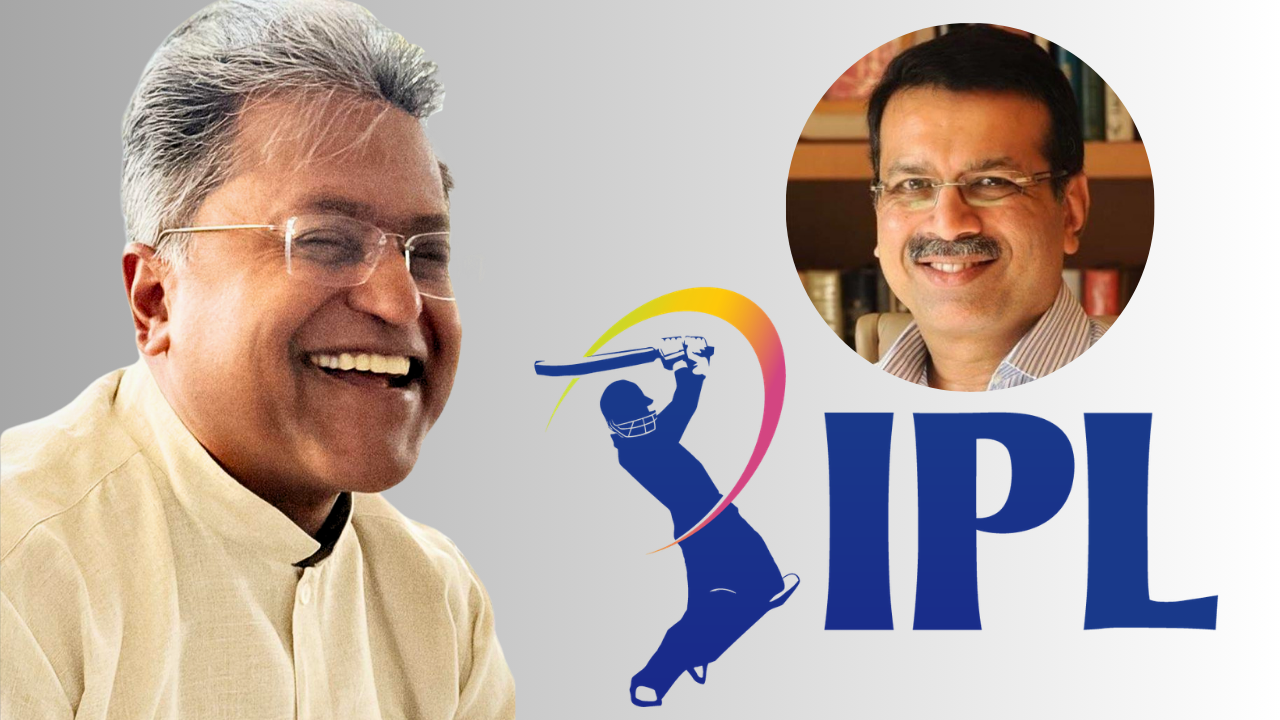
That debate spilled into the open on X, where a post celebrating the IPL’s financial surge quickly escalated into a public flashpoint between Sanjiv Goenka and Lalit Modi.
Modi hits back after Goenka’s IPL credit remarks
The controversy was triggered when Modi publicly lashed out at Goenka, calling him a “clown” in response to a post that, in his view, overlooked the league’s origins.
“Seriously this guy really has a memory loss of who conceived the model. Thats ok. He just lives in his own world. We all know that 🤣🤣 @DrSanjivGoenka is a 🤡 [sic].” he wrote on X.
Seriously this guy really has a memory loss of who conceived the model. Thats ok. He just lives in his own world. We all know that 🤣🤣🤣 @DrSanjivGoenka is a 🤡
wish it was his brother @hvgoenka who owned the ipl franchise. He is a true cricket fan. Not this clown – who thinks… https://t.co/m8eBdAOHHX— Lalit Kumar Modi (@LalitKModi) March 26, 2026
In the same post, he added: “Wish it was his brother @hvgoenka who owned the ipl franchise. He is a true cricket fan. Not this clown – who thinks his tweet will change history. Just proves he has zero knowledge. Just swelled up head 🤯[sic].”
The comments came as a direct response to Goenka’s assessment of the IPL’s value creation — one that credited the league’s structure and governance but made no mention of Modi, who founded the competition in 2008.
Goenka highlights valuation surge and IPL structure
Goenka’s original post focused on the scale of value appreciation across IPL franchises, using recent transactions as a benchmark.
“@rajasthanroyals, acquired for roughly ₹270 crore in 2008, have just been sold for over ₹15,000 crore. @RCBTweets, acquired for roughly ₹485 crore, sold for over ₹16,600 crore. Two franchises, same week, each over ₹15,000 crore,” he wrote on X.
1/ @rajasthanroyals, acquired for roughly ₹270 crore in 2008, have just been sold for over ₹15,000 crore. @RCBTweets, acquired for roughly ₹485 crore, sold for over ₹16,600 crore. Two franchises, same week, each over ₹15,000 crore.
That value was built by the architecture…
— Dr. Sanjiv Goenka (@DrSanjivGoenka) March 25, 2026
The early acquisition figures — approximately US$ 29 million and US$ 52 million — underscore the magnitude of growth achieved since the league’s inception.
Expanding on the drivers behind that rise, he added: “That value was built by the architecture of the IPL. The way broadcast and digital rights were structured. The governance that gave brands confidence to invest at premium levels. Much of this traces back to the vision of @JayShah,”
While the post highlighted structural and administrative evolution, the absence of any reference to Modi became the focal point of the backlash that followed.
Billion-dollar deals provide the backdrop
The exchange came against the backdrop of two landmark franchise transactions completed on Tuesday (March 24), reinforcing the IPL’s position as a global sports business powerhouse.
Royal Challengers Bengaluru was acquired for US$ 1.78 billion (approx. ₹16,732 crore) by a consortium including the Aditya Birla Group, Blackstone, Times Group and Bolt Ventures, as previously reported by cricexec.
In a separate deal on the same day, Rajasthan Royals were sold for US$ 1.63 billion (approx. ₹15,322 crore) to a group led by investor Kal Somani, as reported by cricexec previously.
These valuations — both exceeding ₹15,000 crore — formed the basis of Goenka’s remarks and, ultimately, the trigger for Modi’s response.
Industry reaction highlights wider debate
The public nature of the exchange prompted strong reactions across X, with several users backing Modi’s role in conceptualising the IPL’s original business model, while others pointed to the league’s evolution through governance, media rights strategy, and institutional scaling.
The discussion quickly moved beyond the individuals involved, reflecting a broader divide within the cricket ecosystem — between those who credit the IPL’s founding blueprint and those who emphasise its subsequent structural and commercial development.
Credit, legacy and the IPL’s continuing evolution
Nearly two decades after its launch, the IPL’s transformation from sub-US$ 100 million franchise investments to multi-billion-dollar assets continues to reshape global cricket economics.
But as valuations reach new highs, the episode underscores an enduring question at the heart of the league’s success — whether its growth is best attributed to its original vision or the systems that scaled it.