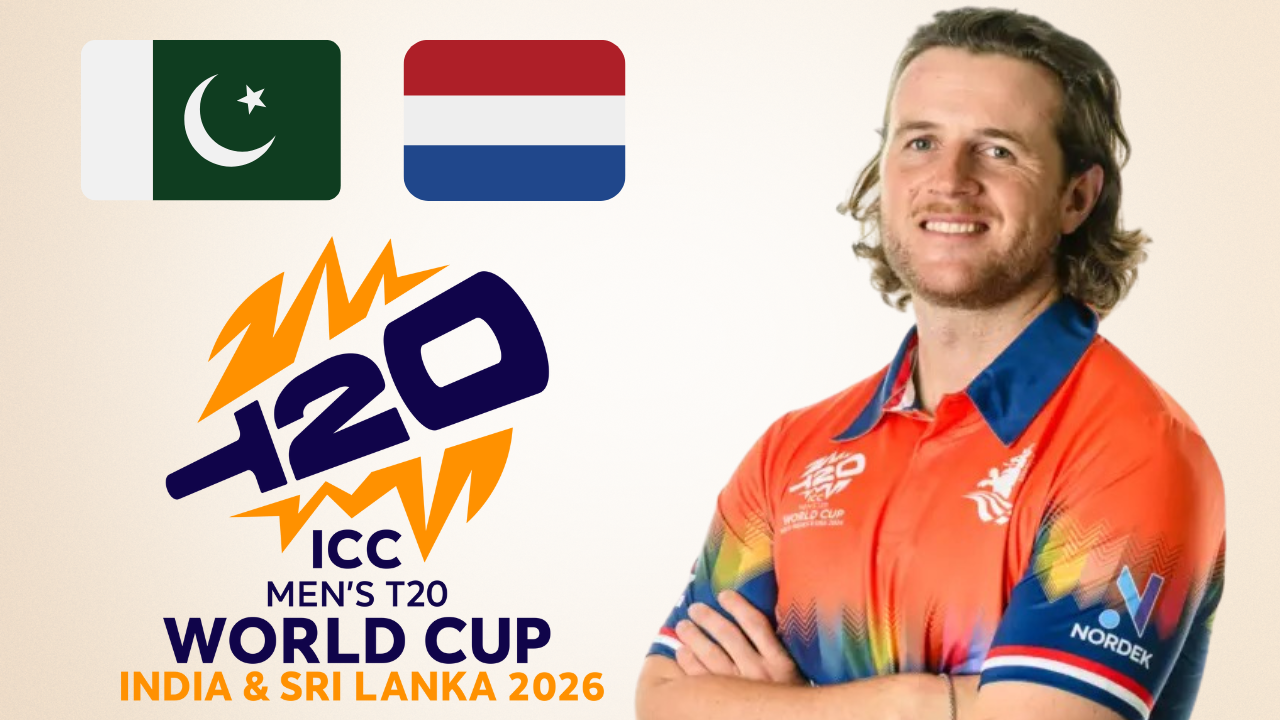
A single moment in the outfield can define an entire match, but for Max O’Dowd, one spilled chance has followed him far beyond the boundary rope. In the aftermath of the Netherlands’ narrow defeat to Pakistan in their T20 World Cup opener, the dropped catch of Faheem Ashraf has become a flashpoint — not just for cricketing debate, but for the emotions surrounding one of the sport’s most politically charged rivalries.
The incident unfolded deep into Pakistan’s chase, when the game had tilted unexpectedly in the Netherlands’ favour. Pakistan were wobbling late, having slid to 119 for seven while chasing 148, and the pressure was firmly on the batting side. When Faheem Ashraf mistimed a lofted shot toward long-off in the penultimate over, the chance looked routine by elite standards. O’Dowd, however, could not hold on, and the momentum swung instantly.
Ashraf capitalised on the reprieve, launching an explosive finish that included multiple boundaries and sealed a three-wicket win with deliveries to spare. What followed for O’Dowd was not just disappointment on the field, but a wave of reaction off it — much of it arriving through his Instagram feed.
Online backlash after a single moment
Speaking to Indian Express after a training session ahead of the Netherlands’ next fixture, O’Dowd revealed the scale and tone of the response he received. “Some of the comments were quite harsh, something that should never be said to anyone,” he said, reflecting on messages that went far beyond cricketing criticism.
What struck him most was where much of the anger appeared to come from. “It seems that Indian fans were angrier with me than the Dutch supporters,” O’Dowd added, pointing to the broader backdrop in which a Pakistan victory — aided by his error — was viewed through the prism of regional rivalry.
Among the more printable reactions were remarks questioning how a professional cricketer could miss such a chance, alongside comments in Hindi mocking the missed opportunity to knock Pakistan out early. Many other responses, O’Dowd indicated, were far more abusive and crossed personal lines.
A mistake, not the whole story
While the missed catch became the defining image of the match, O’Dowd was keen to stress that the defeat could not be reduced to a single action. “We had a chat about things after the game, not just that catch. We could have done a lot of things better. We thought we were a bit short with the bat as well,” he said, pointing to missed chances earlier in the contest.
He also addressed the technical aspect of the error without deflection. “I have taken such catches a thousand times. It’s just that I dropped that one and we lost the match,” O’Dowd said, framing the moment as an exception rather than a pattern. Despite the scrutiny, there was no dramatic response within the camp. “So, no additional practice,” he added, dismissing suggestions of panic-driven changes.
Teammates rally behind O’Dowd
Inside the Netherlands dressing room, the focus quickly shifted to collective accountability. All-rounder Colin Ackermann defended his teammate, arguing that the game turned on far more than one dropped chance. “Max is good. There were obviously many other moments in the game where we could have done better. If you look at the last five overs of our batting, if we had added another 15 to 20 runs, that could have been the difference. There are 240 moments in a T20 game, so we need to be better in those other moments as well,” Ackermann told Indian Express.
Ackermann also shared how the group reset mentally after the loss, emphasizing the importance of moving on quickly in a tight tournament schedule. “When we got off the bus in Delhi, coach Ryan Cook said the past is the past — there’s nothing we can do about it — and we must look forward to the next game against Namibia,” he said.
When rivalry meets social media
O’Dowd’s experience has highlighted how modern cricketing moments can spiral far beyond the field, especially when layered with the intensity of India–Pakistan sentiment. A dropped catch in a neutral contest became a lightning rod for frustration, nationalism, and online outrage.
For the Netherlands batter, the challenge now is not technical but emotional — absorbing the noise, leaning on team support, and preparing for what comes next. The match is over, but the conversation it sparked continues to ripple across timelines and comment sections, reminding players how little distance there is between sport and sentiment in today’s game.