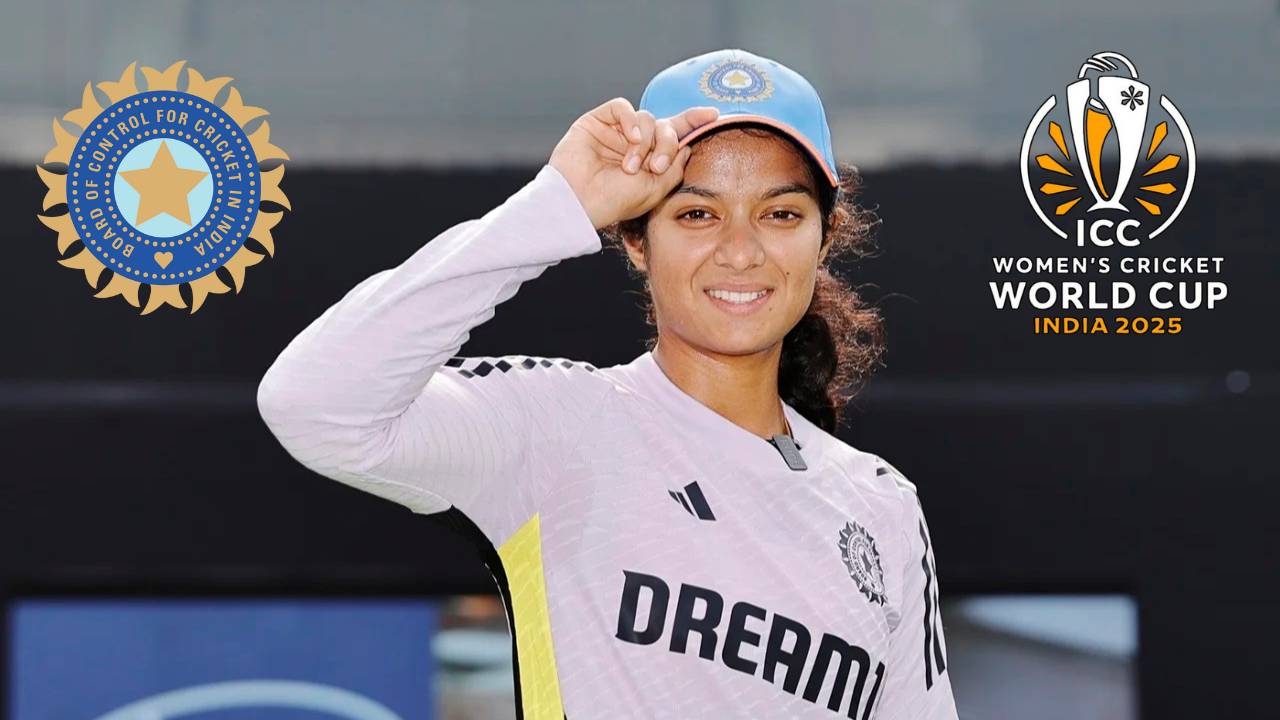
A bittersweet ending to a breakout World Cup campaign
As celebrations erupted at the DY Patil Stadium following India’s historic 52-run victory over South Africa in the ICC Women’s ODI World Cup 2025 final, few moments were as emotionally charged as the sight of Pratika Rawal in a wheelchair, wrapped in the Indian flag, eyes brimming with tears.
Rawal had been one of India’s standout performers in the tournament, amassing 308 runs across six innings at an average of 51.33. She was India’s second-highest run-scorer and fourth overall in the tournament standings. Her consistency at the top of the order helped anchor India’s batting through the tough early stages of the competition.
Yet despite her vital contributions, Rawal did not receive a winner’s medal when the trophy was lifted, according to multiple reports.
The injury that changed everything
Rawal’s campaign came to an abrupt halt during India’s final group-stage match—a dead rubber against Bangladesh—when she suffered an ankle injury. That injury ruled her out of the knockout stages, prompting the team management to officially replace her in the 15-member squad with Shafali Verma.
According to ICC regulations, only the players in the official 15-player squad at the time of the final are eligible to receive medals. Though Rawal began the tournament as a key squad member, her substitution due to injury meant she no longer met that requirement.
Medal eligibility: a rule that’s been questioned before
The exclusion isn’t unprecedented. In the 2003 Men’s ODI World Cup, Australia’s Jason Gillespie took eight wickets in four matches before an injury led to his replacement by Nathan Bracken. Despite his contributions, Gillespie did not receive a winner’s medal—Bracken did.
The same rule applied here. Shafali, who replaced Rawal, went on to score a blistering 87 in the final and was named Player of the Match. Her efforts helped India post 298/7, a total that proved too much for South Africa.
Rawal’s emotional moment on the sidelines
Though sidelined, Rawal was present at the final, soaking in the atmosphere and supporting her teammates from the stands.
“I can’t even express it. There are no words. This flag on my shoulder means so much. To be here with my team it’s surreal. Injuries are part of the game, but I’m just so happy I could still be part of this team. I love this team. I can’t express what I feel we actually did it! We’re the first Indian team to win the World Cup in so long. The whole of India deserves this,” she told the broadcasters after India’s 52-run win.
Despite the personal disappointment, Rawal embraced the team’s triumph wholeheartedly.
“Honestly, it was harder to watch than to play. Every wicket, every boundary goosebumps. The energy, the crowd, the emotion it was incredible,” she said while reflecting on the final.
A contribution that went beyond medals
Rawal’s story is a powerful reminder that not all heroes are seen on the podium. Her performances in the group stage laid the foundation for India’s eventual World Cup glory. Though regulations kept her from holding a medal, her role in India’s historic title win is unquestionable—and unforgettable.