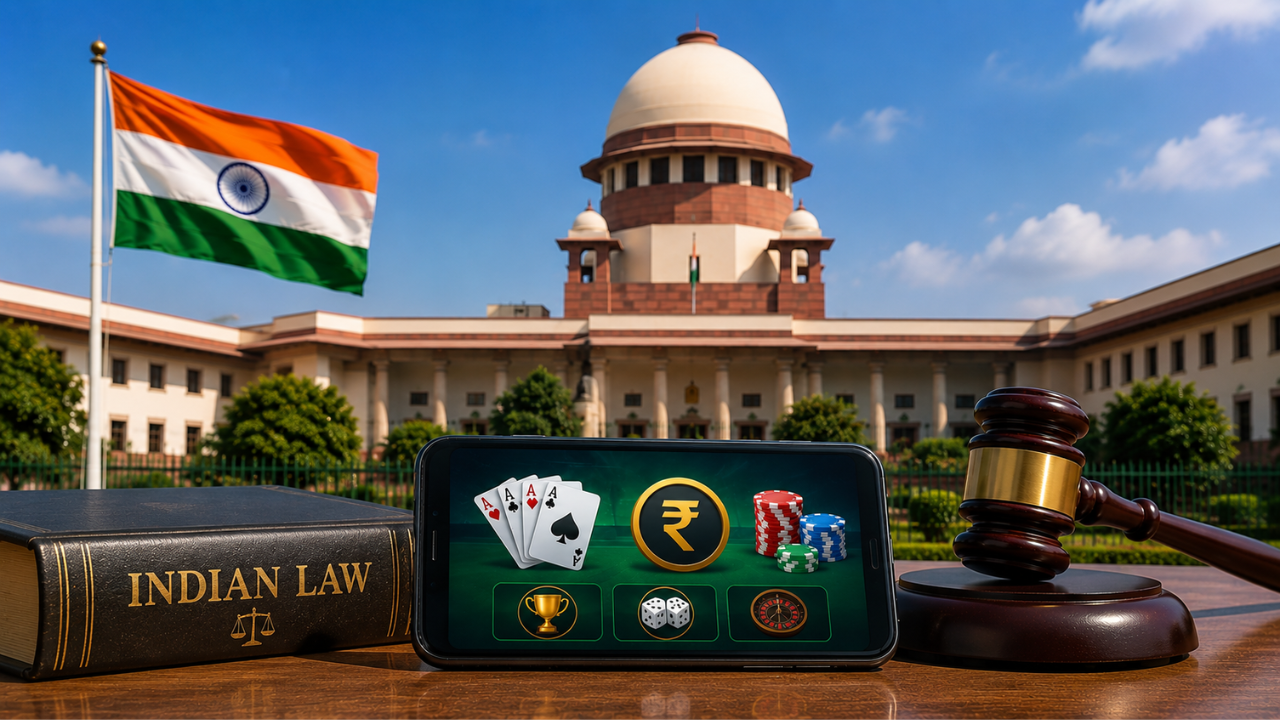
India’s new legal framework for online real-money gaming is set for scrutiny in the Supreme Court, which on August 5, 2026 agreed to move towards a final hearing on challenges to the nationwide prohibition introduced this year, according to a report by PTI. The proceedings bring together questions over the constitutional reach of the ban and a separate push for government action against platforms accused of continuing to facilitate betting and gambling.
Gaming law comes before the Supreme Court
The legislation at the centre of the challenge is the Promotion and Regulation of Online Gaming Act, which has been in force since May 1, 2026. Its prohibition covers online real-money games without making a distinction based on whether the outcome involves skill or chance.
That approach has created the constitutional issue now before the court. Among the grounds raised is whether preventing real-money gaming altogether conflicts with the fundamental right to carry on a trade or business, with rummy and poker among the activities historically regarded as “games of skill.”
Dr K A Paul leads the group of petitioners contesting provisions of the legislation. Chief Justice Surya Kant and Justice Joymalya Bagchi have asked the parties to complete their pleadings, with Solicitor General Tushar Mehta among the lawyers involved in the proceedings.
Enforcement emerges as a parallel issue
A separate public interest litigation before the court focuses on platforms allegedly providing gambling and betting while presenting their operations as social gaming or esports. The Centre for Accountability and Systemic Change (CASC), represented by former Uttar Pradesh DGP Vikram Singh and Shourya Tiwari, is seeking directions to the central government over those operations.
The organisation’s case involves four Union ministries: Electronics and Information Technology, Information and Broadcasting, Finance, and Youth Affairs and Sports. CASC has asked them “to do a harmonious interpretation of provisions of Promotion and Regulation of Online Gaming Act, 2025 and laws made by state legislatures, to prohibit online gambling and betting games operating in the guise of social and e-sports game.”
CASC claims the proliferation of betting and gambling applications is causing social and economic harm across the country. Its public interest litigation will be heard alongside the challenges concerning the real-money gaming legislation.
Thousands of apps raised before the court
The enforcement dispute has already been before the Supreme Court. On October 17, 2025, a bench led by Justice J B Pardiwala asked the Centre to respond to the CASC petition.
During the latest hearing, lawyer Virag Gupta, appearing for CASC, returned to the question of the government’s response. He said information identifying around 2,000 gaming apps allegedly conducting betting and gambling activities in India had been supplied to both the Centre and the court, and that the government had yet to submit a reply despite two earlier orders.
The immediate next step now rests with the parties, which have been directed to finish their pleadings before the Supreme Court proceeds with the final hearing on the challenges to the gaming law.