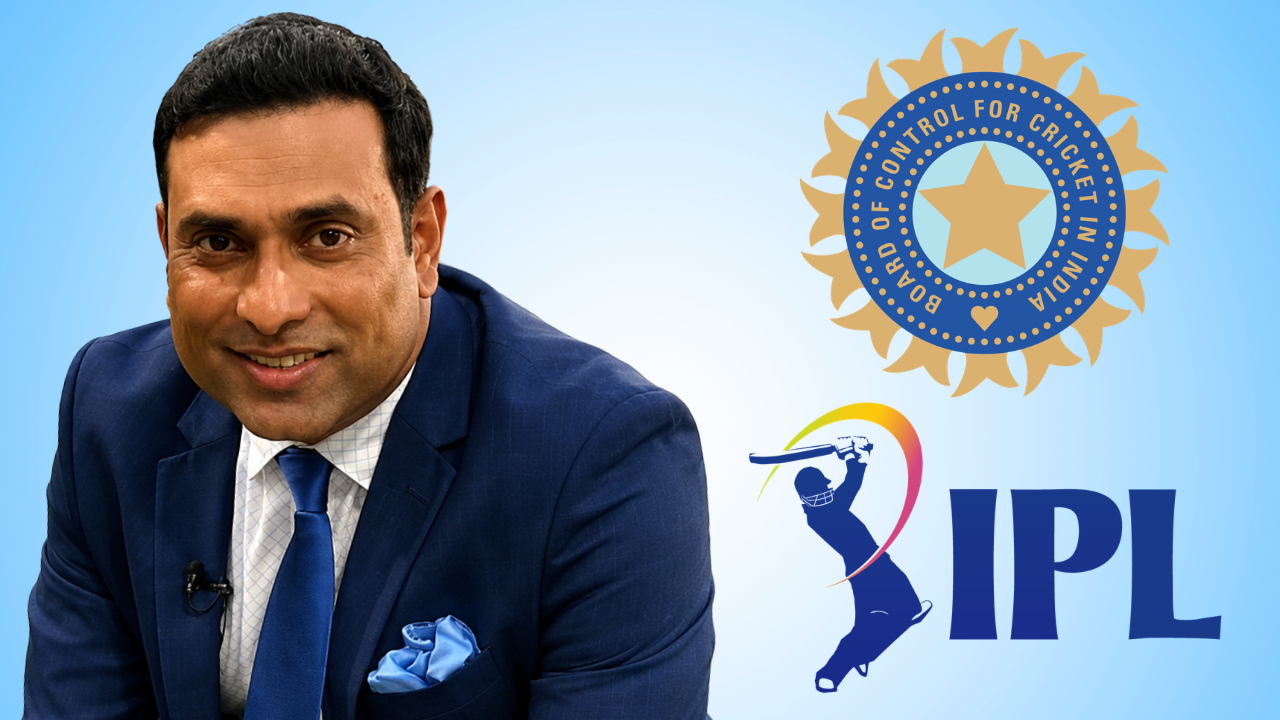
VVS Laxman has defended the BCCI Centre of Excellence (CoE) amid mounting scrutiny over India’s growing injury list, arguing that players cannot be expected to recover according to rigid timelines and insisting that the Bengaluru facility should not be made a scapegoat when rehabilitation takes longer than initially anticipated.
The debate has intensified ahead of India’s two-Test series against Sri Lanka, with Jasprit Bumrah and Sai Sudharsan ruled out, the latter having since been replaced by Sarfaraz Khan, and Washington Sundar unavailable for the opening Test. Harshit Rana, Nitish Kumar Reddy and Akash Deep have also been dealing with injuries, while other India players have undergone rehabilitation at the CoE.
BCCI Secretary Devajit Saikia and Laxman met in Bengaluru as the board reviewed the injury-management situation. Questions surrounding rehabilitation timelines, fitness clearances and communication with selectors have subsequently put the CoE’s processes firmly in focus.
Addressing the media at the CoE in Bengaluru, BCCI Centre of Excellence Head VVS Laxman said, “See, CoE is not just a rehab centre, but there are bigger roles to play for it in helping cricketers achieve excellence. So, we don’t like to use the term ‘blame’ (for injuries) because when you’re using that term, then you’re finding someone as a scapegoat.”
Laxman added, “But there’s brilliant coordination between the CoE and the team management of both the teams (men and women) and the SSM staff of both the teams. So that communication is happening seamlessly.”
Laxman says players cannot recover to fixed timelines
Much of the scrutiny has centred on how the CoE determines when an injured player is ready to return. Rehabilitation programmes can carry projected timelines, but progression ultimately depends on how an individual responds as workloads are gradually increased.
That distinction has become particularly important with players being considered for selection while still completing their rehabilitation.
He said, “This is where I think it’s very important to understand that the guidelines and the timelines are given based on what you expect. But it’s the human body. It is not a machine where the timelines will always be met. So there’s a continuous process of understanding how a player is progressing and based on that, the load is increased. So that’s a process from the time they are diagnosed with the injury to the time they leave the CoE and declare fit.”
Bumrah and Sudharsan illustrate how that system operates. Both remained under consideration for the Sri Lanka tour subject to fitness, meaning their potential selection did not amount to final medical clearance.
Laxman explained, “Now you’re talking about Bumrah and Sai Sudarshan. The process is that the selector reaches out to the CoE asking for the fitness status report and we collect it and send it to the selection committee chairman or chairperson in women’s selection committee with a copy to the head coach of both the teams and the BCCI. Now Bumrah and Sudarshan, there’s always an asterisk against their name. It means subject to fitness. So Bumrah and Sudarshan were going to be picked for Sri Lanka subject to fitness clearance. As I told before, we assess them, move them from one stage to the next stage and if the progression is slow, you communicate to the selection committee chairman and the head coach, which is happening seamlessly, and they understand that they’re not yet ready to participate in an international series.”
Saikia explains ‘subject to fitness’ selections
The timing of selection meetings adds another layer to the process. India squads can be chosen several weeks before departure, creating situations in which selectors need to consider players whose rehabilitation is still underway.
BCCI Secretary Devajit Saikia told select media at the CoE, “We basically have our selection meetings at least three to four weeks before the team departs. So, we do not know the exact status of the player. Therefore, that asterisk subject to fitness is given because that particular player is under a programme of rehabilitation. So, if he gets picked within that period of 21 days or 28 days, he will be taken into the team. So, that is precisely, we do not outrightly reject him. But by the time it (fitness) will be effectively required for the travel or to play the match, by that time he may be totally picked.”
The system allows selectors to retain a player in their plans without requiring the medical team to accelerate the rehabilitation programme to meet the date on which a squad is initially selected.
Laxman also rejected the idea that the current number of injuries should automatically be interpreted as evidence of a wider failure, pointing instead to the physical demands placed on players competing at the highest level.
He said, “I don’t think it’s a cause of concern. But obviously, when someone is playing at the elite level, you’re supposed to give more than 100%. So I think ultimately, injuries are part and parcel of any player. So, if you’re thinking about not getting injured, then you’re not playing to the best of your ability.”
The CoE has also expanded its use of technology to track player workloads and identify potential injury risks. Fast bowlers are monitored through systems including GPS data and the Athlete Monitoring System, with individual workload ranges used to assess whether players are bowling enough as well as whether they are being overloaded. Remote monitoring is another part of that process when players are away from the facility.
CoE source raises concerns over IPL pressures
Alongside Laxman’s defence of the rehabilitation programme, concerns have emerged from within the CoE over the condition in which some players arrive for treatment.
An anonymous BCCI CoE source told ANI, “Too much cricket. The human body has its load limits. Overuse and stress injuries, especially in older players, are unpredictable in terms of return to play. Players play through injuries during IPL due to franchise and financial pressures and then are dumped onto unsuspecting COE physios. The team physios and COE physios are competent and conscientious, and are keeping player safety as their top priority. This, of course, makes it difficult for selectors, coaches, and captains.”
Those concerns broaden the injury debate beyond what happens once a player enters rehabilitation. India’s leading cricketers operate across international assignments, domestic competitions and the IPL, creating different workload demands and different environments in which physical problems must be managed.
If an injury has already been carried through competition before a player reaches the CoE, predicting the subsequent rehabilitation period can become more complicated. The source nevertheless defended both team and CoE physiotherapists, stressing that player safety remained their priority.
CoE sets benchmarks before clearing players
Rather than clearing players according to predetermined dates, the CoE uses physical and performance benchmarks throughout rehabilitation. A player must satisfy those requirements before being released to resume competitive cricket.
Laxman stated, “We have set certain parameters with the SSM and S&C process. Until and unless those benchmarks are not met, or in fact got better, we don’t release (the players). The whole idea is that when he goes back to the Indian team, men and women, or wherever, including the state teams or whatever teams he is participating, from the first match, he should be able to perform to the best of his potential.”
The rehabilitation pathway itself moves through several stages. Following diagnosis and clinical assessment, players progress into strength and conditioning before gradually returning to cricket-specific skills and increased workloads. Return To Play matches then form part of the final assessment before clearance.
Laxman explained, “Whenever the player gets injured in whatever environment, if it is the Indian team, the Indian team physio understands the nature of the injury and then we’ve got experts and specialists with whom we have got a year-long connection. And once that diagnosis happens, those players are sent to the COE. We clinically examine them [through] the SSM team. Based on that assessment, we know the plan of action for their recovery. Once the player is ready for the next phase, which is your strength and conditioning, then the S&C coach comes and plays a part. Now, once the next phase starts after the S&C, slowly they go to the skill part and then we build up the load and then we play two RTP matches before we declare the player fit.”
The objective is therefore not simply to establish that a player can return to training. The CoE wants a rehabilitated cricketer to be capable of handling competitive demands from the beginning of their return rather than needing additional time to reach match intensity after receiving clearance.
Sports Science leadership remains under focus
The increased attention on player rehabilitation comes while the CoE continues without a permanent Head of Sports Science & Medicine following Nitin Patel’s departure in 2025.
The BCCI has explored several candidates for the position. Andrew Leipus had been lined up before withdrawing for family reasons, while another preferred candidate was unable to relocate to Bengaluru. A candidate with experience working around New Zealand rugby was also considered before ultimately deciding against taking the position.
Laxman has been involved in that recruitment process alongside Dr. Dinshaw Pardiwala and Dr. Ashish Soni. In the meantime, the CoE has focused on developing members of its existing team while continuing its search for someone with the required experience who can take on the role full-time in Bengaluru.
The broader challenge now extends across the entire player-management chain. The CoE must balance medical benchmarks against the demands of international selection, while selectors can be forced to make provisional decisions weeks before a player completes rehabilitation. At the same time, concerns from within the facility about players carrying injuries through the IPL have added another dimension to the debate.
For Laxman, however, the central principle remains that rehabilitation must be dictated by the individual player’s physical progress rather than an expected return date. With India navigating a significant injury list, that approach — and the wider system surrounding player workloads before they arrive at the CoE — is facing one of its most visible tests.