
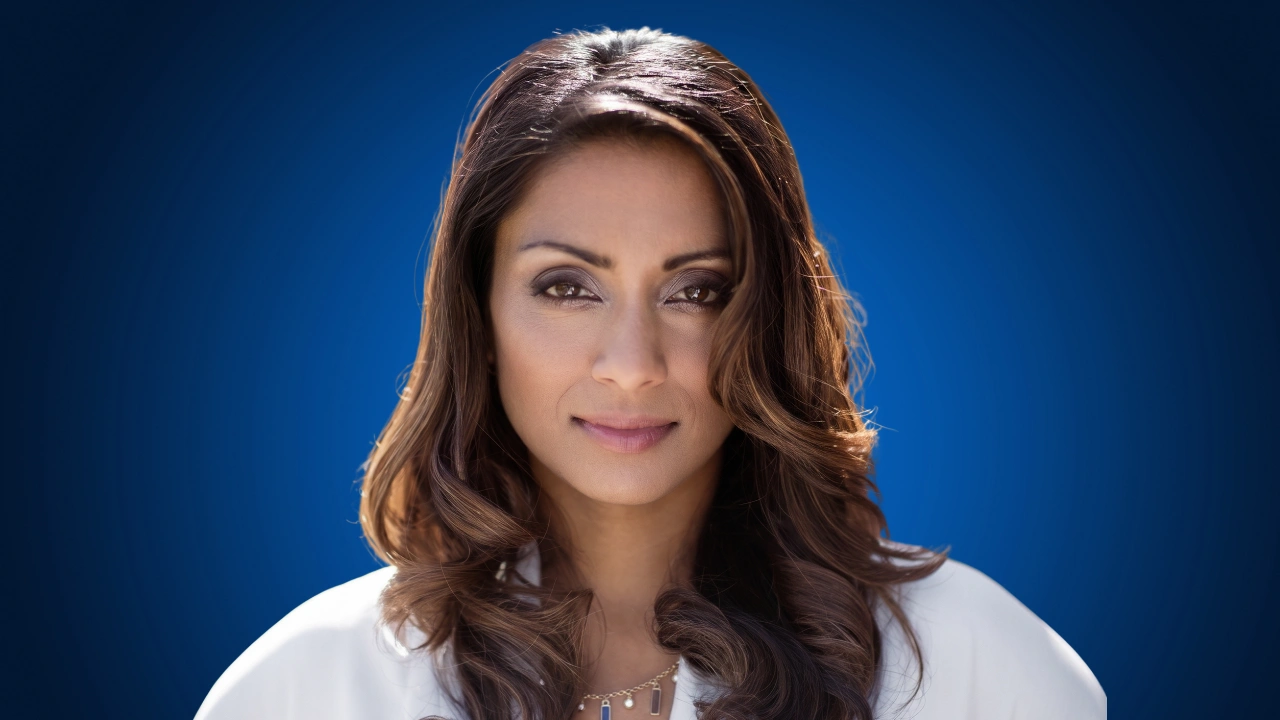

Broadcast Commentator
Isa Guha’s influence on cricket today extends across multiple areas. As one of the sport’s most respected broadcasters, she has become a leading voice not only in how the game is covered, but in who feels welcome to play, work, and lead within it. Having broken barriers as the first British Asian woman to represent England in any sport, Guha is now focused on ensuring those who follow encounter fewer obstacles than she did.
Her work today spans global broadcasting with the BBC, Fox Cricket, Sky Sports and major ICC events, while also presenting the BBC’s coverage of Wimbledon and other major sporting events, alongside Take Her Lead, the charity she launched in 2022 to advance equity, diversity, and participation for women and girls in cricket. Rather than focusing solely on elite pathways, the organization works to create environments where participants feel they genuinely belong. That mission was sharpened by Take Her Lead’s research involving more than 1,000 women and girls. As Guha explains, “The majority said they still didn’t feel like they belonged in the sport. That’s where I say there’s still more to be done.” That belief now drives everything from grassroots coaching and mentoring to research into barriers facing girls and initiatives supporting women in broadcasting and administration.
The growth of women’s cricket has given Guha a unique perspective. Having won both the 50-over and T20 World Cups with England in 2009, she has witnessed the sport’s transformation firsthand. She recalls arriving at Lord’s for the 2009 World Cup final expecting national attention, only to see advertising promoting a men’s Pakistan-Sri Lanka match instead. Today, she says, “Every match is covered in a really big way,” a reflection of how dramatically the women’s game has evolved through greater visibility, record attendances and equal ICC prize money.
Broadcasting has become another avenue for expanding opportunity. Guha entered television at a time when few women covered men’s cricket and freely admits, “When I first started doing it, I was awful… but I just kept saying yes to opportunities.” Through years of presenting, commentary, and learning across different formats and countries, she built one of the sport’s most accomplished broadcasting careers. Today, she uses that experience to identify and mentor aspiring female commentators through Take Her Lead, believing that stronger representation behind the microphone is just as important as representation on the field and emphasizing that diverse voices ultimately make every broadcast—and the game itself—better.
Messages
