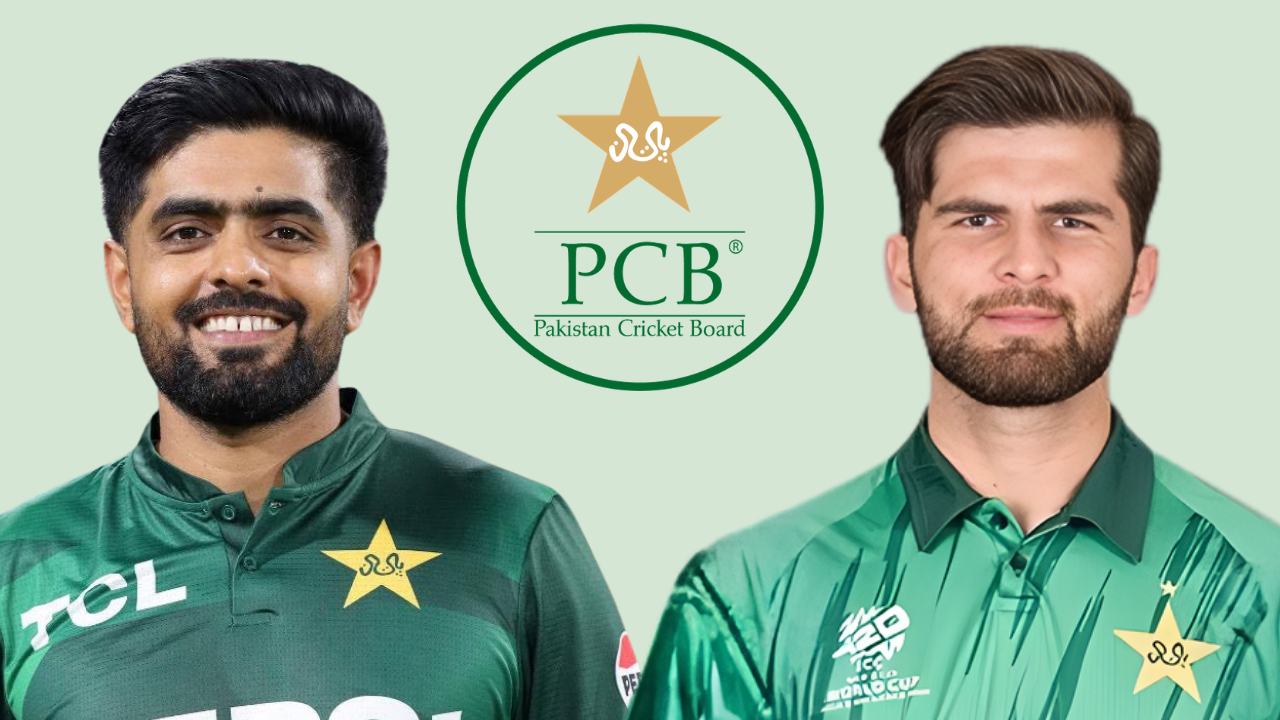
Pakistan’s biggest cricket names could face an unexpected setback ahead of the next central contracts cycle, with Babar Azam and Shaheen Shah Afridi among the players who may reportedly have their contracts put on hold over domestic cricket participation requirements. According to a report by Express Tribune’s Saleem Khaliq, the Pakistan Cricket Board is prepared to take a firmer stance on enforcing domestic cricket obligations as it reshapes its player contracting system.
The reported move would signal a significant shift in policy, with contract eligibility increasingly linked to participation within Pakistan’s domestic structure rather than solely international status or experience.
Babar and Shaheen among players under scrutiny
The issue centres on players who have not met the PCB’s domestic first-class cricket requirements.
Under the proposed enforcement model, players who have not fulfilled those obligations may be required to do so before receiving the full benefits of a central contract. Those unable to participate due to injury or other approved medical reasons would be assessed separately.
Babar and Shaheen are among the prominent names reported to currently fall short of the minimum first-class participation threshold, potentially placing their contracts at risk of being delayed until those conditions are satisfied.
The reported policy would also affect player payments, with contracts remaining inactive until the relevant requirements are met. Any outstanding payments would then reportedly be released once players become compliant with the regulations.
Contract overhaul raises the stakes
The stricter approach comes against the backdrop of wider changes to the PCB’s contracting system.
As previously reported by cricexec, the board is preparing to introduce a format-based structure that would replace the traditional categories previously used for central contracts. Under the proposed model, Test specialists would fall under Track A, players involved in both Tests and ODIs would be placed in Track AB, white-ball players would feature in Track BC, T20 specialists in Track C, and emerging players would be covered through Track D development contracts.
The financial implications are substantial. Players in the highest-paying Track AB category could reportedly earn more than PKR 50 million (approximately US$180K) annually through retainers alone, while Track A red-ball specialists could receive retainers worth up to PKR 4 million (approximately US$14K) per month.
That makes the prospect of delayed contracts particularly significant for Pakistan’s leading multi-format cricketers.
PCB seeks stronger support for Test cricket
The proposed reforms also reflect a broader effort to strengthen Pakistan’s red-ball system and create clearer incentives for players to remain engaged with domestic cricket.
Speaking at a media briefing alongside PCB Director High Performance Aaqib Javed and PCB Chairman Mohsin Naqvi, Pakistan White-Ball Head Coach Mike Hesson highlighted the challenges facing cricket boards around the world.
“Every single Test nation is struggling to come up with a method or document for Test cricket and the challenges around that.”
Hesson also endorsed the direction of the PCB’s proposed framework.
“How do you value it from a financial point of view where you allow players to focus on Test cricket? The PCB have come up with a framework that caters for everything. It’s an impressive document that gives true proof that they care about Test cricket. It also caters to the T20 player who could benefit from going around the world, learning their craft playing different tournaments and also be remunerated.”
Key decisions still to come
The PCB has yet to formally announce its central contracts for the upcoming season, and several details of the proposed framework remain subject to final approval.
However, the reported stance suggests that domestic cricket participation is set to become a far more important consideration than in previous years. If implemented, the policy could have immediate consequences for some of Pakistan’s biggest stars, including Babar Azam and Shaheen Shah Afridi, while reinforcing the PCB’s determination to strengthen the connection between domestic and international cricket.