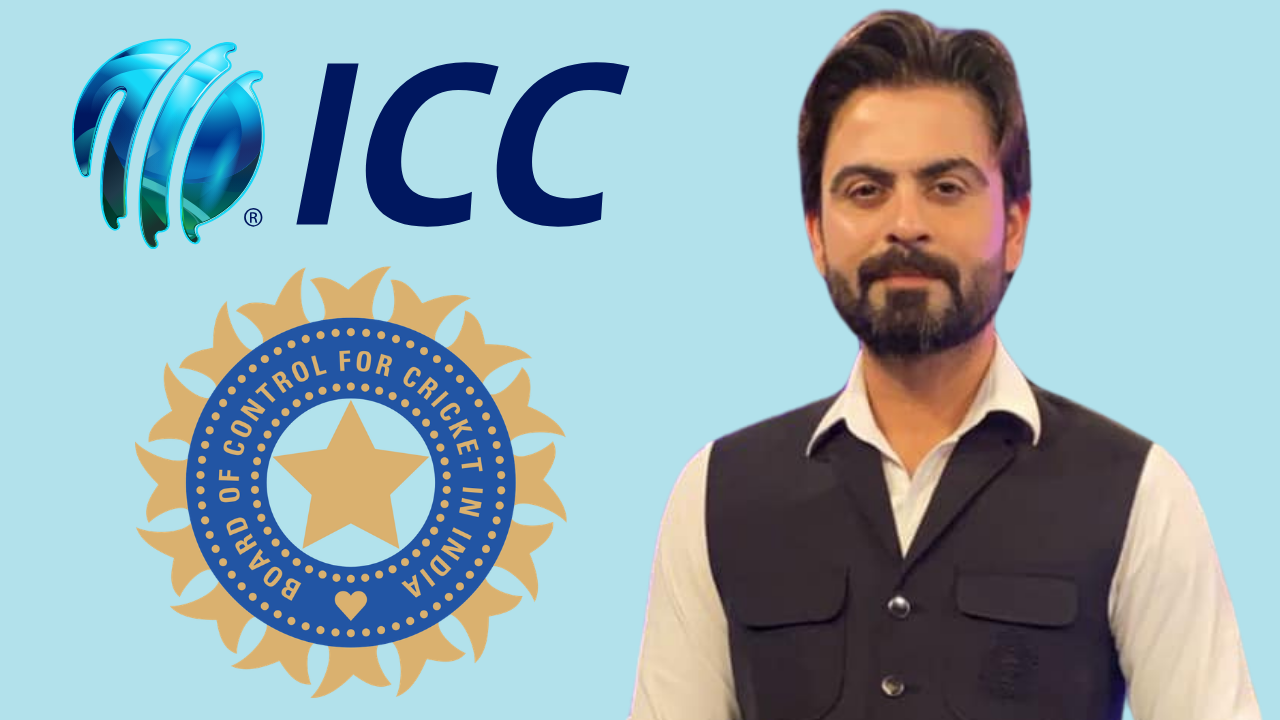
A fresh controversy has emerged around cricket’s anti-doping framework during the ongoing ICC Men’s T20 World Cup, after former Pakistan opener Ahmed Shehzad publicly questioned how testing is conducted for Indian players.
The comments surfaced during the latter stages of the ICC Men’s T20 World Cup, drawing attention amid heightened scrutiny around the tournament. In the semi-final that followed, India defeated England in a high-scoring contest, posting 253/7 before England finished on 246/7, falling seven runs short. India will now face New Zealand in the T20 World Cup final on Sunday.
Ahmed Shehzad raises doping allegation against BCCI
Speaking on the television show Haarna Mana Hai, Shehzad claimed that the Board of Control for Cricket in India does not allow the International Cricket Council to carry out doping tests on Indian players and instead relies on its own system.
“ICC does the dope tests [sic] for the entire world except India. Their own board does it for them. Sir, they don’t give it to the ICC; they say we have our own board, which would determine. The Indians have said that we don’t trust any technology outside, we have good technology, so we would do the dope test for our own players,” Shehzad said on the television show Haarna Mana Hai.
His comments quickly circulated across cricket discussions ahead of the second semi-final between India and England.
So far, neither the International Cricket Council nor the Board of Control for Cricket in India has issued a public response to the allegation.
How anti-doping testing works in international cricket
Cricket’s anti-doping structure is governed by regulations aligned with the World Anti-Doping Agency framework, which the ICC adopted to maintain integrity across international competitions.
Under the system, players can be selected for testing without prior notice during tournaments or outside competitive windows. Testing procedures typically involve collecting urine or blood samples from athletes, which are then examined at laboratories approved under international anti-doping standards.
Samples are usually divided into two parts, commonly referred to as “A” and “B” samples. If the first sample detects a banned substance, the player may face provisional suspension and can request the second sample to be analysed as part of the review process.
Violations confirmed through this procedure can lead to disciplinary sanctions, including suspensions from cricket.
India’s anti-doping oversight under national system
Within India, anti-doping oversight is managed through the National Anti-Doping Agency framework, which the BCCI joined in 2019. The system operates under the same global code used across international sport.
As a result, Indian cricketers are still subject to anti-doping regulations that align with the broader international standards applied to players worldwide.
Despite those structures, Shehzad’s remarks have added another off-field talking point to the tournament, which has already drawn significant attention due to high-profile knockout matches and the approaching final between India and New Zealand.