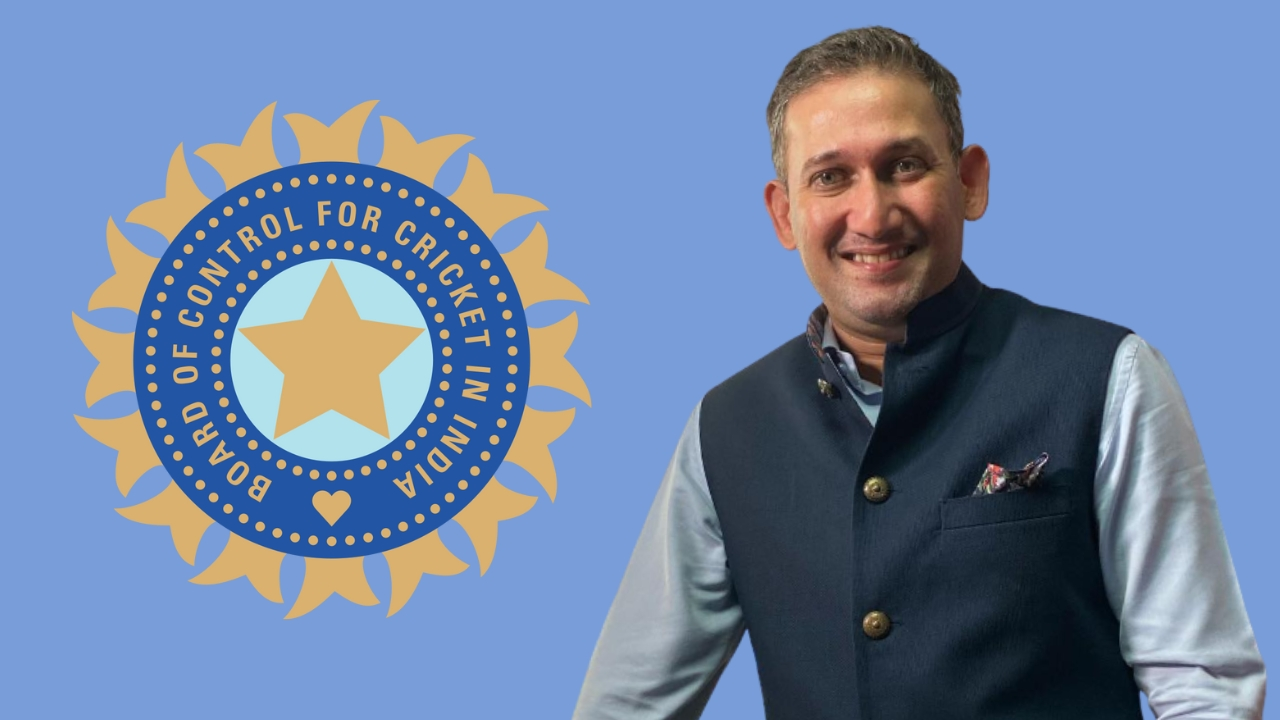
From commentary box to selection table: Agarkar’s evolving roles
As Indian cricket continues to evolve, so do the pressures behind the scenes — something Ajit Agarkar understands more than most. From cricketer to commentator to BCCI’s chief selector, Agarkar’s journey has taken him through the full arc of the game’s ecosystem. Speaking at the NDTV World Summit 2025, he offered rare insight into how each role has challenged him in different ways — but none more so than selection.
“I will probably go with the easier one first. Being a commentator, and I mean no disrespect, you still work hard, spend hours on the ground. As long as you get the right words out, your job as a commentator is done and you go home.”
If commentary offers clarity of input and output, Agarkar said playing the game brought the greatest reward, though it came with its own pressure.
“Playing gives you the most satisfaction. Every time you step on the field, you know your job is on the line, your place is on the line. One thing that goes for you as a player is that the ball or bat is in your hand. Very little margin between a win and a loss, that’s on the line. The one thing that goes for you, as a player, is at least the ball or the bat is in your hand. More often than not, if you play well or make a mistake, it dictates where you go as a player.”
Why selection is the toughest job of all
While playing gives a sense of control and commentary offers a degree of detachment, Agarkar explained that the selector’s role offers neither. Once a squad is picked, the outcomes are out of the committee’s hands.
“As a selector, once you pick a squad of 15, there is nothing else in your hand. It is challenging because of the depth of cricketers we have at the moment. Lot of the things are out of your hands. It is a demanding, hectic, high-pressure job. It is a big responsibility. Once you’ve been a player, you know that you’re shaping careers. A decision that you make can impact a player’s career, in a good or a bad way. You can’t please everyone. So, you try and do the best job you can as a selector.”
That last line — “you can’t please everyone” — captured the essence of Agarkar’s reality, especially in a cricket-obsessed nation where millions of fans, pundits, and former players scrutinize every decision.
Talent pool a blessing and a burden
India’s vast and growing talent pool is an enviable asset, but it has made Agarkar’s job even more complex. Selecting the best 15 from a pool of high-performing athletes is no longer straightforward — and the volume of criticism has scaled accordingly.
“Having so many players to pick from is a good problem to have. It improves the competition levels, and the performance levels stay high. The sport is so popular in India that there will be people who will be critical of your decisions. The fanbases have increased multiple times over the last few years.”
Agarkar admitted that no matter how informed a selection may be, fan-led narratives — often fueled by social media — are difficult to engage with or satisfy.
“I don’t. It is a no-win situation. We watch a lot of cricket through the course of the year.”
The Mohammed Shami fitness saga
That scrutiny recently intensified when senior pacer Mohammed Shami publicly suggested he had proven his fitness by turning out for Bengal in the Ranji Trophy — a perceived jab at the selectors for excluding him from India’s white-ball tour of Australia. Agarkar was measured but firm in his response.
“If he says that to me, I will probably answer that. I mean if he was here, I would probably do that. I am not quite sure what he said on social media. Maybe if I read that, I might give him a call but my phone is always on for most players. I have had multiple chats with him over the last few months, but I don’t want to try and give you a headline here.”
He emphasized Shami’s value to the team — while also laying out the reasons for his omission.
“He has been an incredible performer for India. If he said something, maybe that is a conversation for me to have with him or him to have with me. But even before England, we said if he was fit, he would have been on that plane. Unfortunately, he wasn’t. Our domestic season has just started so we will see if he is fit enough and we will see where it goes. This is the first round of Ranji games that is going on. We will find out in a couple of more games. If he is bowling well, why would you not want to have someone like a Shami.”
Selection decisions still revolve around fitness
Agarkar also pointed out that the decision on Shami was consistent with a pattern of medical assessments and availability issues — not form or reputation.
“But what we have found in the last six-eight months to a year, even during the Australia tour, we were desperate to have him on, but unfortunately his fitness wasn’t there. If he does stay fit over the next few months, the story might be different. But at this point, as far as I know, he wasn’t fit enough for that England tour.”
Shami’s case, like many others before it, illustrates how India’s selectors weigh fitness and readiness over legacy or social media campaigns — even when it involves star players.
A message to players and fans alike
Throughout his comments, Agarkar returned to a consistent theme: the responsibility of shaping careers is immense — and misunderstood. Whether it’s balancing competition, weighing fitness, or silencing online outrage, the selector’s chair offers little rest. But as he made clear, the job isn’t about popularity.
For players, it’s a reminder that performance and availability remain paramount. For fans, it’s a glimpse into the quiet calculations behind every headline.