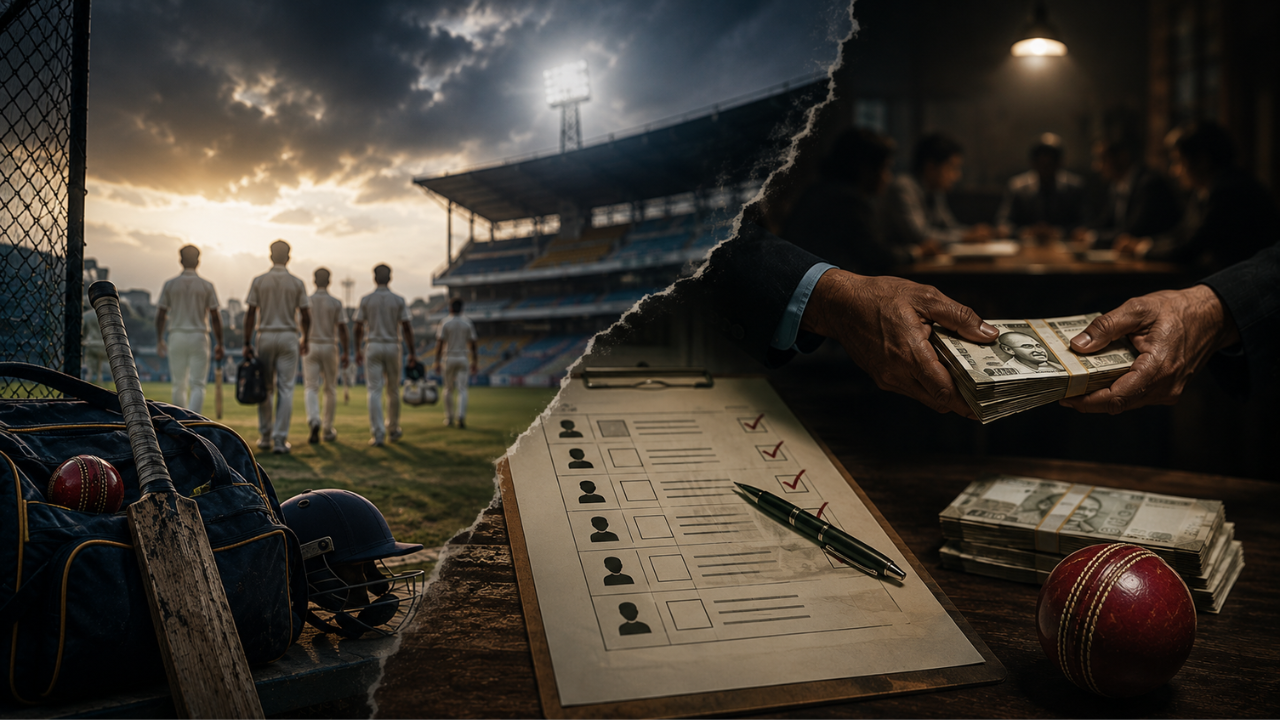
Questions are being raised about whether merit alone is enough to secure opportunities in parts of India’s domestic cricket system, as allegations of pay-to-play practices continue to surface across state-level competitions. According to a report by CricBlogger‘s Indranil Basu, players, coaches and administrators have raised concerns that financial influence is increasingly affecting access to opportunities that were traditionally expected to be earned through performance.
The allegations extend beyond player selection and touch multiple layers of the domestic game. Certain state cricket officials, administrators and individuals associated with the sport have allegedly played a role in facilitating arrangements that can influence opportunities in state-level competitions.
Concerns over access and opportunity
At the heart of the issue is the belief that aspiring cricketers from less privileged backgrounds face growing barriers as the cost of pursuing a professional career continues to rise. Some players are allegedly spending substantial sums in an effort to secure opportunities that would otherwise be expected to come through performance and development pathways.
Describing how the situation has evolved, a source told CricBlogger: “It has become an accepted norm now. Even cricketers from humble backgrounds are forced to exhaust their savings in pursuit of a cricketing career.”
The impact is said to be felt particularly by players and families who lack the financial resources or personal connections often associated with navigating highly competitive domestic environments.
Allegations around selections and state competitions
The claims cover multiple levels of domestic cricket. A place in some state T20 leagues can allegedly cost between ₹15 lakh (approx. US$15.8K) and ₹25 lakh (approx. US$26.3K), while Under-19 opportunities have reportedly been associated with payments of around ₹20 lakh (approx. US$21.1K).
Securing appearances in two to three Ranji Trophy matches for a leading North Zone side is also alleged to involve sums of approximately ₹60 lakh (approx. US$63.2K). Additional claims suggest that players may be expected to surrender a portion of their match fees as part of informal arrangements.
Addressing the effect such practices can have on selection systems, the source added: “Instead of being rewarded for talent and hard work, many feel they have to pay their way through the system.”
The allegations come at a time when domestic competitions are expected to serve as the primary pathway into professional and international cricket.
Influence and oversight under scrutiny
Questions have also been raised about the role of influence within parts of the domestic structure. Allegations extend to the appointment of coaching and support staff, while some franchise owners in state T20 leagues reportedly face restrictions over key cricketing decisions despite investing in teams.
Other claims include allegations that valuable gifts, property arrangements and other benefits have been used to secure cricketing opportunities. Allegations involving a Ranji Trophy coach and a property-related arrangement connected to player backing in another state’s setup have also been raised.
Discussing the role of influential figures within the system, the source noted: “There are individuals who know exactly how the system works and how to use it to their advantage.”
Concerns have also been raised about oversight mechanisms and the ability of existing structures to identify and address alleged wrongdoing.
The wider impact on domestic cricket
The significance of the allegations extends beyond individual selections. State cricket competitions are widely viewed as a critical part of the talent pipeline, making confidence in those systems essential for player development and long-term trust in the domestic game.
Reflecting on the consequences for aspiring cricketers, the source claimed: “Meanwhile, talented cricketers from less privileged backgrounds continue to struggle because there is no effective mechanism in place to prevent these alleged malpractices.”
The allegations remain unverified claims, but they add to broader discussions around transparency, accountability and governance within domestic cricket structures. As state competitions continue to shape future generations of players, questions around integrity and equal access are likely to remain a significant talking point.