Bangladesh’s National Sports Council has formally dismantled the existing Bangladesh Cricket Board structure, triggering a full administrative reset and installing a new interim leadership to steer the sport forward.
NSC moves to dissolve BCB and initiate transition
The decision to dissolve the Aminul Islam Bulbul-led board follows the findings of an investigation into last year’s election process, with NSC Sports Director Aminul Ehsan outlining the basis of the move while addressing reporters at a press conference.
“The NSC reviewed the report of the investigation committee, following which it has come to the conclusion that there were significant weaknesses and irregularities in the election process for the formation of the current BCB board of directors,” he said.
The action effectively ends a period marked by governance instability, including multiple resignations within the board and mounting scrutiny over its legitimacy.
11-member committee to oversee cricket and elections
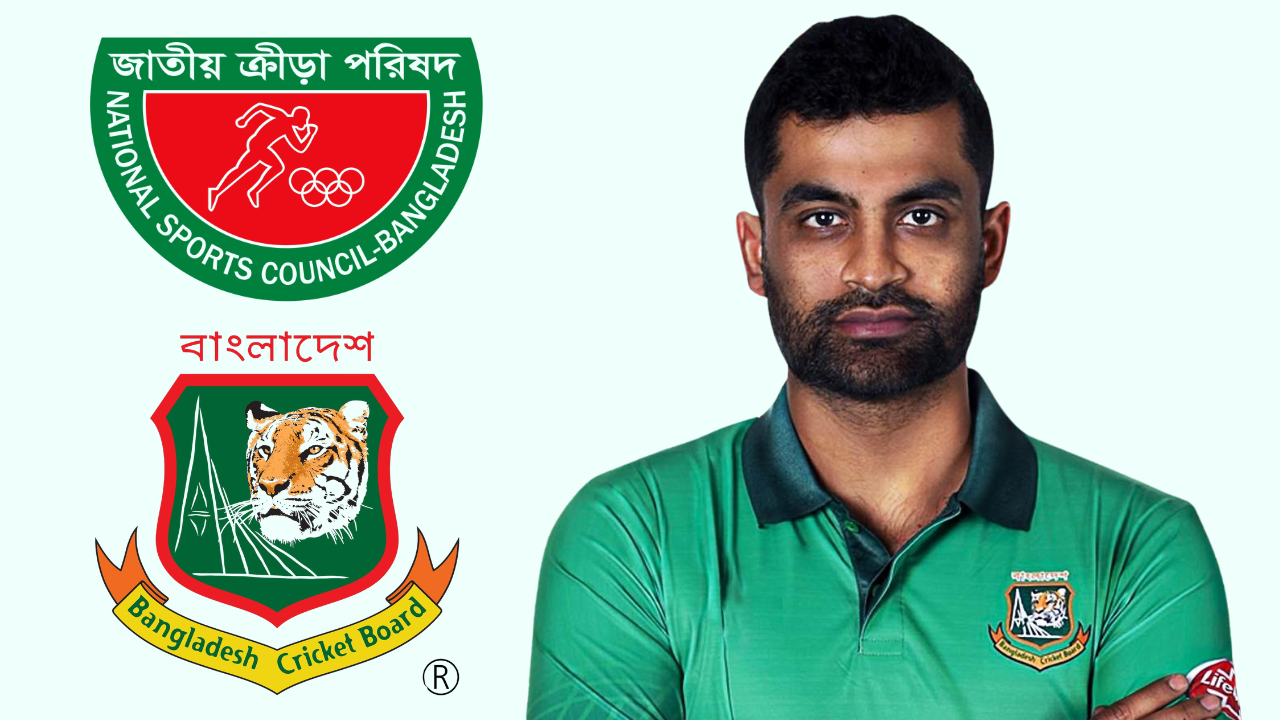
In place of the dissolved board, an 11-member ad hoc committee has been appointed, with former Bangladesh Captain Tamim Iqbal named as President. The group will manage cricket operations while preparing for a fresh election cycle within a three-month window.
“In that context, the NSC has already emailed the ICC about the decision to dissolve this committee. At the same time, the formation of an 11-member ad hoc committee has also been announced. The ad hoc committee will be obliged to present an elected committee within the next three months. At the same time, it will be empowered like an elected committee to manage the normal activities of cricket for the same period,” Ehsan added.
The committee comprises a mix of administrators and former cricketers, including Rashna Imam, Mirza Yasir Abbas, Sayeed Ibrahim Ahmed, Israfil Khosru, Minhajul Abedin Nannu, Athar Ali Khan, Tanjil Chowdhury, Salman Ispahani, Rafiqul Islam Babu and Fahim Sinha.
At 37, Tamim becomes the youngest President in BCB history, marking a rapid transition from playing career to governance. Across 391 international appearances for Bangladesh, he built a legacy as one of the country’s most accomplished batters before retiring in early 2025.
Probe uncovers widespread election irregularities
At the core of the decision lies a detailed investigation into the October 2025 board elections, which identified systemic issues affecting transparency and fairness.
The findings pointed to repeated deadline extensions during the nomination process that enabled changes to councillor lists, along with allegations of pressure on regional associations to nominate specific individuals.
Concerns were also raised over the use of ad hoc committees whose mandates had expired, inconsistencies in voter lists, and the late inclusion of candidates—factors that collectively undermined confidence in the process.
The probe further highlighted issues with e-voting practices, including lack of secrecy, centralised voting activity, and coordinated influence over outcomes. Instances of direct intervention by officials and structural weaknesses in election rules were also flagged, leading to recommendations for governance reform and stricter electoral safeguards.
ICC informed as governance scrutiny extends globally
The NSC has already communicated both the findings and its administrative response to the International Cricket Council, seeking alignment on the transition process.
“We think that the ICC will definitely uphold this decision,” Ehsan noted, reflecting confidence that the global governing body will support the restructuring.
The move comes at a sensitive time for Bangladesh cricket, with international commitments—including an upcoming home series against New Zealand—requiring operational continuity alongside governance reform.
Tamim sets immediate priorities as president
Having assumed office shortly after the announcement, Tamim outlined a clear focus on restoring trust and stabilising the board’s reputation following a turbulent period.
“Look, today we have been given responsibility. What I believe first and foremost is that whenever anyone receives such a responsibility, people usually talk about development or various other matters. Personally, and my team also feels this collectively, we all feel together that our first task must be to restore the reputation of Bangladesh cricket. Over the last one and a half years, Bangladesh cricket’s reputation has been damaged, and restoring it is our most important priority,” Tamim Iqbal said while speaking to media after the board meeting.
That approach places credibility and governance reform ahead of immediate competitive concerns, signalling a reset in administrative priorities.
Election timeline and operational continuity
Alongside reputational repair, the new leadership is tasked with delivering a credible election within a compressed timeline while ensuring day-to-day cricketing operations remain unaffected.
“We have been entrusted with the responsibility of helping conduct a free and fair election within three months. We will carry out this responsibility as honestly and as quickly as possible. At the same time, we will ensure that day-to-day activities, including World Cup issues, are properly managed, and that we take the correct actions where needed,” Tamim added.
He also indicated that the upcoming election would be open and inclusive, with participation encouraged across stakeholders in Bangladesh cricket.
“You would have to ask me personally. I may choose to participate, or someone else may. Or they may not. When a free and fair election is held, I will request everyone interested to participate. It will be a board election, including current board members, players, organisers – everyone should participate. We aim to create an atmosphere where everyone can take part in the election,” he said.
A defining reset moment for Bangladesh cricket
The dissolution of the BCB board and the installation of an interim leadership structure represent one of the most significant governance interventions in Bangladesh cricket in recent years.
With a fixed timeline for elections, external oversight, and a mandate for reform, the coming months will determine whether this transition delivers long-term structural stability—or simply marks another turning point in an ongoing governance cycle.