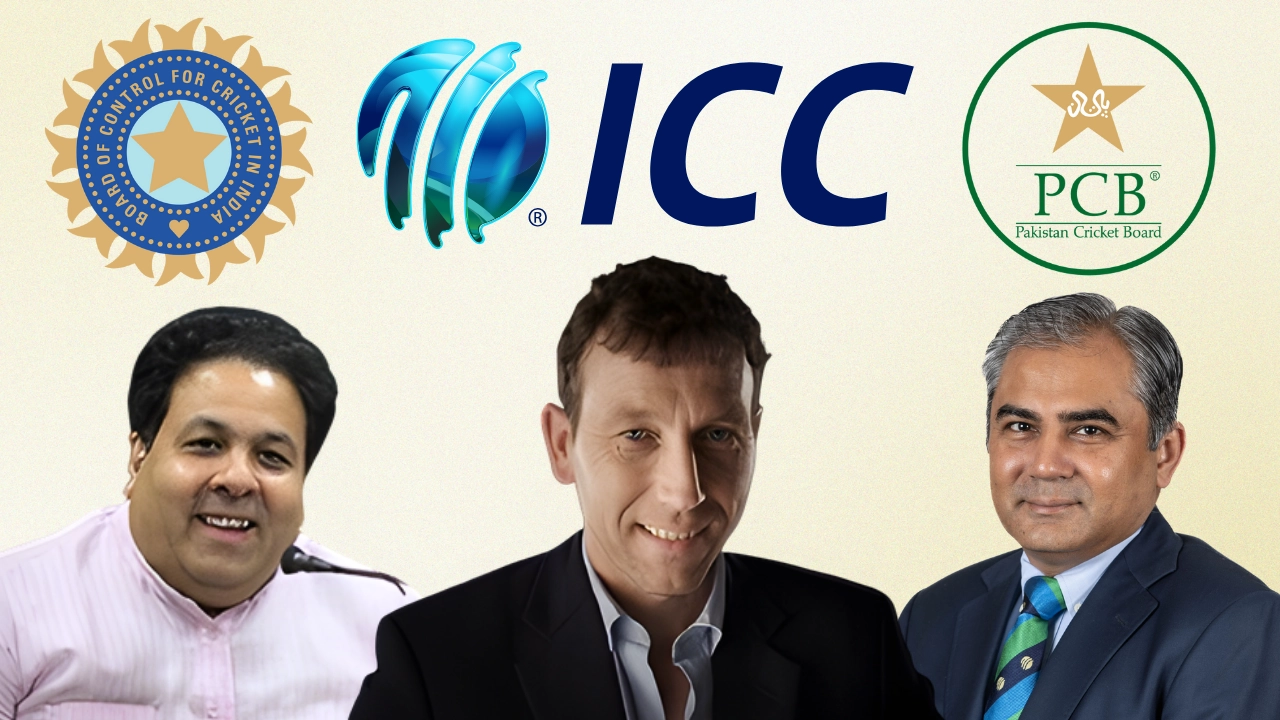
The debate over India and Pakistan’s frequent on-field clashes reignited following the Asia Cup 2025, a tournament marked by tension both on and off the pitch. Former England captain Michael Atherton had urged the ICC to scale back fixtures between the two nations, saying the rivalry had become more political than sporting. But a senior BCCI official dismissed the feasibility of such a move, pointing to the commercial and logistical complexities behind cricket’s most-watched matchup.
BCCI pushes back against calls to reduce fixtures
Responding to Atherton’s comments, the BCCI official told Dainik Jagran:
“It’s easy to talk about all this, but will sponsors and broadcasters agree to it? In today’s situation, if any major team, not just India, withdraws from a tournament, it will be difficult to attract sponsors.”
The official emphasized that India-Pakistan matches remain a key driver of viewership and revenue across global cricket events. Such fixtures routinely dominate television ratings and digital traffic, underpinning the financial ecosystem of international tournaments. Any decision to curtail them, the official suggested, would have to factor in the interests of sponsors, broadcasters, and tournament organizers.
A rivalry that extends beyond the boundary
The Asia Cup 2025 deepened the tension surrounding the rivalry. India and Pakistan met three times during the competition, with India winning each encounter. The matches came soon after the Pahalgam terror attack and Operation Sindoor, heightening political undertones around the tournament.
During the group stage match on September 14, Suryakumar Yadav’s Indian team refused to shake hands with their Pakistani counterparts. The Super 4s clash a week later saw further friction, as several Pakistan players made provocative gestures toward Indian players and fans.
Trophy dispute prolongs Asia Cup fallout
Controversy continued even after the final, as India declined to accept the trophy from Mohsin Naqvi, the Pakistan Cricket Board and Asian Cricket Council chairman. The Asia Cup trophy remains at the ACC headquarters in Dubai. Naqvi has reportedly insisted that Indian captain Suryakumar Yadav must personally travel to Dubai to collect it.
The standoff spilled into a recent ACC meeting, where Naqvi and BCCI representatives Rajeev Shukla and Ashish Shelar exchanged sharp words. Despite repeated requests, Naqvi—who also serves as Pakistan’s Interior Minister—offered no clarity on when the trophy would be handed over.
Commercial realities outweigh politics
The BCCI’s reaction underscores how financial imperatives continue to shape global cricket scheduling. While political friction between India and Pakistan remains a major hurdle, sponsors and broadcasters wield decisive influence over international fixtures.
For now, the prospect of reducing India-Pakistan matches appears unlikely. As the BCCI official’s remarks suggest, commercial interests—not sentiment—are what ultimately keep cricket’s fiercest rivalry alive.