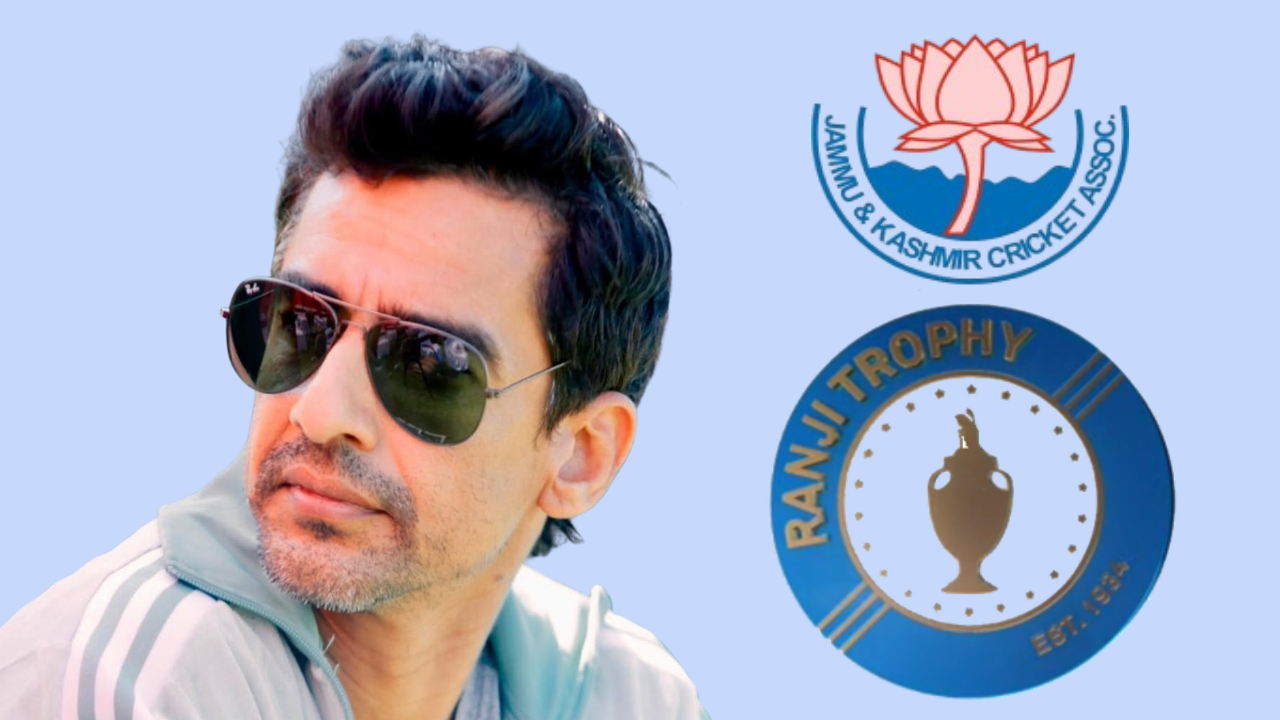
Jammu and Kashmir’s run to their first-ever Ranji Trophy final is not just a breakthrough season — it is the payoff from a governance reset that began in turmoil and evolved into one of Indian domestic cricket’s most compelling rebuilds.
When Mithun Manhas stepped in as one of the administrators of the Jammu and Kashmir Cricket Association (JKCA) in 2021, the brief was not about titles. It was about restoring credibility, transparency and competitive structure to a body under scrutiny.
Four years later, as J&K defeated the Bengal cricket team in the Ranji Trophy semifinal to book a place in the final, the scale of that turnaround became clear.
Said Manhas: “I was watching the match on TV and beating a side like Bengal that had players like Mohammed Shami and Akash Deep is a huge achievement. The cricketer in me is emotional as I ended my first-class career and also worked with the state unit there.”
For Manhas — now President of the Board of Control for Cricket in India — the moment was layered with personal and professional significance.
A free hand — and a tough starting point
The assignment in 2021 was anything but straightforward. JKCA was navigating allegations of mismanagement, and confidence in the system needed rebuilding from the ground up.
“It wasn’t very easy at that time when I took over as the administrator. The then BCCI secretary Jay Shah gave me a free hand and told me that do whatever is needed to get Jammu and Kashmir cricket back on track,” Manhas told PTI in an exclusive interaction after J&K’s six-wicket win over two-time former champions Bengal in the Ranji semifinal in Kalyani.
Rather than rushing to cosmetic fixes, the focus shifted to governance, accountability and talent identification — creating an ecosystem that could sustain performance.
Talent identification as the first pillar
One of the earliest interventions was a structured talent hunt, aimed at broadening the player base and formalising scouting mechanisms.
“I would give a lot of credit to Brigadier Anil Gupta, who has done a commendable job. When I took over, we conducted talent hunt competition,” he said, referring to his colleague on the BCCI panel mandated to restore order within J&K cricket.
The impact of that process is already visible in the current squad.
“You see left-arm seamer Sunil Kumar, who played a big role, is a product of that talent hunt. Having played nearly two decades in Delhi, I had an idea what is required to succeed at this level. We had a Cricket Committee that did a fine job, with honesty and transparency,” said Manhas.
The underlying theme: talent existed — structure was missing.
Engineering competitive conditions in Srinagar and Jammu
While infrastructure gaps remain, J&K’s administrators targeted what they could control — playing conditions and preparation.
“Both the Harbux Stadium in Srinagar and the College ground in Jammu have 10 centre strips each with both red and black soil pitches. We are the only north Indian state with both black and red soil strips,” Manhas said.
That strategic pitch diversity was designed to simulate varied domestic conditions. Preparation extended beyond home surfaces as well.
“When we played against Mumbai last year and beat them, the team had travelled and practised in Mumbai at least a week before the game,” he recalled.
The message internally was clear: preparation had to mirror ambition.
A governance blueprint for emerging regions?
Jammu and Kashmir’s Ranji Trophy campaign is not an overnight fairy tale. It reflects a four-year recalibration: administrative transparency, structured talent scouting, surface strategy, and targeted recruitment of domestic expertise.
For stakeholders across Indian cricket, the takeaway is clear — competitive gains at state level often begin in boardrooms before they appear on scorecards.
And as J&K prepare for the biggest red-ball match in their history, their journey underscores a broader industry truth: reform, when executed with clarity and patience, can shift the competitive map.