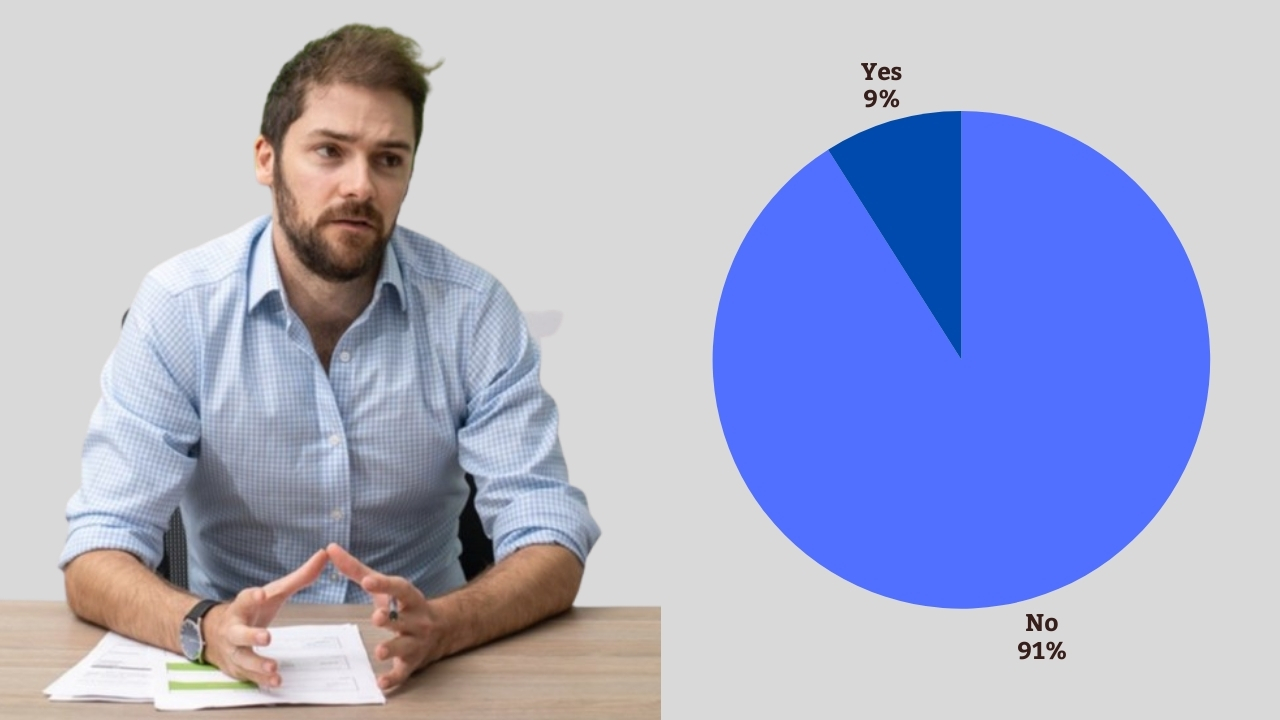
The numbers are stark—and the message, unmistakable.
In a Cricexec poll of top global cricket executives, an overwhelming 91% said it is unacceptable that nearly one in three professional cricketers has experienced non-payment or late payment in ICC or board-sanctioned events.
The poll, based on cricexec’s landmark article Sanctioned but Still Unpaid: the Epidemic of Player Non-Payment in Global Cricket by World Cricketers’ Association (WCA) CEO Tom Moffat, puts the spotlight squarely on cricket’s deepening financial and governance crisis.
“Late and non-payment is a persistent issue in domestic leagues globally, and the issue is not getting better,” Moffat warned.
A global problem, not just a few bad actors
This is not just about fringe leagues or rogue operators.
According to the WCA, non-payment issues have been reported in Bangladesh, Pakistan, Uganda, Sri Lanka, Afghanistan, Nepal, Papua New Guinea, India—and most recently, Oman.
The Oman case has become a symbol of the problem. Despite the ICC announcing its $225,000 prize pool for Oman’s 2024 T20 World Cup campaign, the players still had not been paid a year later.
Sanctioned leagues, unsanctioned practices
The problem is perhaps most glaring in high-profile sanctioned leagues.
The Bangladesh Premier League (BPL) has been one of the worst offenders. cricexec’s prior poll on the BPL found that 91% of global executives believe the ICC should revoke its sanctioned status over repeated payment breaches.
Despite public assurances, players continue to go unpaid, with franchises and board officials blaming each other, while athletes and agents are left holding worthless contracts.
“In any league that is officially sanctioned, players should have confidence that their contracts have some basic protections,” said Moffat. “These include standards around payment terms, and that there is a fit-for-purpose enforcement mechanism.”
Andrew Breetzke, CEO of the South African Cricketers’ Association (SACA), put it bluntly:
“There are two issues that ultimately will undermine—even destroy—any domestic league: corruption, and non-payment of players. If those two elements are not sorted, then your league ultimately will fail.”
The ICC’s growing challenge
Much of the frustration is now directed at the ICC itself.
Even though ICC rules require prize money to be distributed within 21 days of events like the T20 World Cup, there is no meaningful mechanism to enforce compliance.
Moffat has called for reforms like:
- Withholding ICC distributions from non-compliant boards
- Standard dispute resolution clauses across contracts
- Escrow accounts to securely hold player payments
Yet, as insiders admit, these proposals remain “under review” inside the ICC’s member-driven governance system.
“I don’t believe you can rely on ICC sanction because the way that sort of sanction filters down, it’s quite evident that that isn’t working,” said Breetzke.
Learning from other sports—and from each other
The WCA has worked with figures like James Kitching, former head of regulatory at FIFA, to draft solutions drawn from more advanced sporting models.
“We can learn from other sports where they are clearly more advanced and sophisticated than cricket is,” said Moffat.
An existential test for cricket’s leaders
At heart, the poll results reflect an industry crisis of confidence.
Cricket has boasted record-breaking revenues: the IPL’s $6.2 billion media rights, ICC events sold to Disney Star (now Jio Star) for $3 billion, and global ambitions stretching to the Olympics and U.S. expansion.
And yet, nearly a third of its workforce reports they have experienced not getting paid on time—or at all.
As Moffat put it:
“Professional cricket is a short-term and precarious career path for most players. These issues reflect poorly on how cricket, which continues to position itself as the second-biggest sport in the world, treats one of its most important stakeholders.”
Will 91% support lead to action?
With 91% of top global executives agreeing it’s time for change, the question now shifts to the ICC, boards, and leagues.
Will they move beyond platitudes and deliver real, enforceable protections? Or will cricket’s unpaid players remain the silent casualties of its commercial boom?
For the sake of the sport—and the people who make it great—the answer needs to become clear soon.