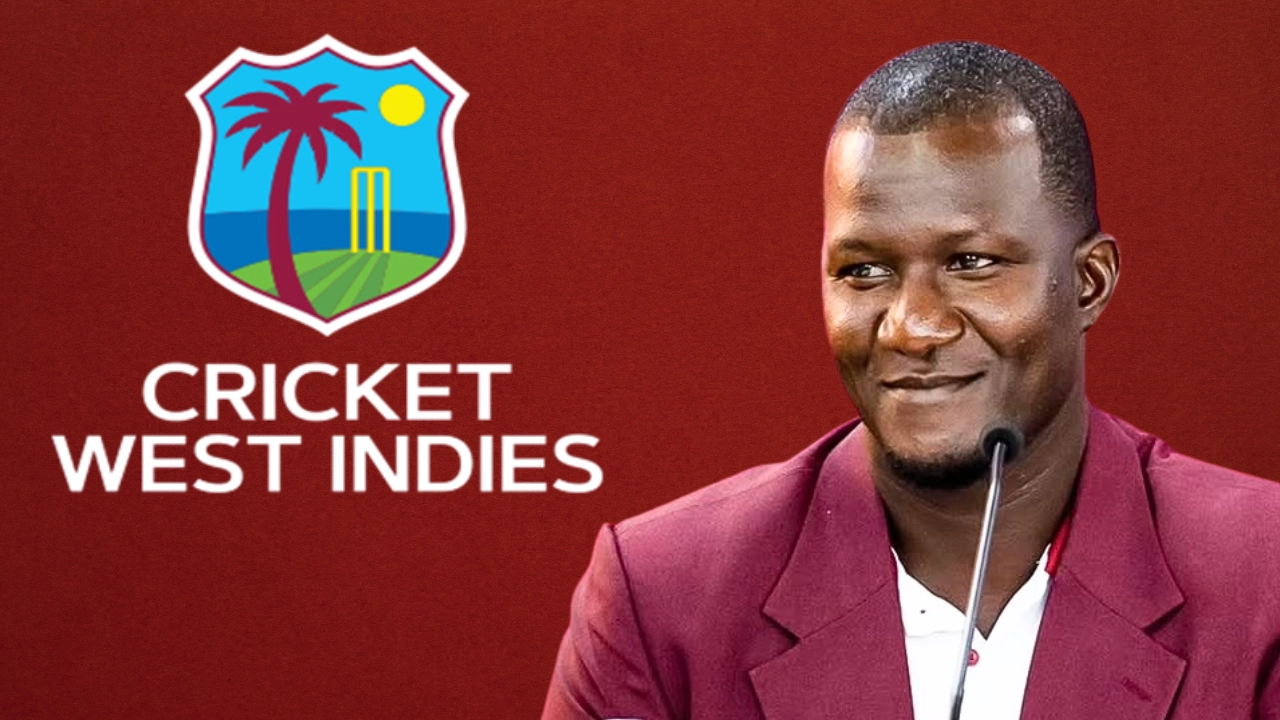
West Indies head coach Darren Sammy has issued a scathing but heartfelt diagnosis of the decline of Test cricket in the Caribbean, offering a powerful commentary on systemic failures, historical injustice, and the urgent need for cultural and structural reform.
Speaking at a press conference ahead of the second Test match against India, Sammy acknowledged the intensity of scrutiny but stressed that the crisis facing West Indies cricket has roots stretching back decades.
A historical decline that runs deep
West Indies’ struggles in Test cricket are not the result of recent failings alone, Sammy explained, but stem from systemic issues that have plagued the team for decades.
“I mean, the last time we won a series here in India, I was just born. My mom had just had me, in 1983. So the troubles that we have didn’t start now. In 1983, some great players were playing. So I know now I’m under the microscope, I’m in the middle, and we’re open to being criticised by everybody. But the root of the problem didn’t start two years ago. Something way back.”
Sammy’s comments come at a time when the West Indies’ red-ball legacy stands in stark contrast to its present. Despite producing some of the most iconic figures in cricket history, the team’s prolonged decline has raised questions not only about performance but also about leadership, infrastructure, and long-term vision.
Sammy described the situation using a deeply resonant metaphor. “It’s like a cancer that’s already in the system. And you know, if you don’t beat cancer, you know what happens. And again, I think it’s Breast Cancer [Awareness] Month, so it’s a good way to put it, that our problems don’t lie on the surface. It’s rooted deep into our system. And that is something we will continue to change. The immediate thing is, try and encourage the guys, train better, better mindset and all these things. And hopefully steps could be taken in the right direction.”
A financial imbalance rooted in legacy
The coach lamented how West Indies cricket, despite its pioneering dominance during the 1970s to 1990s, failed to capitalise on the commercial evolution of the game.
“Look, [it’s] the history we bring, or the history we have, and the legacy we have left on this game in all formats.”
“Obviously the way we play now, everybody will lean towards that. But if we take that aside, and understand the impact that the West Indies team have had in international cricket, I think all what we ask for, we deserve.”
Sammy’s argument was not just about pride in past glories, but a call for overdue recognition — not in sentiment, but in structural support. He drew a direct line between the current struggles and the lack of reinvestment during the team’s heyday, when West Indies were touring giants but received little in return.
“You know you speak to so many other teams. The inspiration that Vivian Richards’ team had, or the impact it had, even here in India, the impact these guys had on the next generation, West Indies contributed to that. I remember watching [West Indies playing] five Test-match series [around the world]. It’s like India now. Everybody wants India to tour, because that’s where the financial gains are. India brings that to the home territory. That was West Indies in the past.”
“But we did not reap those financial rewards. We were playing five Test matches, three-four months in one place, entertaining the world, where other parts benefited. So for now, when we, over the years, whether it be through lack of management, whatever it is, we are in need of those financial resources to help us grow and move forward, I think we deserve that. Because of the impact we’ve had.”
This historical imbalance, Sammy suggested, has left the current generation of players grappling with the consequences — reduced funding, fewer opportunities, and a system struggling to compete with better-resourced cricketing nations. The call for fairness, then, is not just about nostalgia, but about building a future that honours the legacy laid decades ago.
Working with limited resources
Sammy was candid about the constraints facing the current setup.
Beyond historical context, Sammy acknowledged the very real limitations the West Indies team faces today. With shrinking budgets, outdated infrastructure, and a constant drain of talent to global leagues, the coach stressed that rebuilding requires more than just tactical fixes — it demands systemic support.
“We could only work with what we have and who’s willing. The inability to match some of the franchises across the world has been an issue. But what I always tell these guys, if we complain about not having the best facilities, not having enough manpower like the other teams, not having the best technology, all these things which the other teams are superior to us, it’s no secret.”
“The difference in the different teams, the top 3-4 teams in the world versus the bottom four. We’ve been struggling for finance for a long time. That’s one of the reasons why Brian (Lara), Shiv (Chanderpaul) they’re going to have this event this afternoon. Trying to see if we can get sponsors to help in some of the areas that we need improvement.”
The hope, Sammy implied, lies in rallying both internal and external stakeholders — from legends like Lara and Chanderpaul to potential sponsors — who can help address these chronic gaps. But until then, the team must find ways to stay competitive despite the disparity.
Changing player motivation and mindset
The West Indies coach drew attention to a shift in how players now react to international selection — a change that signals deeper issues with the appeal of Test cricket in today’s landscape. For Sammy, this disinterest is not just a symptom of financial disparity but a reflection of the game’s diminished emotional pull.
“For me as a coach, when I call a player and I tell him that he has been selected for West Indies, and I’m hoping that he accepts the selection, that tells us where our cricket is.”
Contrasting this with his own excitement two decades ago, Sammy painted a personal picture of how far things have drifted.
“As a kid, I remember in 2004, me being at Lord’s, MCC Young Cricketers, and getting a call. Once I saw the area code 1268, I knew it was from Antigua, I was hoping it was a call from the West Indies Cricket Board, and how excited I was.”
He acknowledged that while the times have changed, the core problem of financial disparity continues to shape career choices for young cricketers.
“Times have changed. We [can] only work with what we have, and who’s willing. And the inability to match some of the franchises across the world [financially], it has been an issue.”
A call to outwork the opposition
Sammy believes that while financial limitations are real, they cannot excuse a lack of effort. He challenged his players to take ownership, pointing out that work ethic and preparation are within their control — regardless of resources.
“But what I always tell these guys [is], if we complain about not having the best facilities, not having enough manpower like the other teams, not having the best technology, all these things which the other teams are superior to us [in], then why the hell are they still outworking us? The only way we could match up [and] compete at a consistent level is if we as the coaches and the players are prepared to outwork the opposition, and we’re not doing that.”
“So that’s where I’ve actually challenged them. When you practise, when you train, when you strategise, to be more precise, more purposeful. And I must say, again today, I’ve seen them starting to understand what we’re trying to do.”
His words underline a simple but crucial belief: effort and mindset must become non-negotiables in the team’s pursuit
Rebuilding from a difficult starting point
When Darren Sammy took over as West Indies Test coach in April, he inherited not just a team in transition, but a daunting schedule that left little room for experimentation or gradual rebuilding. With back-to-back series against Australia at home, India away, and New Zealand on the horizon, he knew the journey would be steep.
“When I took on this Test job, I wanted to change the way we played, the results that we have. What we did was look at, especially from the batsmen, look at our most consistent batters in international cricket, whether it be T20, whether it be ODIs, whether it be Test matches, and put it together and see how best we could get a batting group. And that’s what we’ve done. It’s been, I think this will be the fifth Test match with that regime, and it’s not worked.”
Despite early setbacks, Sammy never underestimated the challenge.
“Mind you, when I look at the job I had, I saw Australia in the Caribbean, India in India, and New Zealand in New Zealand. I knew it was going to be very difficult. It will be probably the three most challenging series that we’ll have, whether it be home or away.”
He emphasized that rebuilding isn’t just about changing line-ups but aligning vision — with the director of cricket, with the players, and with the long-term goals of the team.
“And I understand what we try to build. The director of cricket, the vision that we have, and also the players that we want to play. So I take all that into consideration. But what we cannot have, like I said is, against all the odds, the opposition is still outworking us. And that’s the biggest issue for me.”
Sammy underlined that while talent is crucial, it’s the work ethic and hunger to improve that truly separates the great teams from the rest.
“You don’t need talent to work hard. You don’t need talent to be motivated. It’s not a skill. The skill you need is to go and play. But the mindset. That’s what it takes. And I’m trying to continue to instil that in the guys.”
His belief in trusting the process remains intact, even if results are slow to come.
“Hopefully the guys who’ve gotten the opportunities [will start performing]. If it doesn’t work, obviously I’ve got to go back and see what’s there in the Caribbean. But again for me, dealing with all of that is just trusting the process. And don’t look at the result before the process has been executed.”
The T20 generation and lost Test heroes
Sammy also reflected on how changing times have altered young players’ role models.
“Growing up, we had heroes. [Brian] Lara, Sir Viv, [Curtly] Ambrose, [Courtney] Walsh, [Richie] Richardson. We had so many different heroes. Ian Bishop. So many, that me watching cricket with my father, I would say, ‘Oh, I want to be like this guy.'”
“There’s a challenge here now. I always challenge the guys [in the team], which kid in the Caribbean is watching you, and you are inspiring? If you notice, we’ve been, over the last decade, the format where the heroes come from has been the T20 format. And that’s why you see some of the direction in which the younger players are heading. That’s where the heroes are. That’s where they see people they want to be like from the Caribbean.”
“So it’s hard, but we will not stop trying, because winning builds and shows that it could be done, and we’ve not been able to do that for a long time.”
Sammy’s words reflect both the frustration and determination of a cricketing nation striving to reclaim its former glory. As the West Indies prepare to face India once again, the challenge is not just to win a Test, but to rebuild belief — in the team, in the system, and in the future of Caribbean cricket.