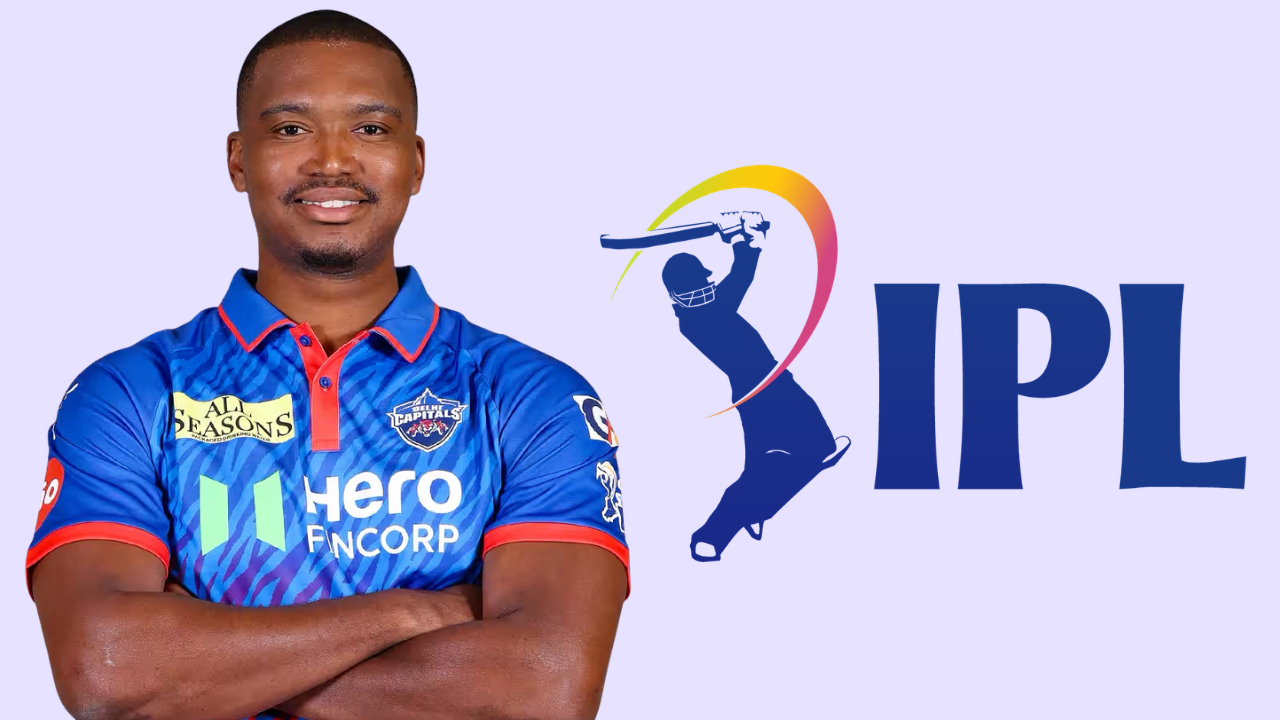
A potentially serious on-field injury to Lungi Ngidi during an IPL match in Delhi triggered a swift emergency response that saw the fast bowler transported to hospital in just 11 minutes, following the creation of a green corridor under the supervision of Delhi Police. The incident unfolded during the Delhi Capitals’ clash against Punjab Kings at the Arun Jaitley Stadium, where Ngidi fell heavily on his neck while attempting a catch, remaining motionless as medical teams rushed in and prepared him for immediate evacuation.
With peak evening traffic building across central Delhi, the situation required rapid coordination, with ACP Traffic Officer Sanjay Singh stepping in to manage the ambulance movement and ensure a clear route to BLK Max Hospital in Rajendra Nagar, significantly reducing a journey that typically takes up to 30 minutes.
Speaking about how he first became aware of the incident, “I’m ACP Traffic of Centre District, and the Arun Jaitley Stadium comes under this jurisdiction. Whenever IPL matches take place, the overall jurisdiction lies with the DCP, and I also control a few things. I was outside the stadium, someone was watching the match on mobile, and then I was informed that someone had faced an injury inside the stadium and an ambulance had entered the field,” Singh told Hindustan Times.
Immediate response and on-ground urgency
By the time Singh reached the stadium gates, the seriousness of the situation had become evident, with the player already placed inside the ambulance and preparations underway for urgent medical transport.
He said, “I thought if the ambulance entered the field, then the player had to be taken to the hospital. We had to give the route to the traffic guys. I went there, and the ambulance was near Gate No.2. The Delhi Capitals officials were also there. Lungi Ngidi was inside the ambulance, wearing an oxygen mask. He wasn’t moving, and panic gripped the people. I asked the driver, ‘Where are you taking him?’ It was then that he said that the plan was to take him to BLK Max Hospital in Rajender Nagar.”
Decision-making under pressure
Faced with peak-hour congestion and limited time to act, Singh took a call that would define the response, opting to override standard navigation plans and coordinate a controlled route through the city.
Singh said, “I asked the driver, ‘Do you know the route?’ He told me that he would follow the Google Maps. It was peak hour. I immediately informed the control room and told them the entire route from the stadium to the hospital. Everyone was informed that the important junctions, such as Mandi House, should have proper traffic police deployment. It was then decided that a green corridor should be created.”
Explaining the reasoning behind the route selection, Singh also told Indian Express, “But, we took the longer route because the other roads were severely blocked due to high traffic.”
Execution of the green corridor
The operation required synchronised coordination across multiple traffic points, with signals cleared along the route to allow uninterrupted passage for the ambulance.
Singh told Hindustan Times, “Green corridor means the traffic signal would be green for the entire route that the ambulance takes. Fortunately, everyone worked properly. The entire 8 km distance was covered in 11 minutes. One Delhi Capitals official was also travelling in my car, I was monitoring the entire situation, and I was getting the traffic cleared.”
Scale and rarity of operation
Such corridors are rarely deployed without advance planning, making the rapid execution notable in this instance.
Highlighting the nature of the operation, Singh told Indian Express, “It’s the rarest thing and is mostly done to move the ambulances or respond to distress calls. It was the first time that a green corridor was executed so quickly. Usually, it’s planned.”
Providing further insight into the coordination involved, Nishant Gupta, DCP Traffic Police, Central Range, told Indian Express, “We are ready for such situations, but yesterday (Saturday) was an unprecedented situation. There wasn’t enough time to mobilise any kind of security escort or force to accompany the ambulance. So, when ACP Sanjay left with the ambulance, we all kept coordinating on our wireless sets to make sure there was no blockage anywhere. I think close to 60 officers were involved for those 11 minutes as the ambulance moved from the stadium to the hospital.”
Cricketing background shaping instinct
Singh’s response was also shaped by his own experience in the sport, having previously played competitive cricket alongside several prominent Indian players.
Singh told Hindustan Times, “There’s a Delhi Police cricket team. I played for the last time in 2012. There’s one thing called the DDCA League Cricket match. Matches are played group-wise. There were ONGC and Indian Airlines teams, so Yuvraj Singh, Gautam Gambhir, Mohammad Kaif and Virender Sehwag all used to play. Virat Kohli was a kid back then; he used to play too. I have played cricket with all of them.”
Training and preparedness
The ability to implement such a response also reflected prior training and preparedness within the department, enabling officers to act quickly in high-pressure situations.
Singh noted, “Recently, an Artificial Intelligence Programme was killed, and members from several countries had come here. Our senior officials trained us properly at that time. We can create a green corridor at any time and implement it quickly. The entire credit goes to our senior officials.”
Outcome and recovery
Ngidi was taken to the emergency ward upon arrival and underwent medical evaluation before being declared stable later that evening.
Ngidi is stable and is due to be discharged shortly from the hospital. https://t.co/fWScEMU4Oy
— Delhi Capitals (@DelhiCapitals) April 25, 2026
In an official update on April 25, Delhi Capitals confirmed on X, “Ngidi is stable and will be discharged from the hospital later,” while the player himself reassured supporters in a message shared on April 27, stating, “Thank you for the messages, all good,” on Instagram.
The incident highlighted both the risks associated with high-intensity competition and the role of coordinated emergency response systems in ensuring player safety during live sporting events.