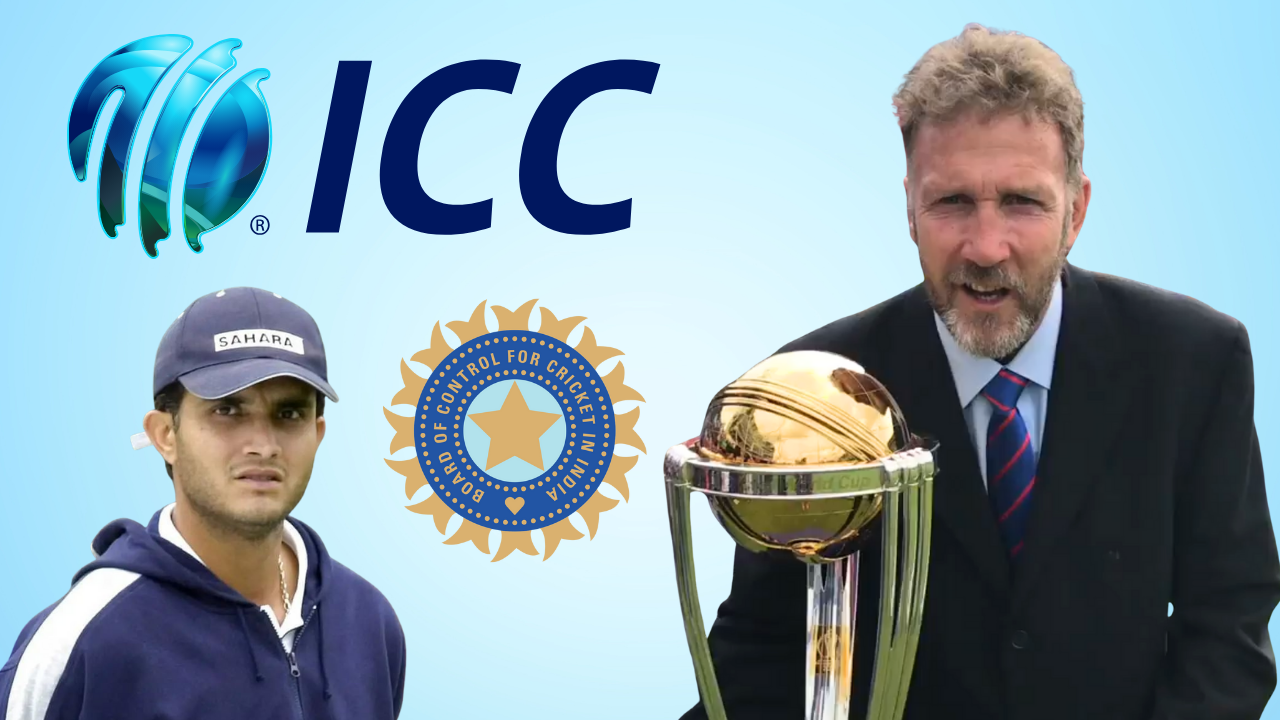
Pressure, power, and leniency: the quiet forces behind the match referee’s job
Over two decades, Chris Broad witnessed the transformation of cricket’s governing structures from the inside — not just in how matches were officiated, but in how power was distributed. As the stakes of international cricket ballooned, so too did the subtle pressures on officials tasked with enforcing the rules, especially in matches involving the sport’s most commercially influential teams.
It was in this context that Broad said he received a direct call urging him to show leniency to India during a game in which the team had fallen behind on over rates.
Speaking to The Telegraph, Broad recalled one such incident when disciplinary action was delayed after behind-the-scenes intervention.
“India were three, four overs down at the end of a game so it constituted a fine,” said Broad.
“I got a phone call saying, ‘Be lenient, find some time because it’s India’. And it’s like, right, OK. So we had to find some time, brought it down below the threshold.”
The attempt to manage the optics of a penalty was not an isolated incident. According to Broad, the very next match presented the same situation — and this time, then-India captain Sourav Ganguly ignored the over-rate warnings.
“The very next game, exactly the same thing happened. He [Sourav Ganguly] didn’t listen to any of the hurry-ups, and so I phoned and said, ‘What do you want me to do now?’ and I was told, ‘Just do him.’ So there were politics involved, right from the start. A lot of the guys now are either politically more savvy or just keeping the head below the parapet. I don’t know,” Broad added.
ICC dynamics changed with India’s rise
Broad, who officiated in 622 international matches from 2003 to 2024, said that as the ICC’s internal structure evolved, the influence of certain boards became more prominent — and this changed how decisions were made and managed.
“I think we were supported by Vince van der Bijl (ICC umpires manager) while he was in position because he came from a cricketing background but, once he left, the management became a lot weaker. India got all the money and have now taken over the ICC so in many ways. I’m pleased I’m not around because it’s a much more political position now than it ever has been,” he said.
While Broad said he was willing to continue officiating beyond 2024, he acknowledged the burden of navigating a politically charged landscape, both on and off the field.
“I was very happy to carry on. But for 20 years, I dodged a lot of bullets, both politically and physically. I look back and I think, ‘you know, 20 years is quite a long time to be doing that job’.”
Officiating in an ethically complex environment
Reflecting on his time across cricket’s diverse geographies, Broad pointed out the moral challenges match officials face when operating in vastly different political and cultural settings.
“I’m pleased not to be travelling to certain parts of the world. And I was always someone who believed in right and wrong and in certain parts of the world it’s a bit like the River Ganges – right and wrong are so far apart and there’s a lot of dirty water in between them that you have to deal with, so I think as someone who comes from a right and wrong perspective, to last 20 years in that politically active environment is a pretty good effort.”
Broad’s account underscores a deeper tension at the heart of modern cricket: the balance between fairness and influence, governance and power. As the sport continues to evolve, his revelations raise broader questions about whether the structures in place today can truly uphold impartiality in the face of growing political and commercial pressures.