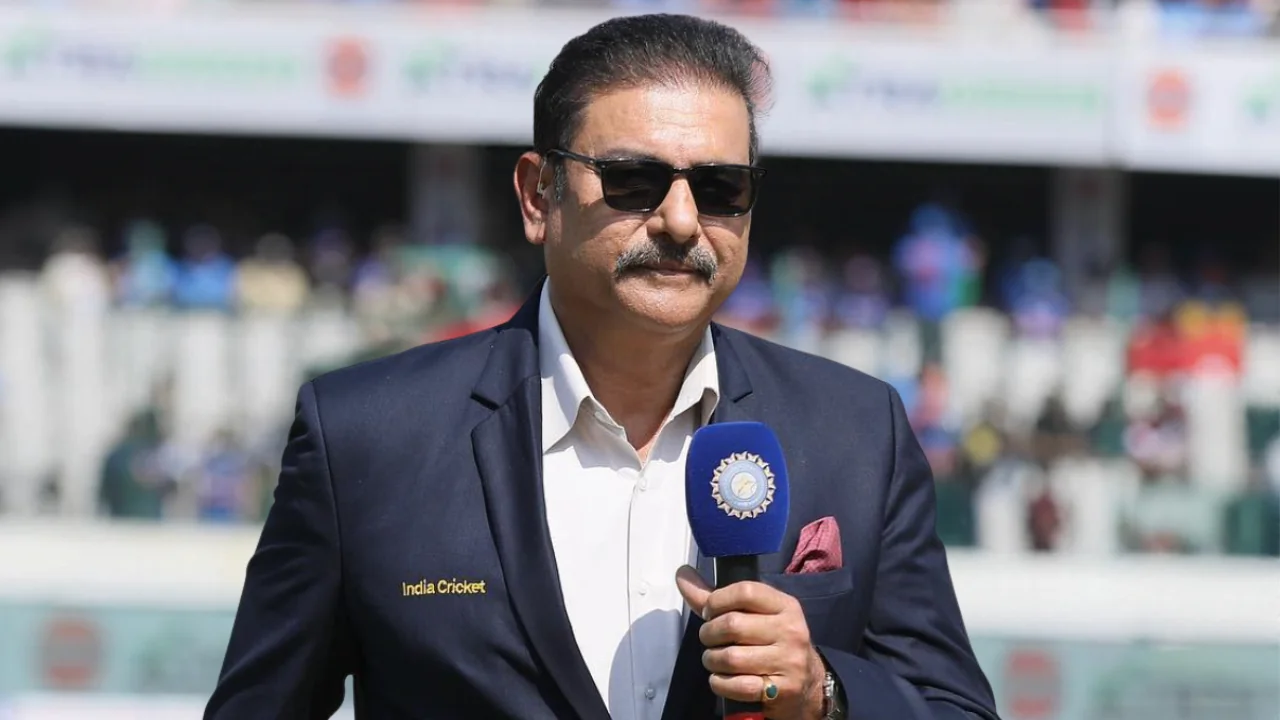
Former India Head Coach Ravi Shastri has described coaching the national cricket team as the most demanding role of his career, placing it above both playing international cricket and working as a commentator.
Having experienced all three sides of the sport, Shastri believes the responsibilities of leading India create a different kind of pressure, with enormous public expectations and little opportunity for a coach to influence events once a match begins.
Speaking in an interview with Sky Sport’s Ian Smith, Shastri reflected on the challenges of the position and the satisfaction that comes with delivering results.
Ravi Shastri on the pressure and rewards of coaching India
Shastri’s time in charge of India coincided with a period of significant success in Test cricket, but he made clear that the demands of the job extended far beyond preparing players and developing strategies.
Shastri said: “You know, you always have the gun to your head. But if you pull it off and you’re successful, I mean, then the rewards, it’s very rewarding.”
He added: “Gives you tons of respect. And, you know, makes you enjoy what you’re doing and gives you that kind of job satisfaction with nothing else gave you.”
Shastri served as India’s Head Coach from July 2017 until November 2021, a tenure that included some of the country’s most significant overseas Test performances.
India secured its first Test series victory in Australia during the 2018–19 Border-Gavaskar Trophy before repeating the achievement with a 2–1 series win in 2020–21, despite injuries that disrupted the touring squad.
The team also spent 42 months at the top of the ICC Test rankings and reached the inaugural World Test Championship final in 2021. In white-ball cricket, India progressed to the semi-finals of the 2019 ODI World Cup.
Those achievements provide the backdrop to Shastri’s assessment of a position in which even a successful record does not eliminate the expectation of winning the next match.
Why Shastri considers coaching tougher than playing
The distinction Shastri draws between coaching and his other cricketing roles centres on the amount of control each allows.
As an international player, he could directly influence a contest with bat or ball. Broadcasting offered another form of active participation, with a microphone and the responsibility of communicating the action to viewers.
Coaching, by contrast, requires decisions to be made before players take the field, leaving the outcome dependent on their performances under pressure.
Shastri told Ian Smith: “Yeah, the toughest would be coaching, right. See, no, because you are nothing in your control once the players leave and get onto the field. You have the bat, ball when you’re playing, the mic when you’re broadcasting. But once the players go out, you know, you can only twiddle your thumbs. And it comes with immense responsibility. You know, the expectations of the country are such. COVID, no COVID, you got to win, you know, game after game. So there’s no hiding behind that.”
His remarks also reflect the unusual circumstances of his tenure, which included the disruption caused by the COVID-19 pandemic. International cricket continued through a period of significant operational challenges, while expectations surrounding India’s performances remained high.
Why Ravi Shastri remains committed to cricket commentary
Although coaching represented the greatest professional challenge, Shastri’s career in broadcasting has provided a different connection to the sport.
A former India all-rounder who became one of cricket’s most recognisable commentators, Shastri has spent decades moving between roles in the game. His reflections on broadcasting focused on the personal commitment required to remain enthusiastic across such a long career.
Shastri noted: “But you stayed with the game. And I love it. I mean the only way we can hang in here if we are passionate about the game.”
Shastri also reflected on the opportunities that can emerge over a career in cricket and the choices involved in remaining connected to the sport.
He continued: “\[On his journey into broadcasting\] it’s amazing how life can take you in various places. And particularly the cricketing life. I mean it’s captured us. I mean obviously you love the game. I mean you know to stay involved because you would have had many, many opportunities to break away and do other things with your stature in India.”
His broadcasting career has included commentary on major international matches and tournament finals, experiences he discussed with Smith as part of their shared history behind the microphone.
Shastri concluded: “If you’re not passionate about the game, you don’t love the game, you won’t be here this long with showing that kind of enthusiasm for every game day after day. You know, whether it’s with you, the way you commentated on that World Cup final, you know, a close finish, you were calling it at the end. Fabulous. And we’ve called many finals in the end, you know, right through our careers. And it’s a privilege, you know, when someone understands the game, understands the discipline of television, you know, and then to work that for that length of time. It’s fun.”
For Shastri, the contrast between coaching and commentary is ultimately one of responsibility rather than commitment. Coaching India placed him under constant pressure to deliver results, while broadcasting has allowed him to remain closely involved with the sport that has shaped his professional life.