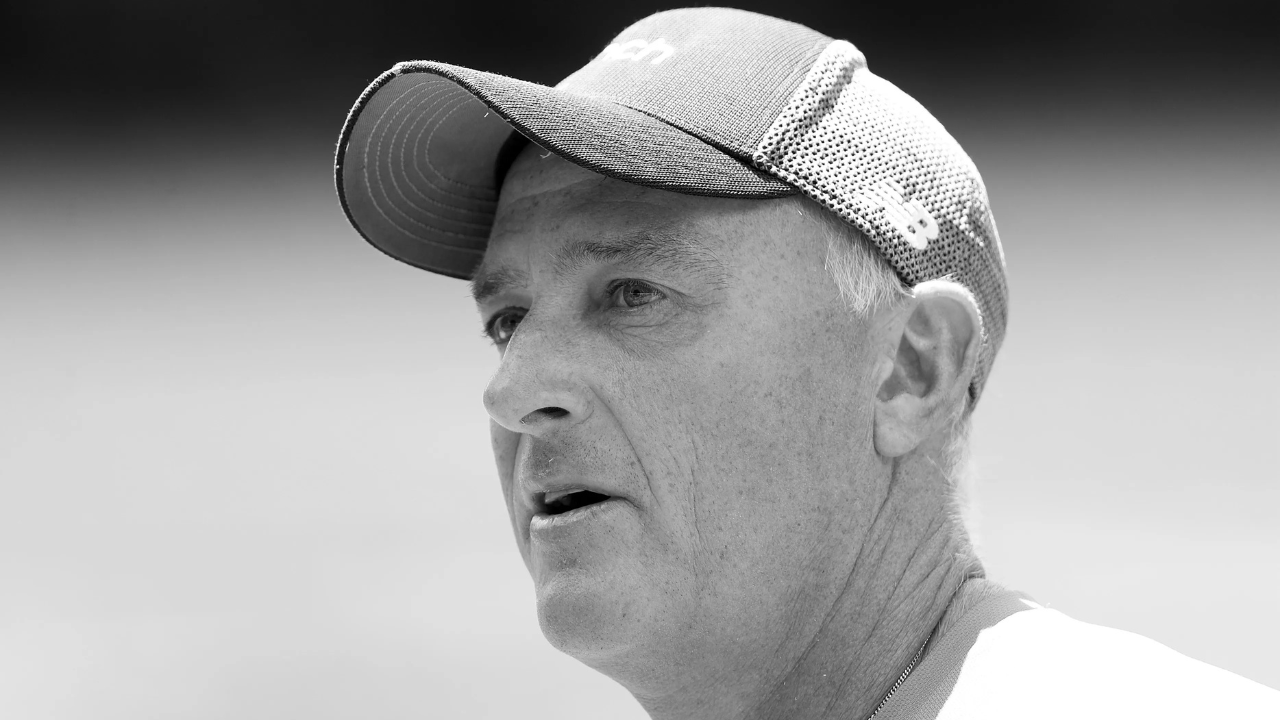
Amanda Thorpe, widow of former England cricketer and coach Graham Thorpe, has spoken out publicly for the first time about her husband’s mental health battles and the role she believes a lack of support played in his decline following the abrupt end of his coaching career.
In a powerful interview with talkSPORT, Amanda Thorpe said her husband’s downward spiral began after being removed from the England coaching setup in 2022, following the Ashes series defeat in Australia.
She told talkSPORT that if the “entire rug of his cricketing career had not been pulled from under him so completely… it is really clear to me that he would still be alive, so it would have made all the difference”.
“He was absolutely gutted”: Amanda recalls the toll of England dismissal
Thorpe, a respected figure in English cricket both as a player and coach, had been a key member of England’s coaching team before his departure in early 2022. Amanda Thorpe described the emotional impact it had on him during the Ashes tour, noting how deeply he was affected by the events that unfolded.
Amanda Thorpe said her husband “was really teetering on the edge on that tour” and he was “absolutely gutted” by the incident. “He went round on the flight back and apologised personally to every person on that tour,” she said.
Limited mental health support criticized as “too little, too late”
According to Amanda, the support provided by the ECB after Thorpe’s departure was far from sufficient. While the board covered ten online counselling sessions, she described this effort as inadequate in the face of her husband’s deteriorating condition.
“As he went through these sessions, it was clear that he wasn’t coping. He was getting worse. We really did ask for help. I knew he needed more help than that. And, it wasn’t forthcoming.”
Thorpe suffered a major health crisis later that year, including a stroke, which further complicated his mental and physical state.
“It was too late, basically, after the crisis [in 2022], he was very ill. He nearly lost his life. He had a stroke. We don’t know how that affected his brain after that.
“The ECB might say, well, we didn’t know how ill he was. Although the doctors he was under did know, but then they sort of said, oh, but there’s confidentiality. There’s got to be some connection [between the ECB and their doctors].”
ECB: “Graham was a deeply admired and much-loved person”
In response, the ECB expressed their sadness at Thorpe’s passing and reaffirmed their communication with his family during the period after his death.
According to ESPN, an ECB spokesperson said Thorpe was remembered as “a deeply admired and much-loved person”:
“His loss has been felt deeply across the cricketing community and far beyond, and our thoughts and heartfelt sympathies remain with his wife Amanda, his children, and all those who loved him.
“Graham’s passing is a heart-breaking reminder of the challenges many face with mental health. His death was examined by a coroner; the inquest was held earlier this year with full support from the ECB.
“We have met with Amanda to discuss her concerns and have been in regular contact with her and the wider family.”
A reminder of mental health’s place in professional sport
Amanda Thorpe’s account paints a sobering picture of how sudden professional setbacks, particularly in elite sport, can spiral into deeper health struggles without sustained support. Her call for stronger mental health safeguards within cricket, and better coordination between teams, doctors, and governing bodies, underscores a growing issue across global sports — the urgent need to support those behind the scenes when their careers end.