
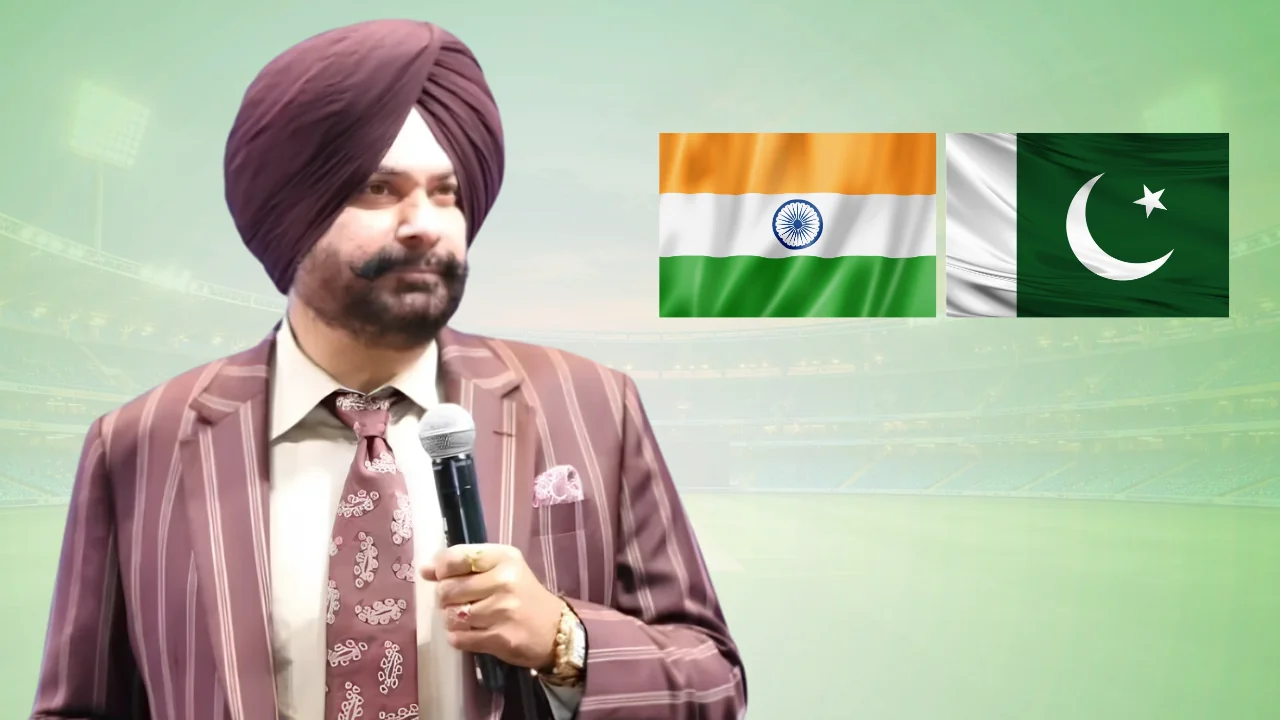
The future of bilateral cricket between India and Pakistan remains dependent on government policy rather than decisions within the cricketing establishment, according to former India batter Navjot Singh Sidhu, who believes the sport could eventually serve as a diplomatic bridge between the two countries.
Speaking to reporters while commentating in the DP World ILT20, as reported by PTI, Sidhu declined to take a personal position on restoring bilateral cricket, emphasising that the responsibility rests with the elected government.
“Political matters are political matters. I say that whatever decision has to be taken politically, will be taken by the government,” Sidhu said.
“The government is elected by the people and it has been empowered, and whatever decisions they are taking, they are the rights of the residents.
“If they decide that these matches will not happen because of a certain reason — whatever the reasons are — the Home Ministry knows,” he added.
Government policy remains central to India-Pakistan cricket relations
Although India and Pakistan have not contested a bilateral series since 2012-13, cricketing engagement between the two nations has continued through multilateral competitions.
Tournaments administered by the International Cricket Council (ICC) and the Asian Cricket Council (ACC) have provided opportunities for men’s, women’s and age-group teams to compete against each other at neutral venues.
However, India’s sporting relationship with Pakistan became subject to a formal government prohibition on bilateral engagements following the military confrontation between the two countries in 2025, which came in the aftermath of the Pahalgam terror attack.
Sidhu indicated that cricket could become part of a broader diplomatic initiative should the government determine that relations between the two countries are ready to improve.
“…when they decide that these differences have to be resolved, they would say ‘bring cricket in’. It is the way, and that’s your answer from me,” he said.
Commercial demand to shape cricket’s future
Beyond bilateral relations, Sidhu addressed the evolving economics of international cricket, arguing that consumer demand will remain a determining factor in how administrators balance the sport’s three formats.
He dismissed the suggestion that the expansion of T20 cricket necessarily comes at the expense of ODI cricket, pointing instead to the commercial considerations influencing scheduling decisions.
“(It is) because people want it; you are playing T20 cricket. But you are not ignoring ODI cricket. If you are playing 20 ODIs, you are playing 25 T20s,” he explained.
“It is basically demand-driven. What will sell and what is commercially viable will always have the priority,” he added.
IPL has transformed India’s position in global cricket
Sidhu identified the Indian Premier League (IPL) as a major force behind India’s emergence as a commercial and talent development centre for international cricket.
The former opener contrasted the opportunities available to Indian cricketers during his playing career with those created by today’s franchise ecosystem.
“Earlier, we used to go to England to play County cricket to hone our skills; now the whole world comes to India to play in the Indian league,” he said.
For Sidhu, the benefits of the IPL extend beyond India’s commercial influence. Access to leading international players, specialist coaches and trainers has also helped domestic cricketers develop greater confidence in their ability to compete at the highest level.
“The Indians are playing and spending time with the best international players and coaches. They get the feeling that they belong. (In my days) we would come from Patiala, and there was never that sense of belonging.
“But they have the (feeling of) belonging straight away. The cream of the world (is) rubbing shoulders with them, the best coaches and trainers. The game is played as much between the hands as it is between the ears, 70 per cent of it is mental,” Sidhu added.
Sidhu backs franchise expansion and innovation
Sidhu also endorsed the work of cricket administrators in developing new competitions, citing the DP World ILT20 as an example of the sport’s continued evolution through franchise cricket.
“I can say with confidence that it is a shining example of how cricket is being run all over the world; the administrators need to be complimented,” he said.
“Ideas move the world. Invention is the name of the game. You cannot be monotonous. You cannot keep on doing the same things,” he added.


