In a major shift for Indian cricket, Rohit Sharma has officially retired from Test cricket, setting the stage for a historic three-captain structure across formats. Having already stepped away from T20s, Rohit will now focus solely on leading the Indian team in One Day Internationals (ODIs), with an eye firmly on the 2027 ODI World Cup.
Sources close to veteran batter Rohit Sharma indicate that his decision to retire from Test cricket is part of a broader strategy to manage his fitness and prolong his career, aiming to participate in the 2027 ODI World Cup. There is a strong consensus that his leadership in ODIs is secure, with no immediate plans for a captaincy change before the 2027 tournament. This underscores the belief that Rohit’s role as captain in the 50-over format is firmly established.
Surya Kumar Yadav continues T20 charge with young squad behind him
In T20 Internationals, Surya Kumar Yadav remains the captain, having already carved out a niche for himself in the shortest format. He has no commitments in ODIs or Tests and is expected to lead India through to the 2026 T20 World Cup.
Selectors have placed significant confidence in Suryakumar Yadav’s leadership, entrusting him with a youthful and dynamic T20 squad. Under his captaincy, the Indian team is anticipated to evolve into a formidable force, with growing momentum supporting his role at the helm.
Race heats up for new Test captain ahead of England series
With Rohit’s retirement from Tests now official, India will require a new leader for the upcoming five-match Test series against England beginning June 20. The decision will not only determine who takes over the red-ball leadership but also shape the future of the Test setup.
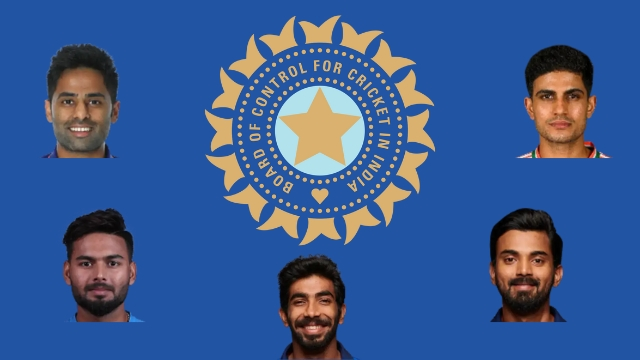
The shortlist for the job reportedly includes Jasprit Bumrah, KL Rahul, Shubman Gill, and Rishabh Pant. Bumrah, the current vice-captain, has previously led India in a few matches. However, concerns over his long-term fitness and the demands of fast bowling have made selectors and BCCI officials cautious about naming him as the full-time captain.
Pant, while talented, faces skepticism due to inconsistent batting performances. That has opened the door for KL Rahul and Shubman Gill to emerge as frontrunners. The decision will be revealed when the selection committee announces the squad for the England tour.
Indian cricket’s first-ever three-captain structure officially begins
For the first time in Indian cricket history, the men’s national team will operate with three different captains for each format—Rohit Sharma in ODIs, Surya Kumar Yadav in T20s, and a soon-to-be-named leader for Tests. This format-specific leadership strategy is seen as a landmark shift, signaling a new approach to workload management and strategic specialization.
With all three captains tailored to the unique demands of each format, India is preparing for a bold and potentially transformative chapter in its cricketing journey.