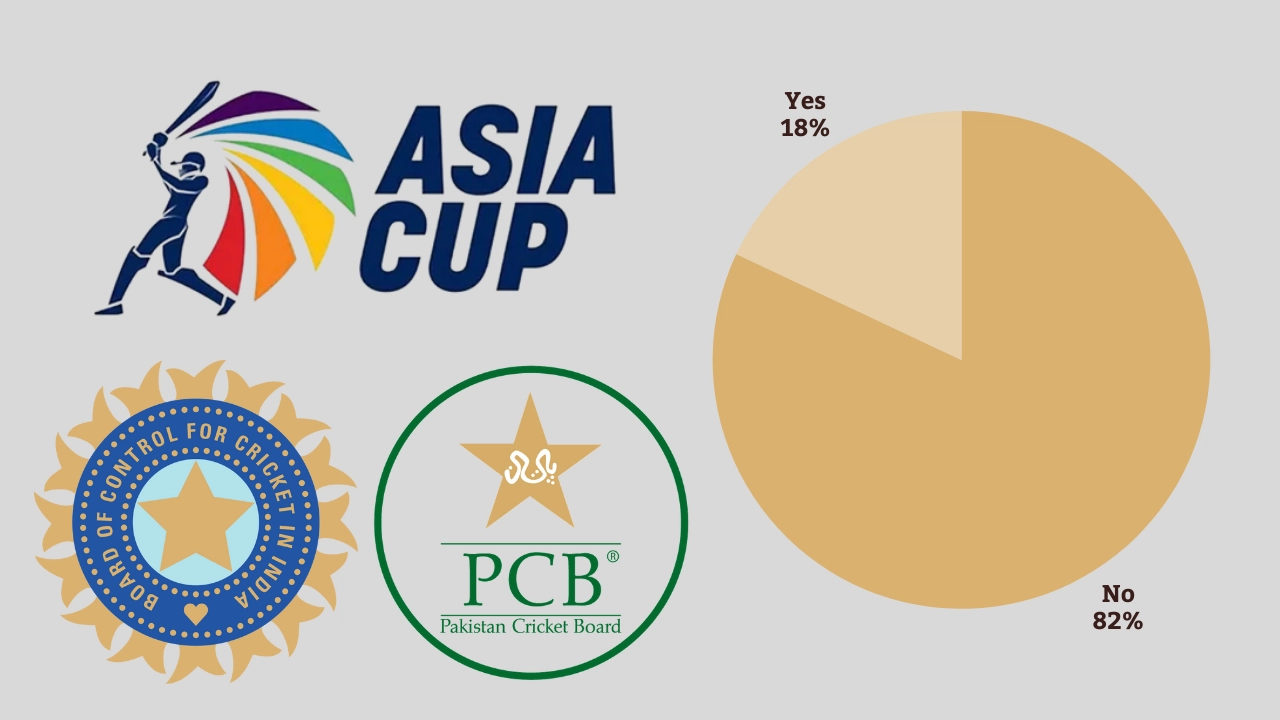
A new cricexec poll of global cricket executives has delivered a stark verdict on one of the most politically charged flashpoints in recent cricket history. Asked whether India was right to refuse the traditional post-match handshake with Pakistan after their Asia Cup 2025 clash in Dubai, just 18% said yes, while an overwhelming 82% said no.
The result underscores the growing sense within the industry that the incident — which India defended as a symbolic act of solidarity with terror victims — risked undermining the spirit of the game and dragging cricket further into the realm of politics.
India’s justification: “Some things are above sportsmanship”
India’s captain Suryakumar Yadav admitted the decision was deliberate and premeditated, coordinated between the BCCI and government. “Our government and BCCI, we were aligned. Together, we came here, we took a call… I feel a few things in life are ahead of sportsman spirit,” he told reporters.
He went further, dedicating the victory to victims of the Pahalgam terror attack and to India’s armed forces: “We actually stand with all the victims of the Pahalgam terror attack. And we stand with their families also, express our solidarity. We dedicate this win to our brave armed forces.”
For India, the gesture was framed as a statement of national solidarity. But for many in the cricket world, it crossed a line.
Pakistan’s outrage: “Against the spirit of the game”
Pakistan’s response was swift and fierce. Head coach Mike Hesson said: “Obviously, we were ready to shake hands at the end of the game. We were disappointed that our opposition didn’t do that. That was a disappointing way for the match to play.”
Pakistan captain Salman Ali Agha refused to attend the post-match presentation in protest. Team manager Naveed Akram Cheema lodged a formal complaint, calling the behaviour “unsporting” and “against the spirit of the game.”
PCB chairman Mohsin Naqvi escalated further, demanding the removal of match referee Andy Pycroft: “Utterly disappointing to witness the lack of sportsmanship today. Dragging politics into the game goes against the very spirit of sports.”
A storm beyond the boundary
The fallout quickly widened. Former Pakistan stars like Kamran Akmal and Basit Ali condemned the move on live TV. “This is a very bad topic, bad for the game. Actions like these spoil the entire sport with such petty behaviour,” Akmal said. Basit warned: “If this happens in ICC events, what will the ICC head do — because he’s Indian? This isn’t helping cricket get better.”
Former Pakistan captain Shahid Afridi struck a more pragmatic note, suggesting the players were under orders: “I don’t want to fault the Indian cricketers; they were given orders from up above.” Still, he called the episode “embarrassing” for cricket.
Even voices like Shoaib Akhtar lamented the symbolism: “Do a handshake. It’s a game of cricket. Show your grace. I would go and shake hands with my enemies.”
Miscommunication or escalation?
Confusion over the role of match referee Andy Pycroft added fuel. Reports suggested Pycroft instructed both captains to skip the pre-match handshake but failed to clarify post-match protocol, leading to awkward scenes. Pycroft later apologised to the PCB, calling it “a result of miscommunication.”
Still, Pakistan pressed for his removal, while India reportedly planned to boycott any trophy presentation involving Naqvi, showing how deeply the incident had bled into tournament politics.
Symbolism vs sportsmanship
The handshake, a ritual that closes contests with mutual respect, became the defining story of the tournament. For supporters of India’s decision, it was a symbolic stand at a time of national trauma. For detractors, it was an erosion of cricket’s ethos.
The cricexec poll makes clear that the industry leans heavily toward the latter view: 82% believe India was wrong. In a game built on traditions of respect, the refusal to shake hands struck many as a dangerous precedent.
As the Asia Cup rolls on, and with the possibility of further India-Pakistan encounters, the ICC finds itself under pressure to prevent symbolic gestures from overshadowing the sport itself. The question now is whether cricket can find a way to separate politics from play — or whether the handshake will remain another casualty of the world’s most volatile rivalry.