
The Royal path: a different kind of expansion
In a cricketing world where academies spring up on every continent under the banners of powerful franchises, the Rajasthan Royals have chosen a different path. Their model is not about mass proliferation. It is about sustainability, quality, and a philosophy deeply embedded in their DNA: talent must be nurtured with care, not consumed as a commodity.
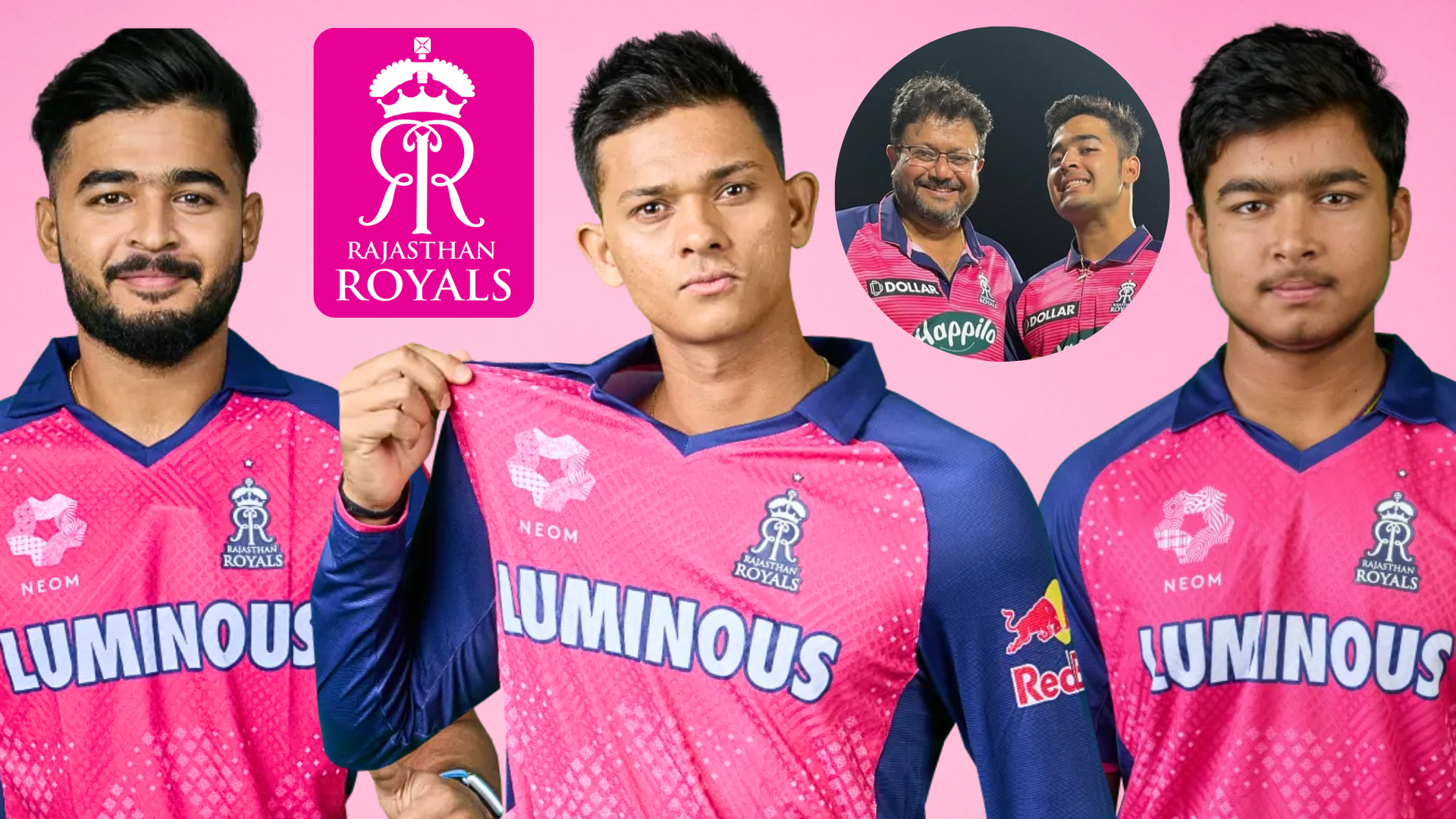
The Royals’ name has long been synonymous with discovery. From Ravindra Jadeja and Shane Watson in the inaugural IPL season to today’s youth-driven side led by the likes of Yashasvi Jaiswal, Riyan Parag, and Dhruv Jurel, the Royals have built reputations around unearthing the next generation. But in recent years, this commitment has expanded into a bold global academy model—one that blends the physical with the digital, the local with the global, and the grassroots with the professional stage.
The rise of 14-year-old Vaibhav Suryavanshi, a Royals-scouted prodigy who stunned audiences at the professional level in 2025, became a striking example of the system at work. The true story is broader: it’s about the deliberate choices the Royals make, the philosophies they live by, and the way they balance technology, coaching, and culture to build a sustainable pipeline.
As Sid Lahiri, Head of International Player Development, put it, speaking to cricexec:
“We don’t want 100 academies closing down in a few years. What we’re building are sustainable ecosystems, with coaches who make a difference every day.”
The Royals philosophy: grassroots as foundation
The Royals’ academy strategy reflects their broader identity. None of their academies have shut down since inception—a rarity in a field plagued by short-term ventures.
Lahiri emphasized: “We’re still learning how to get the best from our centers. But the fact that none have closed shows our model works. We don’t want quick wins. We want sustainable ecosystems, built on strong coaches and strong values.”
The Royals’ selective approach has built trust with parents and communities. In the US, where cricket is still a niche sport, this philosophy resonates strongly with families looking for stability.
The Royals Coaching Hub: scaling without borders
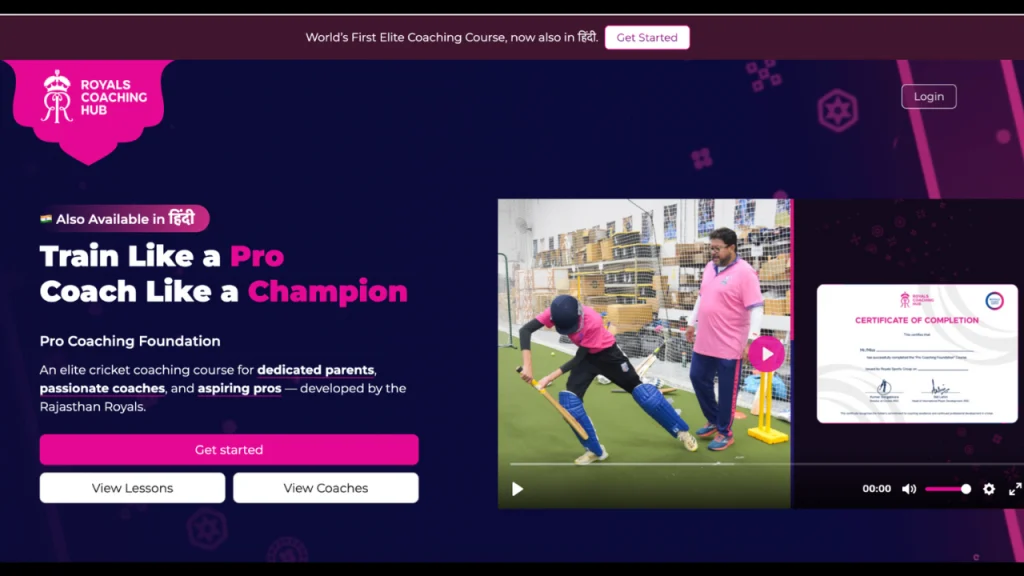
If the physical academies are the roots, the Royals Coaching Hub is the tree canopy—stretching across geographies, democratizing access. Conceptualised in 2024 and launched in 2025, the Hub is an online portal designed for coaches, parents, and players. It has already reached thousands across 30+ countries.
The Hub’s strength lies in credibility. Content is developed by elite coaches—Lahiri, Shane Burger, Richard Das, Dishant Yagnik—and endorsed by Royals Director of Cricket Kumar Sangakkara, who calls it: “A movement to recognize, support, and elevate the true architects of cricket’s future.”
Lahiri elaborated: “Coaching shouldn’t be about finding faults. It should be about finding solutions. Too often, coaches just tell a kid what’s wrong. Our hub is built on 20 years of experience, offering parents and grassroots coaches practical tools to help kids improve without confusion.”
The platform includes:
- Bite-sized lessons on batting, bowling, fielding, wicketkeeping.
- Modules on fitness, nutrition, youth hydration.
- Coaching philosophy and communication.
- AI-driven technique correction.
- A new Hindi-language version, to democratise cricket education in India.
- More languages coming soon
Lahiri added: “I’ve seen parents desperate to help but giving the wrong guidance. With the Hub, we guarantee improvement if you follow the system. Even if a dad is coaching his kid, the resources are there to do it right.”
A measured global footprint
The Royals Academy footprint today includes:
- England: Surrey, Lahiri’s original academy, now firmly under the Royals umbrella.
- India: Two academies in Jaipur and Pune, linked to the Royals’ high-performance centers.
- USA: New Jersey and the Washington DC area, tapping into diaspora-driven momentum.
Each academy is deeply integrated, with coaches trained to deliver a standardized Royals methodology. Cross-pollination is encouraged—an Indian academy coach might travel to the US, while a US-based coach might spend time in Jaipur. This fluidity ensures the Royals’ philosophy is consistent globally.
The American frontier: opportunity and ambition
The United States is the Royals’ boldest leap yet. Cricket here is still nascent, but powered by a fervent diaspora. Lahiri sees enormous potential:
“Cricket here is driven by Asian parents. They’re crazy about it. Weekdays, weekends — they’ll sacrifice work to bring their kids to training. No more is it a summer sport. It’s year-round now. The talent is outstanding. It’s only a matter of time before cricket becomes big here.”
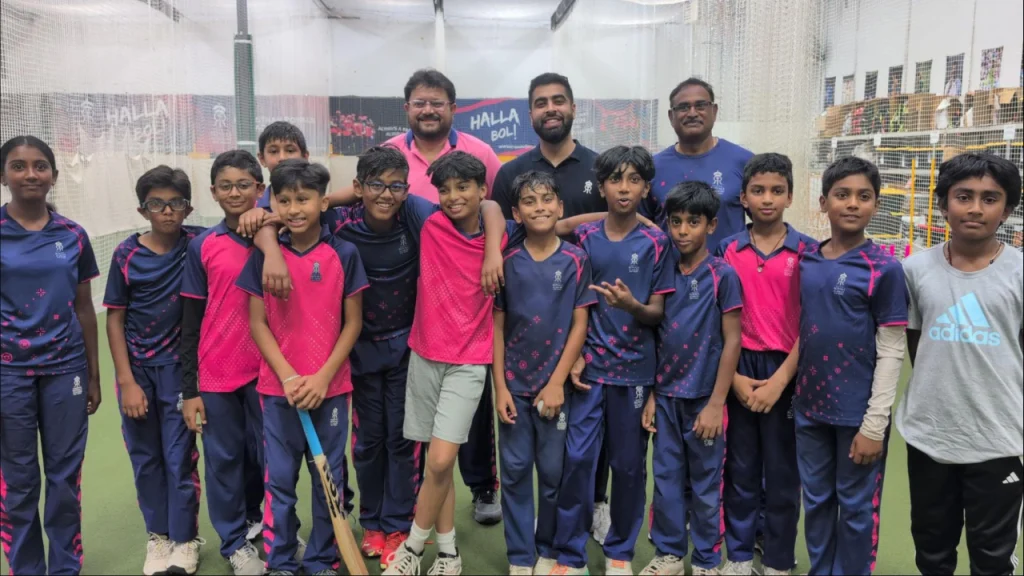
The New Jersey Academy has already become a hub for the Indian and South Asian communities across the Tri-State area. Sessions are packed with kids training year-round, while parents form a visible support system, often sitting through multiple sessions a week. Lahiri notes that many children in New Jersey train four to six times per week, “like they would in Mumbai or Delhi.”
This past month, the Royals expanded further, launching their second U.S. academy, the Rajasthan Royals Academy Washington. Based in Sterling, Virginia, just outside of Washington DC, this academy has quickly become a high-performance hub for players aged 5 to 19. Originally established in 2017 with just seven players, the program has now grown into a thriving centre with more than 150 enrolled students. Under the leadership of CEO Girish Murthy, and founder / head coach Chita Nilak, the facility delivers a structured development program rooted in teamwork, discipline, and sportsmanship.
The Virginia academy boasts a 100 x 110-foot indoor turf with three practice lanes, in addition to access to outdoor grounds for matches and advanced training. Seven certified coaches (four full-time, three part-time) deliver consistent, high-quality sessions, creating a strong pipeline of players. Lahiri hailed the launch:
“The launch of our Sterling academy is a statement of our commitment to nurturing talent here. Our goal is to give every young player — regardless of background — access to world-class coaching, structured development, and genuine opportunities to connect with the game at the highest levels. This is about building a lasting cricket culture in America.”
Students gain exposure through opportunities like net bowling, dugout experiences, and match-day engagement, further connecting them with the broader Royals ecosystem. Plans are already in place to add two more training centres in the region and eventually build a sustainable, long-term cricket facility.
Pathways to the pros: bridging grassroots and elite
Perhaps the most unique element of the Royals system is how directly it connects grassroots with elite cricket. An under-17 bowler in Washington might find himself at a CPL training camp.
But it’s not just for players, it’s also for coaches. Lahiri himself is proof of this pathway:
“I came through grassroots, and now I work with Royals’ professional teams. It’s tough, but it can be done. With the Coaching Hub, our next step is to help coaches transition from grassroots to professional levels. That will multiply opportunities across the world.”
These pathways make the Royals model aspirational, grounding kids’ and coaches’ dreams in real possibility.
From maidans to global blueprints: Sid Lahiri’s journey
Few stories illustrate the Royals’ ethos better than Sid Lahiri’s own. Raised on the maidans of Kolkata, Lahiri once dreamed of playing for India. Like many of his generation, a lack of structured pathways left him disillusioned. But instead of leaving the game, he chose a harder path—migrating to England in search of opportunity, taking ECB coaching badges, and even working as a groundsman to stay close to cricket.
That academy, founded in 2005, grew into one of the UK’s most respected. Talents like Ollie Pope, England’s Test Vice-Captain, and other county and national stars like Shoaib Bashir, Gus Atkinson, and Jamie Smith have set foot in the academy. Lahiri’s philosophy was simple: individual attention, relentless discipline, and mentorship that extended beyond cricket.
His reputation soon reached India. By 2019, with Shane Warne walking into his Surrey academy, the partnership was sealed: Star Cricket Academy officially became the first Rajasthan Royals Academy outside India.
“Royals have always supported young cricketers. We signed Yashasvi Jaiswal when he was just 18, when nobody knew him. We’ve done that with Ravindra Jadeja, Riyan Parag, Dhruv Jurel. It’s part of our DNA. The ownership genuinely believes in giving back to cricket, and that’s what drew me to them.”
From then on, Lahiri became a central figure in the Royals’ global vision. Today, as Head of International Player Development, he oversees academies in India, England, and the US, while also contributing to coaching in Royals’ professional setups in Paarl and Barbados. His story—from grassroots coach to global leader —mirrors the very pathways he is now building for others.
Conclusion: reshaping cricket’s future
The Rajasthan Royals’ grassroot initiative is less about volume, more about value. It is about ecosystems, not empires. It is also about empowering coaches as much as players, parents as much as professionals.
From Sid Lahiri’s journey out of Kolkata to global leadership, to the digital revolution of the Royals Coaching Hub, to the team’s deliberate, innovation-led expansion, the Royals are quietly building what could be a model for the future of cricket.
They may not have the most academies. They may not be the loudest. But they may just have the most sustainable, thoughtful blueprint. And if the successes of Ollie Pope, Yashasvi Jaiswal, and Riyan Parag are any indication, that blueprint works.


