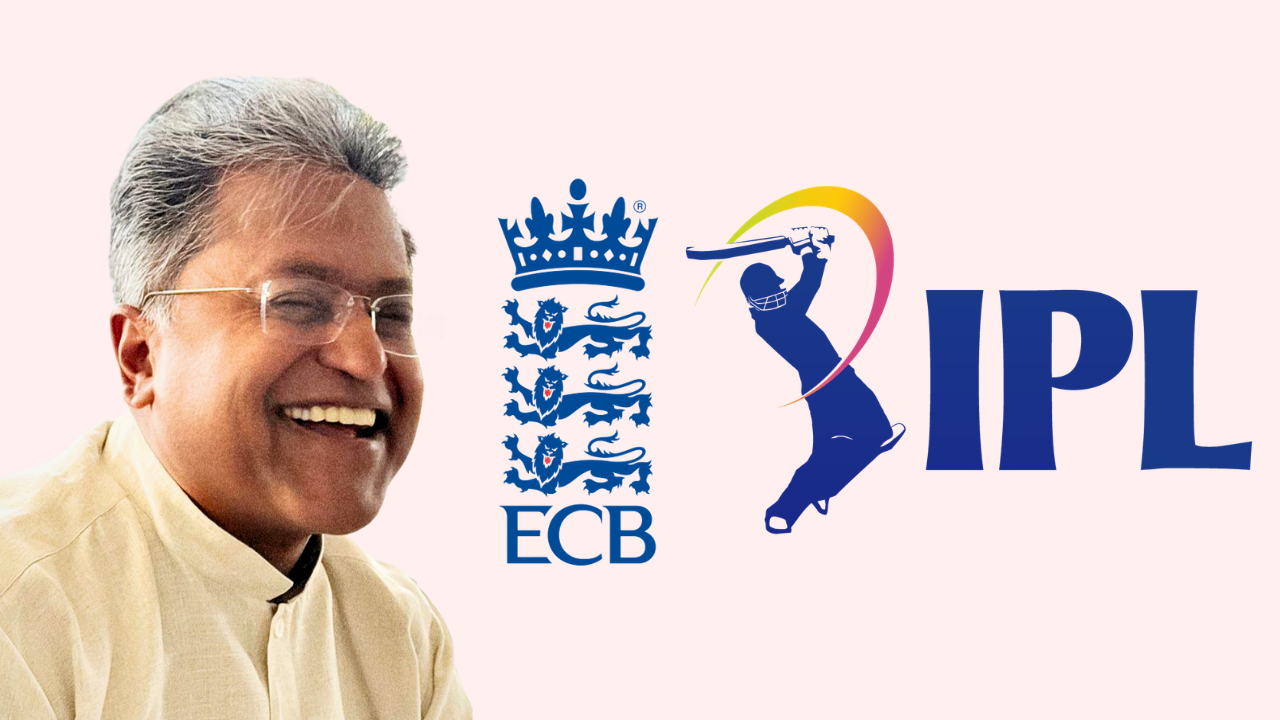
The Indian Premier League’s global influence today masks a turbulent early phase when participation by international players was far from straightforward.
Kevin Pietersen, one of England’s earliest IPL stars, has reflected on being caught in the middle of a power struggle between English cricket authorities and the league’s leadership, explaining in an interview with The Telegraph how his push to prioritise the IPL came at a personal cost.
Pietersen recalls being at centre of ECB and IPL power struggle
As the IPL emerged in 2008, the England and Wales Cricket Board maintained a cautious stance toward player participation, particularly when it clashed with the international calendar.
Pietersen, however, quickly identified the league’s commercial and cricketing potential and sought to take part, even if it meant missing parts of England’s Test schedule.
“All I was wanting to do was play the IPL, earn more money, and miss a couple of Test matches in May, which didn’t matter anyway,” Kevin Pietersen told The Telegraph.
His decision placed him directly in the middle of a broader institutional conflict between the ECB and IPL Founder Lalit Modi, with Pietersen acknowledging the tension that defined that period.
“I knew it was the ECB [England and Wales Cricket Board] versus Lalit Modi [the IPL’s founder], and I was at the centre of it. I might have, in hindsight, dealt with a few things a little bit differently. But I was always telling the truth, so I slept perfectly every single night. It was a storm in a teacup,” he added.
Early IPL stance came with consequences for Pietersen
Pietersen’s willingness to prioritise franchise cricket over parts of the international calendar was not well received by the ECB at the time.
Reflecting on the aftermath, he suggested that his forward-looking stance on the IPL’s growth led to consequences within the England setup.
“I sort of foresaw the future, but then I got punished for it,” he said.
Despite the challenges, Pietersen’s early involvement coincided with the IPL’s rapid evolution into one of cricket’s most influential competitions, attracting top talent from across the world.
He was among the highest-profile signings in the league’s early years, joining Royal Challengers Bengaluru for INR 9.8 crore (approx. US$ 1 million), alongside Andrew Flintoff, who was signed by Chennai Super Kings for the same amount.
IPL’s long-term impact on England players
Over time, the ECB’s approach softened, with the IPL now widely seen as a key development platform for England’s white-ball players.
Cricketers such as Jos Buttler, Jofra Archer, Liam Livingstone and Phil Salt have all benefited from regular participation in franchise leagues, gaining exposure to high-pressure environments and diverse playing conditions.
Pietersen believes that the sacrifices made during the league’s early years helped create that pathway for future generations.
“I did something with Jos Buttler the other day for my YouTube channel,” he said.
He then shared Buttler’s acknowledgement of that influence and the changing landscape for England players.
“He actually thanked me. He said, because of the sacrifices that I made, they could go out and enjoy what they enjoy now. And I was, like: ‘Dude, it’s fine, man. I got what I got. I live a pretty cool life. I’m very happy. So it is what it is,’” he added.
Pietersen’s reflections underline how the IPL’s integration into the global cricket calendar has reshaped player priorities, with England now among the nations whose players are deeply embedded in the franchise ecosystem.