
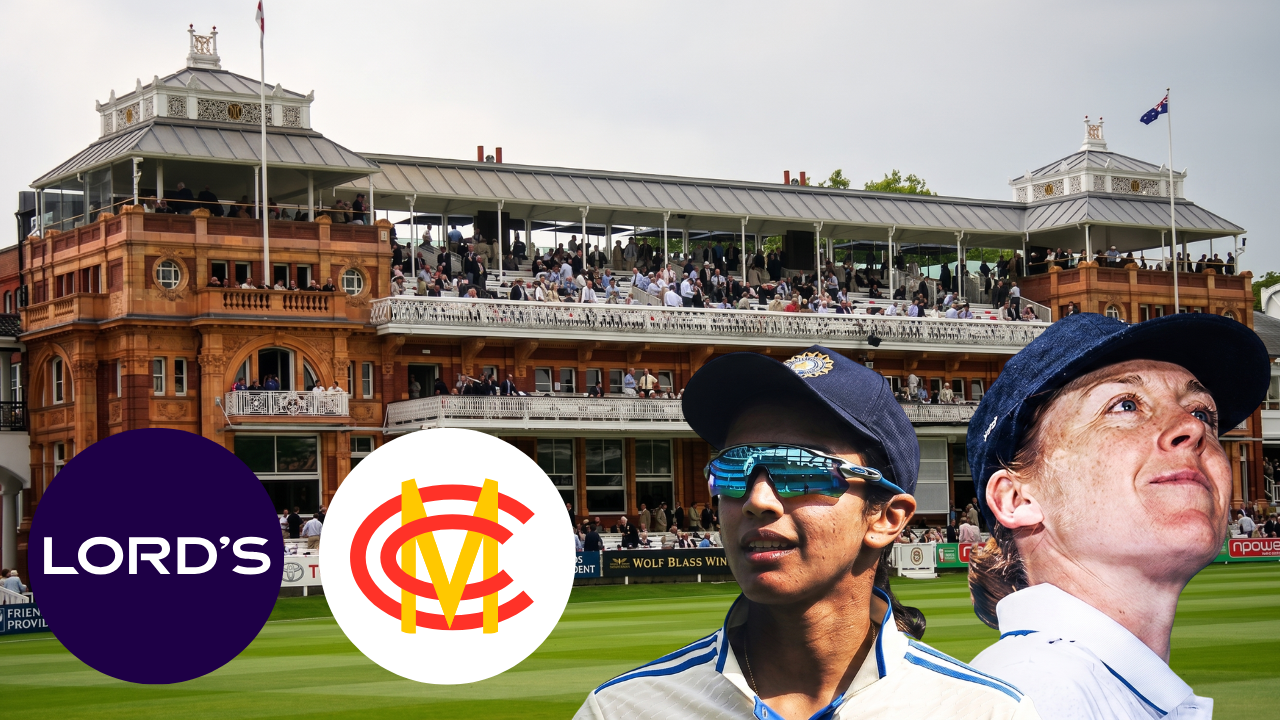
For more than two centuries, Marylebone Cricket Club has been sitting at the centre of the game. It is the custodian of the Laws of Cricket. It runs Lord’s, the venue widely considered the sport’s spiritual home. Its egg-and-bacon colours, its Long Room, its pavilion are among the most photographed signifiers in cricket. None of that has changed. What has changed — visibly, within a compressed window over a single English summer — is what the institution is choosing to do with its platform.
Within seven days in July 2026, Lord’s will host the final of the ICC Women’s T20 World Cup on Sunday July 5th and then stage the first ever women’s Test match at the Home of Cricket starting on the 10th of July. Those two fixtures sit inside a season of 21 women’s matches at the Ground, a record that more than doubles the available seats compared with 2025; shortly after them, a freshly rebranded London Spirit takes the field again in The Hundred. Ten weeks before the first ball of that Test, ticket sales for that match alone crossed 23,207, breaking the UK Women’s Test attendance record.

Katie Maier, MCC’s Chief Marketing Officer, frames 2026 in unambiguous terms. “It’s a pivotal year at Lord’s and for the women’s game more widely,” she says. “We’re hosting this hugely historic moment, the first women’s Test ever at Lord’s, 50 years on from when we hosted our first international in 1976. To see the home of cricket, which is so synonymous with the Test match game, finally staging women’s Test matches is going to be a really incredible moment.”
A transformation, not a one-off summer
The institutional arc behind 2026 traces back roughly six years. In June 2020, MCC announced that Clare Connor CBE — former England captain, the first woman to lead her country to an Ashes win in 42 years, and at that point the ECB’s Managing Director of Women’s Cricket — would become the Club’s first female President. The MCC presidency runs annually, and Connor’s one-year tenure formally began on 1 October 2021 (after the term of her predecessor, Kumar Sangakkara, was extended by a year due to COVID).

Maier joined the Club in September 2020, a few months after the announcement about Connor’s presidency – initially as Head of Marketing and Communications on a maternity cover; she moved into a Head of Strategic Projects role in 2021 and was named Chief Marketing Officer in July 2022, taking the marketing function to the executive table.
Connor’s appointment was an inflection point, brief by the design of the role but symbolically decisive. The years since have brought a visible acceleration in MCC’s investment in the women’s game. The Club has installed permanent visual markers around the Ground: exhibitions on women’s cricket in the MCC Museum, the Rachael Heyhoe Flint Gate, a commemorative Women’s Ashes plaque in the Harris Garden, and a portrait of former England captain Charlotte Edwards in the Long Room. On the field, attendance has followed: 21,610 spectators watched England Women take on Australia in the 2023 Ashes at Lord’s — the highest bilateral attendance for an England Women’s home international — and the 2025 Hundred women’s final at Lord’s drew 22,542. “The growth we’ve seen in the women’s game across ODIs, T20s, now the Test, in the grassroots — it’s been unprecedented,” Maier says.
A private club, a public brand
The work of marketing Lord’s is structurally unusual, and Maier is candid about it. “We are a private club, but we’re well known for having a public function,” she says. “We have this dual brand — the club of MCC, but also this very public consumer global brand that is Lord’s as a venue. There is a bit of a tightrope walk that does go on in a venue and a brand like this in a marketing role.
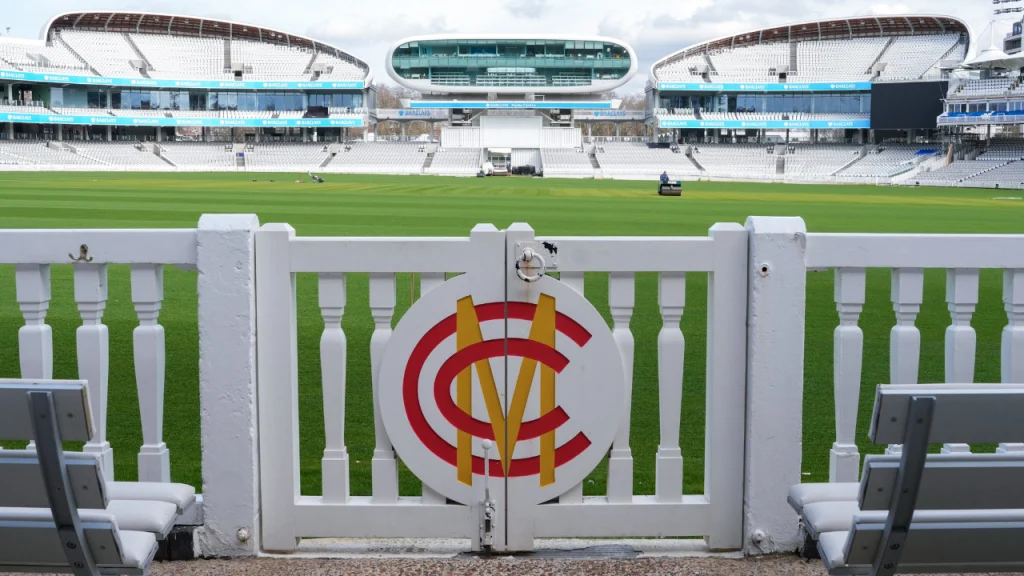
That tightrope has shaped how Maier has had to make the case for marketing investment inside an organisation that pre-dates almost every modern sports-marketing convention. “When you’re working in an operation which isn’t just a marketing agency, you’re having to break things down to make it understandable as to why there’s return, why there is value,” she says. “As long as you present it in a very rational way, we’ve actually found it’s been very open-minded.” 2026 is the first year in which MCC is investing in a dedicated audience growth campaign, anchored to the Lord’s Test but built to grow audiences across the year — the product, Maier says, of “really great debate and conversation over the last couple of years to this point with the committees.” CEO Robert Lawson and Chairman Mark Nicholas, she adds, have both been “very focused on taking the club forward and growing our audiences.”
The Hundred, the Tech Titans and London Spirit’s first MCC summer
The third pillar of MCC’s 2026 — and arguably the most commercially consequential — is the first Hundred season under the competition’s new ownership structure. In July 2025, MCC and Cricket Investor Holdings Limited, the consortium publicly known as the Tech Titans, signed contracts as the ECB completed the sale of London Spirit. ECB transferred a 51% stake to MCC as a gift and sold a 49% stake to the Tech Titans via auction; operational control passed to the new ownership on 1 October 2025. London Spirit was the largest single transaction in the privatisation of The Hundred’s eight franchises, contributing a massive portion of the £500m+ that the broader sale unlocked for the professional and grassroots game in England and Wales.For MCC, the deal carried a particular weight that Maier does not understate. “It’s sort of a pinch-yourself moment for many people who work in the club,” she says. “We’ve never had a team of our own in the history of MCC. It’s over 200 years without a team that we can really own and build.” The relationship with the new co-owners — a consortium led by Nikesh Arora of Palo Alto Networks alongside corporate and tech heavyweights like Microsoft CEO Satya Nadella and Google CEO Sundar Pichai, with Julian Metherell as London Spirit Board Chair and Eoin Morgan among the MCC-nominated directors — has, on her account, been built around shared decision-making rather than passive capital. The investors, she says, “are in it primarily because they love the sport” but are “very keen to empower us to lead it, to make the decisions around the branding, around the commerciality, around the team itself on the field, in order that we achieve the collectively desired financial success off it.”
The most public output of that empowerment, so far, is the London Spirit rebrand unveiled on 19 January 2026. Worked up over the preceding year with brand agency VCCP, it began with consumer research that deliberately reached beyond the existing fan base. “We needed to understand what the fan wants — the current fan of The Hundred, but also the future fan,” Maier says. “We spoke to our existing London Spirit fans, but also our members, and we collected representative samples from cricket fans, not just in the UK, but overseas, India and America especially.”

The research closed off the largest open question in the project. “What it told us first and foremost was that actually the name worked,” Maier says. “There was a lot of equity in that. It wasn’t broken, so let’s not fix it. But the identity, while strong, we felt could be improved upon.” On every other dimension, the brief tightened around Lord’s itself: “They really wanted to see us leaning more heavily into Lord’s as our unique asset, to celebrate London as one of the greatest cities in the world, and with a nod to the colours of MCC — you can’t get away from a bit of egg and bacon and the credibility that can give to a brand.”
The new identity — a dark blue palette threaded with MCC red and yellow across merchandise, a monogram with an L tilted to evoke the Lord’s slope, and a Father Time motif marking the centenary of the weathervane — was designed to function across screen sizes. “Having an L and an S together that could be really clean, clear and identifiable, that can also be commercialised and look fantastic on a cap, was really important to us,” Maier says. “We’re hero’ing other elements of our IP at MCC and Lord’s too — whether it’s Father Time, the Media Centre, the diagonals of the MCC tie. So this next era of London Spirit really does feel like our team.”
The rebrand has landed alongside a Barclays principal partnership — building on the bank’s existing premier sponsorship of Lord’s — and a Nike kit supply deal that marks Nike’s first in The Hundred. Heather Knight, the former England and London Spirit captain, has taken up a newly created Women’s General Manager role at the franchise, a first within the competition.
An audience no longer divided by gender
Across all three pillars — World Cup, Test, Hundred — Maier returns repeatedly to a point that quietly reframes how the women’s game is being marketed at Lord’s. The audience she is selling to is not segmented along the lines that older models assumed. “There’s real momentum now, not just amongst the cricketing fan base,” she says. “You’re also definitely seeing some new audiences coming through — those who seek out the big moments. The Hundred has been fantastic for the women’s game, and we’re seeing some great crossover from those who might have dipped their toe in the water at a Hundred match at Lord’s and are now seeing it as an opportunity to take it onto the international level.”
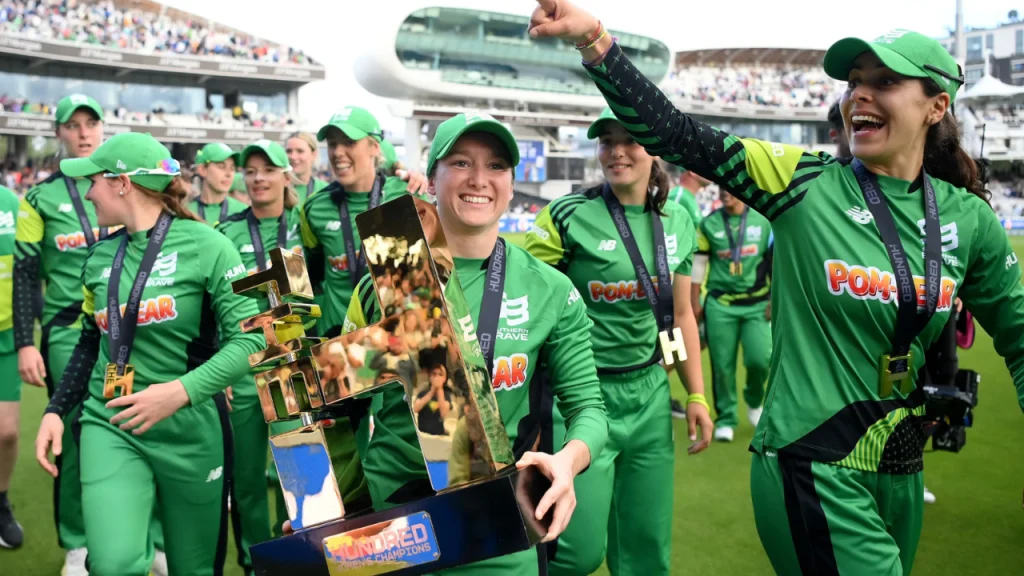
The crossover runs in both directions. “The fan base is obviously seeing more females coming through, but we are seeing male fans as well appreciating what we’re putting on in the women’s game,” Maier says. “Probably 10 years ago, people would have thought ‘women will come to women’s matches and men will go to men’s matches’ – but that’s not the case.” Lifting the women’s game to the position that other women’s sports have reached commercially, she suggests, “will come down to the quality of the cricket, the performances on the field, and creating those stars off it. Having those personalities that sit behind the teams is fundamental.” The market she is describing is no longer marginal: women’s cricket is one of the fastest-growing areas in global sport, with the UK market alone projected to be worth £1bn by 2030.
Representation, network, institution
The Connor presidency, on Maier’s reading, was a marker. “I was fortunate when I joined — Clare was coming into that presidential role,” she says. “That was quite a pivotal moment for MCC, the first ever female President, and I forged a very close working relationship with her through that period.”
Her own path into and back into cricket runs against the assumption that the sport’s executive ranks need to be filled from inside it. After an early career stint at Hampshire’s Rose Bowl two decades ago — under then-Chairman Rod Bransgrove, who Maier credits as “very progressive in many ways” — she spent more than a decade outside cricket, in marketing leadership roles at The Jockey Club’s Sandown Park and Royal Caribbean’s Celebrity Cruises, before launching a five-year sports marketing consulting practice in 2015 where her clients included the Investec Derby Festival and GB Women’s Hockey. She returned to cricket via MCC in 2020. That cross-industry trajectory now informs how the department hires.
“It’s not always about employing people who just have cricket experience,” she says. “People who come from other sports, but also other industries, can bring in a lens of ‘what does a fan want’ even though they might be coming into the sport for the first time.”
The next institutional question
Most of the visible 2026 work — the Test, the World Cup final, the Hundred rebrand, the audience growth campaign — sits in a public arena. One of the more consequential conversations MCC is having about itself this year, however, sits inside its membership. In April, the Club signalled that it had begun a consultation with Members on the topic of gender diversity, acknowledging that progress on the field and around the Ground had not yet been fully reflected within its own membership. Around a third of cricket audiences are now estimated to be female; the Club has noted that its own membership has evolved more gradually, shaped by structural factors including the length of the waiting list and the design of membership pathways. The consultation, in MCC’s own framing, is “an opportunity to consider how MCC can continue to reflect the modern game while remaining true to its traditions and governance.”
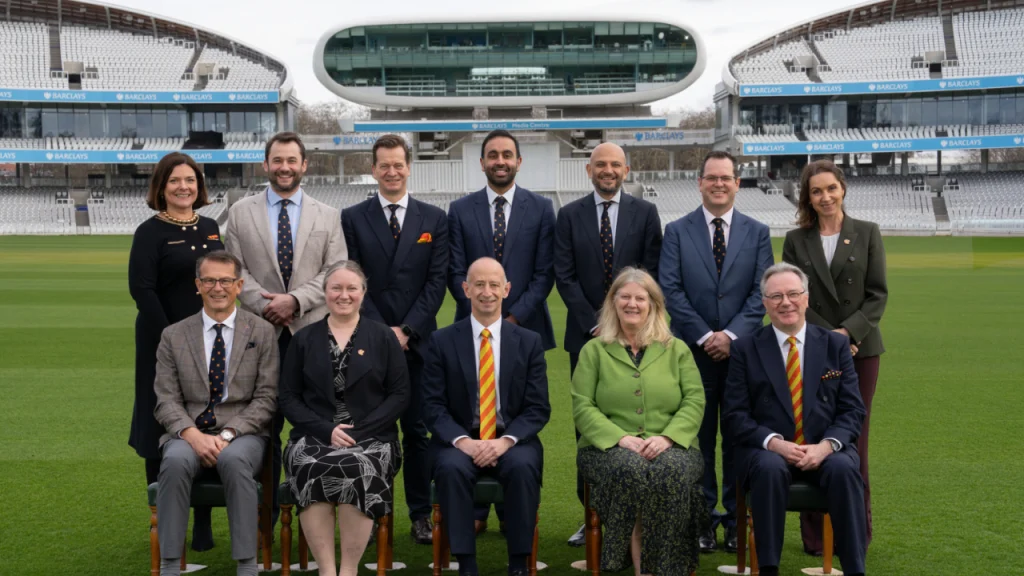
The consultation will run on its own timetable, with any decisions taken through Member agreement. But its existence — alongside a record women’s fixtures calendar, a sold-out World Cup final, a record-breaking Test, a privatised competition with new co-owners, and a marketing organisation built to serve all of it — is what 2026 at Lord’s actually looks like up close. The home of cricket has spent six years quietly redrawing what it considers its core work. This summer is when that work meets the public.


