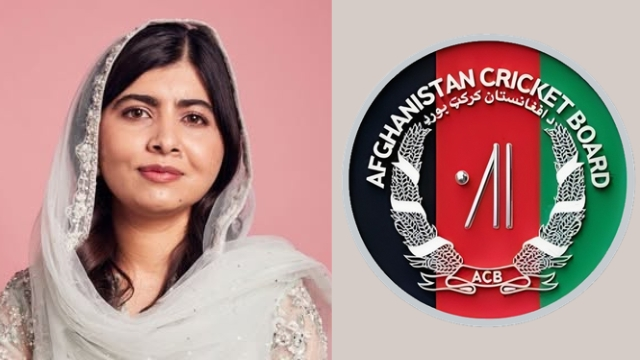
At the launch of the 2026 ICC Women’s T20 World Cup at Lord’s, Nobel Peace Prize laureate Malala Yousafzai delivered a powerful message to global cricket leaders: stand in solidarity with Afghan women and girls who remain banned from playing sports and accessing education under Taliban rule.
“The right to play, the right to learn”
Speaking on Thursday, Malala called out the gender apartheid in Afghanistan, highlighting that the country remains the only ICC full member without a women’s national cricket team. She said:
“I want to take this opportunity to talk about what’s happening to women and girls in Afghanistan. They currently have their cricket team in exile – for women – and the same is the case for their women’s soccer team as well.”
“It’s the only country where girls are banned from learning and playing sports – along with every other opportunity they should have.”
“They’re living under the Taliban in a system of gender apartheid… and we need to share our support and solidarity with them.”
In 2020, 25 Afghan women were given professional contracts by the Afghanistan Cricket Board (ACB). But that effort was dismantled with the Taliban’s return in 2021. Twenty of those players fled to Australia, while others lost not just their cricketing futures, but nearly all basic rights—including the right to speak publicly or safely participate in sport.
“We cannot leave behind millions of women”
Malala emphasized the contradiction of celebrating women’s progress in sport without acknowledging those who have been excluded:
“We cannot leave behind millions of women who do not have this right, right now—the right to play, the right to learn.”
“We’ll see true progress when we take everybody with us. We must hold our governments accountable for pressuring the Taliban and find ways to support Afghan women and girls in exile.”
“Sport is such a powerful way to show our support, to help them play.”
ICC and board support welcomed, but more action needed
Malala acknowledged recent initiatives by the ICC, ECB, BCCI, and Cricket Australia, including the formation of a taskforce to assist exiled Afghan women cricketers. That effort has led to funding, coaching access, and the Afghan Women’s XI participating in an exhibition game in Melbourne hosted by Cricket Without Borders.
“I am happy that recently the ICC and the ECB have made some good announcements, but I do believe there is a lot more that we could do,” she added.
The Afghanistan Cricket Board continues to receive full ICC funding despite lacking an active women’s team—a situation that critics argue undermines the ICC’s stated commitment to gender equality.
Personal stakes for Malala
Malala’s advocacy is deeply personal. At 15, she survived an assassination attempt by the Pakistani Taliban for championing girls’ right to education. She also grew up playing cricket and badminton with her brothers, giving her appeal on behalf of Afghan women athletes both symbolic and authentic.
As women’s cricket experiences rapid global growth, Malala’s speech served as a crucial reminder: sport’s progress must be inclusive to be meaningful. The silence of exile must not become cricket’s blind spot.