
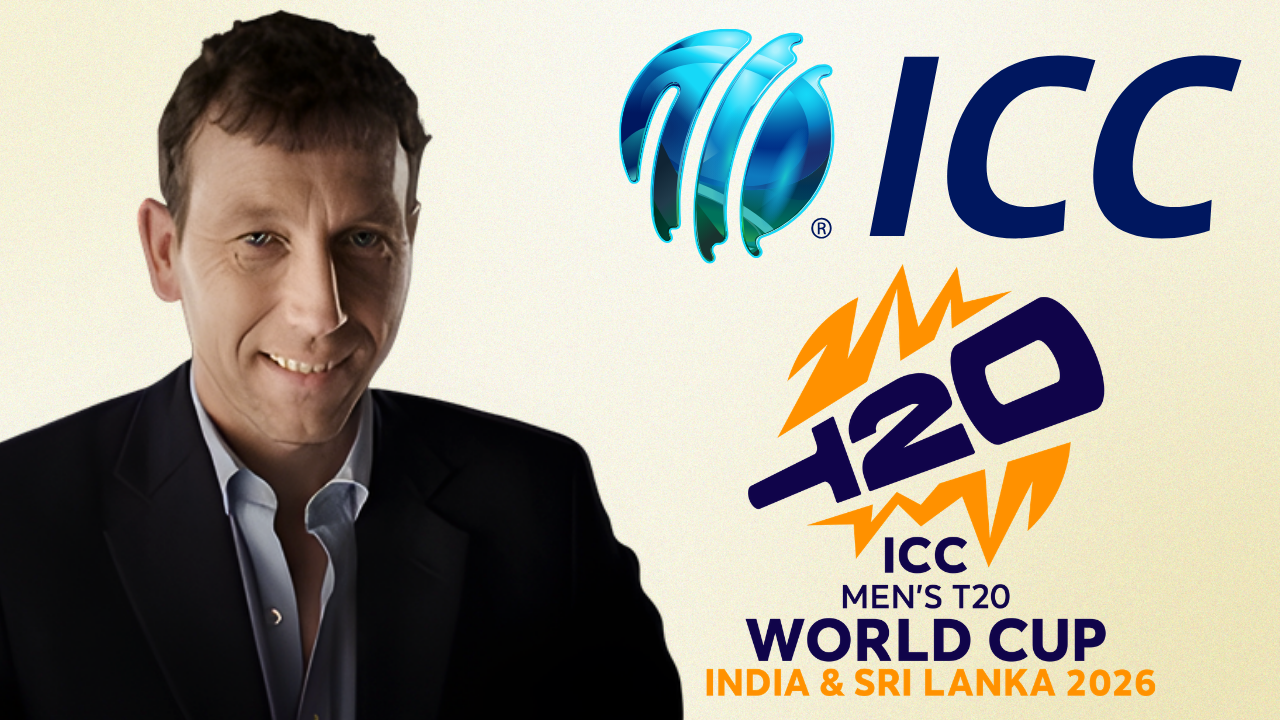
International cricket’s expanding global tournament calendar is facing renewed scrutiny after the conclusion of the ICC Men’s T20 World Cup 2026.
With multiple ICC events scheduled within short cycles, debate has resurfaced about whether the sport risks diluting the prestige of its flagship tournaments. Speaking on Sky Sports following India’s triumph in the T20 World Cup final against New Zealand, former England Captain Michael Atherton said the current structure leaves him conflicted about the frequency of global competitions.
“So you think gradually, you know, that there’ll be a law of diminishing returns. But equally, you know, people will say, who are supporters of the associate nations, that they want a T20 World Cup every two years because that’s the time that they have to showcase what they’re about and, you know, the time to get on the big stage,” Atherton said.
Concerns over crowded ICC events calendar
Atherton suggested the growing number of global tournaments could eventually reduce the sense of anticipation traditionally associated with World Cups. He pointed to the fact that the ICC’s current cycle effectively delivers multiple flagship events within a short window.
“It’s why I’m a bit conflicted about the number of World Cups that we have. In a way, you think there’s going to be the law of diminishing returns. If you have a World Cup virtually every year, well, there’s essentially three World Cups every four years with the biennial T20 World Cup and then the quadrennial 50-over World Cup… that makes three out of every four years,” he added.
The ICC tournament landscape now includes T20 World Cups every two years, the ODI World Cup every four years and the revived Champions Trophy positioned within the cycle. That schedule means international cricket regularly features major global events across different formats within short intervals.
T20 seen as key driver of global expansion
Despite raising concerns about tournament frequency, Atherton acknowledged that the rise of T20 cricket has played a crucial role in expanding the sport beyond its traditional power bases.
“So, somewhat conflicted about that, but obviously a global game is a good thing in theory and practice. T20 is obviously going to drive that. It’s long been, you know, we give the ICC a bit of stick from time to time. It’s long been their desire to globalise the game through T20,” he stated.
The T20 World Cup has increasingly been positioned by administrators as the primary platform for growing cricket in emerging markets. Recent editions of the tournament have featured expanded line-ups, including 20 participating teams, allowing several Associate nations to compete on the sport’s biggest stage.
Associate nations benefit from expanded T20 opportunities
Atherton also highlighted how the shorter format helps narrow the competitive gap between established cricket powers and developing teams.
“It’s the obvious format because it narrows the gap and makes it more likely that games will be competitive, and that is working to some degree. In terms of giving teams more opportunity, it is difficult with the calendar sometimes. But when you think how many times England have played Scotland, for example, which I think is six times in our history, when they’re our next-door neighbors, there must be more opportunity to give a team like Scotland more chances when teams come and tour England, and indeed England themselves,” he noted.
As cricket continues to balance commercial expansion with the traditions of its global tournaments, the debate around how many World Cups the sport truly needs appears unlikely to disappear anytime soon.


