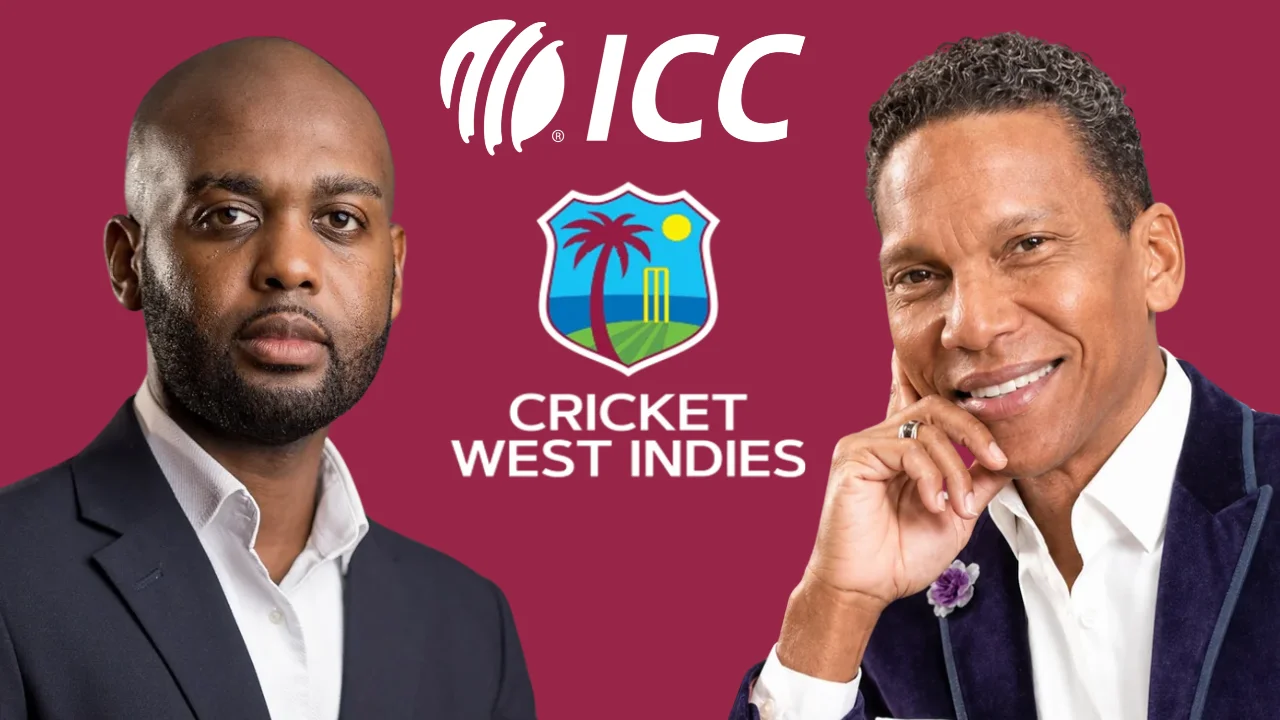
Shallow defends the ICC reform call
Dehring had described the ICC’s current model as unfair and said the world body should deliver greater benefits to smaller cricketing nations such as the West Indies. Shallow, who is fully aligned with his Chief Executive, addressed the matter in an interview with Guardian Media Sports. He said: “I suspect it was sort of taken out of context what the CEO (Chris Dehring) said.” He added: “…I think the point that Chris was making, or he tried to make, was by and large an amendment to the commercial model would help smaller members, the likes of Cricket West Indies, New Zealand, and so on.”
Under the existing bilateral arrangements, the board hosting an international series generally keeps the revenue from its broadcast rights. Shallow continued: “It’s something that I’m sure is topical at the board level of the ICC, and maybe in the coming period, when there’s a discussion around that, who knows, it may be revised.”
What the India tour still delivered
During the tour, CWI secured sponsorship partners for both the ODI and T20I contests, helped by the size and commercial influence of the Indian market. Shallow said: “When we host India, this is one of the series that we generate significant revenue from.” He noted: “Though we don’t get a share of their broadcast deal, we do benefit from them financially from the tour.”
Dehring on governments and shifting priorities
Dehring has described his own comments as a bit taken out of context. They concerned an October 20 Gleaner editorial titled ‘Dismantling WI Cricket?’, which was read as saying Caribbean governments had proved unreliable in backing the regional body. In Dehring’s account, what is unreliable is a model that depends on governments in an economically challenging environment, not the governments themselves. Dehring told The Gleaner: “… But the point that I make is that any business model that is dependent on Caribbean governments is not a safe, secure business model.”
CWI still welcomes government assistance, but Dehring says it cannot be the fundamental basis for the board’s continuation, and he noted that past pledges of support have not been sustained. He accepts that cricket is as important in the Caribbean as anywhere, but says developing nations must prioritise differently. He explained: “Our Caribbean governments already have so many issues to resolve, our hospitals, our healthcare industries, our schools, our education, and so on. There are so many demands of government that you cannot rely on government to be the core of your business model.”
On shifting priorities, Dehring said: “Governments change, and priorities change at any point in time. When a hurricane hits a country, you really can’t fault the government for going in for the investment in cricket and dealing with the population that has been hit by a hurricane. That’s the point that I make.”
Dehring has described governments as very supportive overall. Of the 2007 World Cup, he said: “Certainly, when you look at the new facilities that were built for Cricket World Cup 2007, that has helped to sustain an industry.” He continued: “It spawned things like the Caribbean Premier League, which has been a very successful league, probably the second most watched league in the world, and so on.”
Dehring added: “Remember, 90 per cent of our earnings come from outside of the region, or international broadcast rights, international sponsorships. You put us down; we are probably one of the region’s biggest exporters, but we export our IP, our intellectual property.”
The public good argument
Dehring set out his public good argument in an exclusive interview with the RJRGLEANER Communications Group. He argued that CWI, though a private company, has operated as a public good for at least 30 years. He said: “So, Cricket West Indies and its predecessor, the West Indies Cricket Board, is probably the most transparent cricket board in the world.”
He expected a backlash for saying so, but pointed out that privately held companies elsewhere do not publish audited financial statements, produce annual reports or hold press conferences where the public can question them. CWI does all three. It holds quarterly press conferences to which the Caribbean media are invited, and Dehring said he has personally taken part in at least three. Turnout and questions have been scarce, he said, and few people download and scrutinise the audited reports as they would those of a public company.
Dehring said: “The vast majority of income that Cricket West Indies has earned over those 30 years are generated from outside of the Caribbean. It’s not from Caribbean governments or Caribbean people. And therefore, when you think about all of that expenditure of those resources in the region, you understand that Cricket West Indies has really contributed across the societies.” He added: “You know, I’ve made the point a few months ago in a tourism forum that we have directly spent US$82.5 million over the last 15 years on domestic airlift. That is money that has flowed from outside of the region into our pockets and been spent on domestic carriers. We’ve spent over US$120 million on hotels in the region, direct expenditure.”
Those figures do not include visiting fans and media, who also book flights and hotel rooms across the region. In Dehring’s view, an economic study of CWI’s contribution over the years would show it is worthy of consideration for corporate and government support to continue.