
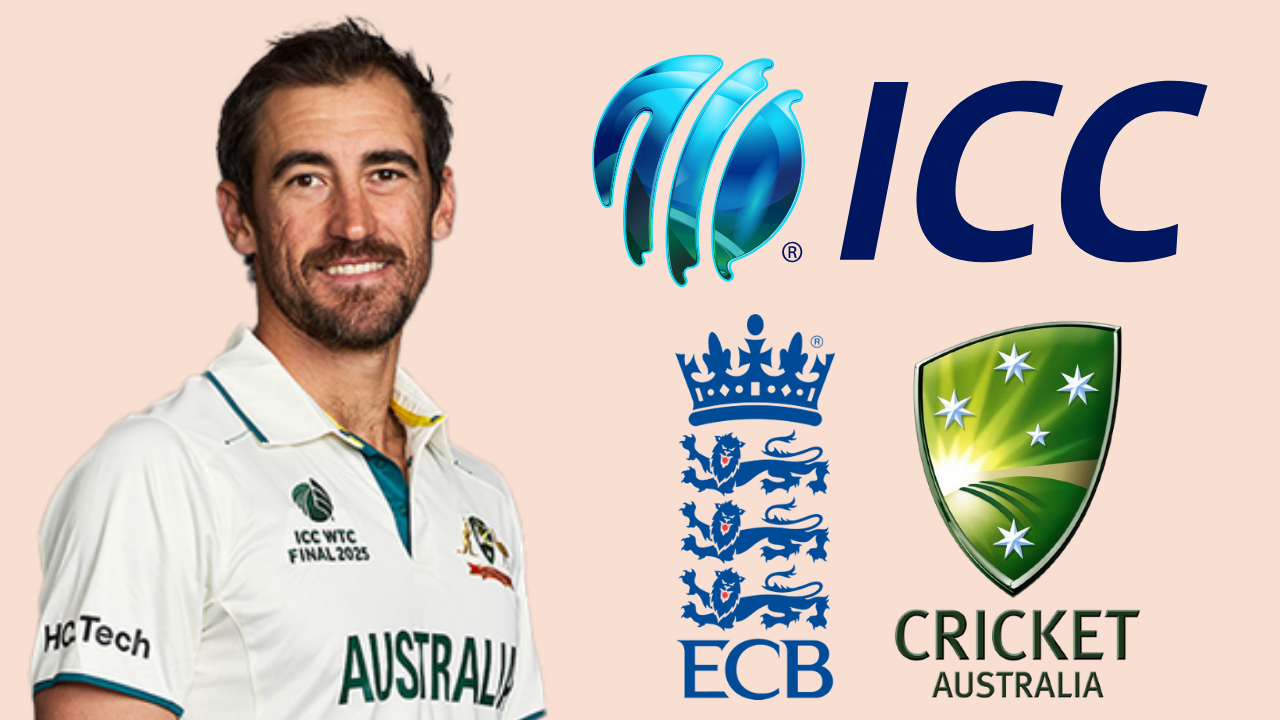
The Ashes are rarely short on drama, but this time the spotlight isn’t on a controversial wicket or a war of words—it’s on the technology meant to prevent such debates. In a series already brimming with tension, Mitchell Starc has emerged as the face of growing frustration with the inconsistencies of the Decision Review System (DRS), demanding the International Cricket Council (ICC) take full control and responsibility.
The latest controversy exploded during the third Test at Adelaide, when Real Time Snicko (RTS), the sound-based edge detection system used in Australia, came under intense scrutiny following a series of errors and questionable decisions. During the match, Starc was caught on the stump mic declaring, “Snicko needs to be sacked”, summing up the Australian camp’s discontent in five pointed words.
Starc demands ICC accountability and a global standard
Speaking to the media after the Test, Starc expanded on his frustrations and made a direct appeal to the ICC. “I’m sure it’s frustrating for everyone, viewers, officials, broadcasters no doubt. One thing I will say … I’m only going to speak for myself here, the officials use it, right? So why doesn’t the ICC pay for it? And why is it not just one [provider] across the board? Why don’t we use the same technology in all different series that’s going to perhaps create less confusion, less frustration? So that’s where I’ll leave that.”
His remarks weren’t just a venting of emotion—they reflect a growing concern among players and fans alike about a fragmented system that varies from country to country. In Australia, RTS is used, while most of the cricketing world—including the ICC’s marquee events—relies on UltraEdge.
Operator errors and system flaws spark uproar
The tipping point came early in the Adelaide Test when England successfully appealed to have a review reinstated. Match referee Jeff Crowe approved the reinstatement after RTS provider BBG Sports admitted operator error—an admission that caused significant embarrassment and sparked questions over the technology’s reliability.
Tensions escalated further on day two when another review involving England’s Jamie Smith raised eyebrows after Snicko detected a spike inconsistent with the moment the ball passed the bat. That sequence of events led to Starc’s stump mic outburst and intensified scrutiny on RTS.
The issue isn’t isolated to one match or one team. With broadcasters currently footing the bill and choosing which technology to use, the lack of a standardized system has opened the door to inconsistencies that affect the integrity of decisions in high-stakes matches.
Ponting and Cummins acknowledge technological disparity
Former Australia captain Ricky Ponting didn’t mince words during his commentary on the third Test, suggesting the current system isn’t up to scratch. He said umpires “can’t trust” RTS, implicitly endorsing UltraEdge as the superior and more reliable option.
Australia captain Pat Cummins struck a more measured tone at the post-match press conference but echoed the same underlying concern about variation in DRS systems across countries. “The one here seems a little bit different to sometimes what you get overseas. There’s always a few murmurs. You’re hoping that it matches up if you’re the bowling team. Sometimes you kind of just making sure that it’s all okay if you’re batting, even though you feel like you haven’t hit it. It sometimes doesn’t feel super consistent, but you just crack on whatever the umpire says.”
Cummins’ comments reflect the awkward balance players must strike—navigating between trusting the system and recognizing its flaws.
ECB and CA prepare to push for ICC review
With both Cricket Australia and the England and Wales Cricket Board feeling the heat from multiple decisions during the Test, both are reportedly preparing to lobby the ICC to review and reform its DRS protocols. One of the central points of this effort is expected to be the financial model—specifically, why host broadcasters are responsible for paying for and selecting the technology, rather than the ICC ensuring a unified and reliable system globally.
England camp downplays the controversy
While the Australian side has been vocal, England’s representatives have remained largely reserved in their responses. Former player and current coach Marcus Trescothick, when asked about the situation during the third Test, summed up England’s stance with a brief, non-committal response: “It is what it is.”
As the Ashes series moves forward, RTS will continue to be used for the final two Tests in Melbourne and Sydney, as mid-series technology changes are not permitted. But the conversation around the credibility of DRS—and the ICC’s role in ensuring its fairness—shows no signs of fading.
What began as a murmuring of discontent has now become a full-throated demand from players and commentators alike: the time has come for the ICC to take full ownership of the DRS, unify its suppliers, and restore consistency to one of cricket’s most vital tools.


