On the afternoon of November 7 at Zayed Cricket Stadium, Kieron Pollard walked out to defend a title and Jason Holder walked out to contest the first match in his franchise’s history. Two more matches followed the same evening. By the time the floodlights went off, six teams had played, 66 players had appeared, and the 2026 Abu Dhabi T10 was roughly a sixteenth of the way through its season.
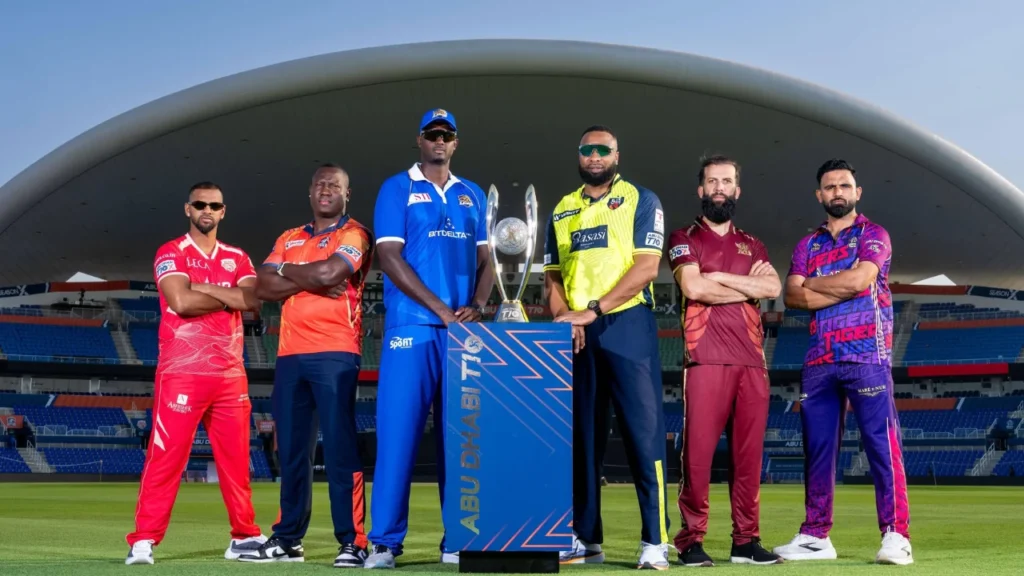
T10 occupies an unusual position in cricket. It is sanctioned, and it is played by genuine international cricketers, but it has no World Cup, no pinnacle event and no place in the ICC’s competitive architecture. What grew up in that space was a circuit of tournaments of wildly varying quality, several of which became bywords for unpaid players and unreliable owners. The format’s reputation was shaped less by the cricket than by the lack of governance around it.
Which is what makes the current experiment worth watching. The Abu Dhabi T10 is now owned and run by government bodies, and it is spending real capital on the proposition that ten overs a side is a legitimate way to play professional cricket.
How Abu Dhabi ended up owning a league
The emirate did not initially set out to rescue a format. It set out to solve a scheduling problem.
When Abu Dhabi Cricket & Sports Hub (ADCSH) took over Zayed Cricket Stadium in 2018 — a ground and a couple of nets on nearly a million square metres — the emirate was, in Matt Boucher‘s phrase, “the de facto host when something happened in Southeast Asia and was relocated to this part of the world.” Useful, but not a strategy. “On an annual basis you can’t guarantee ICC events, and you really can’t create your own event,” says Boucher, who had moved across from the Abu Dhabi Sports Council.
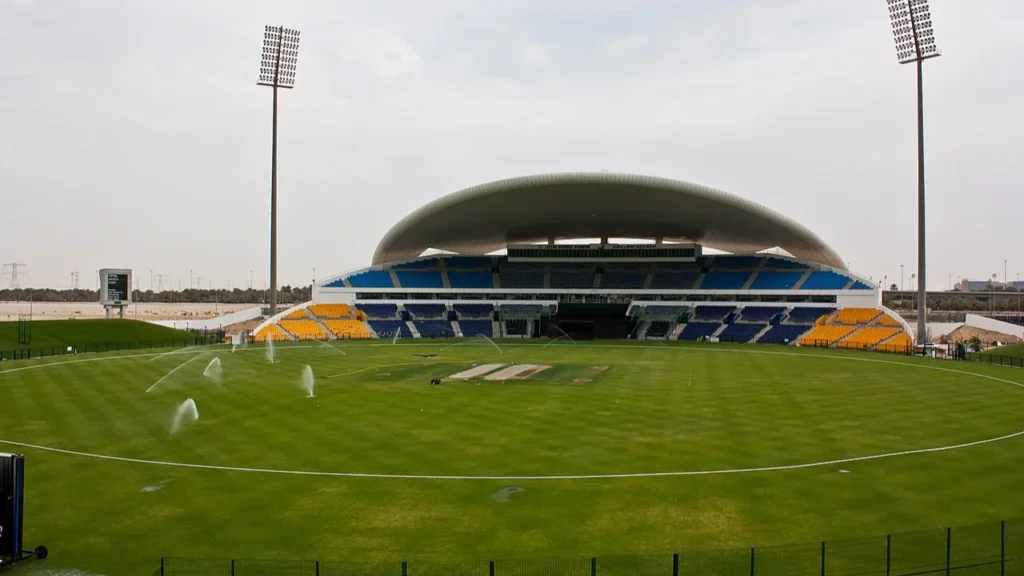
So it bought one. A five-year destination deal in 2019 brought the T10 from Sharjah. The tournament itself stayed with T10 Sports Management, founded by Shaji Ul Mulk, and Abu Dhabi hosted it — an arrangement that held through COVID and beyond, until this year, when ADCSH assumed majority ownership and commercial control.
The tournament now sits with ASHRA Events LLC – S.P.C., a wholly owned ADCSH subsidiary, operating alongside the Sports Council and the Emirates Cricket Board. Underneath it is a 50-year licence from the ECB — the structural fact that makes everything else possible, because it is what allows the league to issue franchise licences a decade long.
The case for ten overs
Boucher is an unlikely advocate, and he knows it. He describes himself as “a traditional Test match viewing Englishman,” and when pressed on the format’s merits he does not start with a typical pitch.
“I’m not on the pulpit to say that it’s the world’s best format besides Test cricket,” he says. ” But for what we wanted in Abu Dhabi, and for what we could secure on long-term contracts from the government, into private partners and our federation stakeholders, is absolutely perfect for us.”
That is a more interesting argument than format evangelism, because it is an argument about events rather than about cricket. What T10 offers an event owner is density. A match lasts about an hour and 40 minutes; with a 25-minute changeover, three fit comfortably into a six-and-a-half-hour evening window. “A fan arriving at 4pm and leaving at 10pm has seen three matches, 66 players, three different scenarios and a whole lot of excitement,” Boucher says. Across 13 days this year, that produces 32 matches at one venue. “It is not what the rest of the world are doing,” he says. “Unique is an overused word, but it is special.”
It also suits an emirate selling itself to visitors. The Department of Culture and Tourism has been a sponsorship partner throughout, and the two-weekend structure is built deliberately around an inbound tourism play. Boucher is careful not to claim the job is done: a packaged festival weekend of cricket is “something we definitely want to be able to do,” rather than something he says has been achieved.

On whether the format could compress further, he is firm. “T10 is probably as short as we go.” A 60-ball innings, he argues, retains what makes the game recognisable: “We’ve got interesting powerplay bowling, we’ve got big hitting, and the elements of T20 are definitely there within T10.”
His most persuasive evidence is domestic. His children are 15 and 12, and their attention has moved. “When it’s T20 now, it’s: no, daddy, we haven’t got time for that, we’re going somewhere else for the day,” he says. “But when the T10 events come around, or when it’s half an innings of a T20, then they’re in for it.”
The thing that was actually broken
Ask Boucher what needed fixing and he does not start with the cricket, the broadcast or the marketing. He starts with who owned the teams.
“The absolute headline and the strength of the event comes off the ownership,” he says. “Over the last couple of years there has been far too much churn in the team ownership in T10, and that has impacted the deliverables of the event. It means we are chasing our tails. It means we are not providing a sound and structured foundation, with repeat and reliable team owners to move forward with.”
The numbers behind that are stark: 18 different teams have competed across nine seasons of an eight-team tournament, and five team owners changed in the last edition alone. Every franchise agreement had been negotiated separately, on its own terms. “They were all unique, and they were all specific to each of the different owners, that also made it very hard to deliver a consistent event.”
So the first work of the new ownership, from January through March, was contractual rather than sporting. “One of the real core agreements we wanted to get hold of was a standardised franchise agreement,” Boucher says, together with “verified due diligence documents, financial information” and an ICC event application filed as early and as cleanly as possible.
Deloitte ran a two-stage invitation-to-bid process: a qualification stage, then a detailed data room opened to shortlisted bidders. “What that involved was a neutral, independent body being part of the shop window,” Boucher says. Prospective owners had to clear its background checks before a franchise agreement could be signed.
The most consequential reform to emerge from that review concerned players rather than owners. Under the standardised agreements, franchises must fund 100% of their player fees in advance, into an ADCSH-controlled account, with the tournament itself — not the individual teams — responsible for paying the cricketers. It was a direct answer to the problem that had done most damage to the format’s name: the WCA had named the Abu Dhabi T10 among the historic major offenders on late and non-payment in sanctioned domestic leagues, and agents who had spent years chasing franchises for money owed described the change as long overdue.
The underlying change, though, is simpler than any process. ADCSH had been running the event for years without the authority to decide anything about it. “We never had the decision, because we weren’t the owners of the event,” Boucher says. “Now we can make the decision, and we can make the decision that is best for the event and best for the owners in Abu Dhabi, not necessarily just best for the bottom line.”
He is careful not to overstate the resources that come with government backing — “I’m not in any way saying we’ve got endless pots of financial support” — but the difference in mandate is real. “Nobody at the Sports Council is holding a gun to our heads saying you have to earn this amount of money or it is a failure, which is a very refreshing position for us to have.”
In practice that has meant budget for things previously cut. Hawk-Eye, present two years ago and absent last year, returns, along with drone cameras, buggy cams and a 26-camera production. Fifteen full-time ADCSH staff work on the event.
The economics of a 50-year licence
The commercial model is the part most likely to determine whether any of this lasts, and it is built around the two halves of that ECB licence.
Franchise fees are payable for the first 10 years and not thereafter. “A potential owner can invest into the product in the first 10 years, and then really when we move forward into the second 10 years, they will then reap the benefits,” Boucher says. The modelling assumes the event’s revenue pillars build through the first decade alongside fee income; in the second decade, with the fee gone, “their P&L becomes more attractive for them.” In the meantime, each franchise receives a guaranteed annual share of Central Pool Income for years one to 10 — revenue certainty from the outset, which is unusual in a young league.
There is an expansion path, and it was in the data room so bidders could model against it: two additional teams in year four, two more in year eight, building towards a 10- to 12-team tournament over a maximum of 15 days. There are defined exit points for owners whose circumstances change, and entry points for replacements. The sequencing answers the churn problem directly. “We don’t want one team in in year two and then that team out in year three,” Boucher says.
He is equally clear about what this is not. “It is definitely a private-public partnership, but it is not something where we are giving handouts to the teams just because we want the best names to come along. There is definitely an investment, which they are all familiar with, over the first 10 years, before the returns really do kick in.”
Six teams are contesting the 2026 edition — UAE Bulls, Yas Lions, Royal Desert Champions, Emirates Eagles, United Tigers and Arabian Aces — five of them under new ownership groups, with the Bulls retained as what Boucher calls a legacy team. Their ownership has been consistent since 2019 and their contract was refreshed rather than replaced. “They’re the most professional team we’ve dealt with,” he says. Andy Flower coaches them; Neelesh Bhatnagar owns them.
Building the shop window
If ownership was the structural fix, distribution is the growth plan, and it has been assembled piece by piece since September.
Boucher’s strategic view of broadcast is unsentimental about where the leverage sits. “We are not taking anything for granted. We don’t just expect to be given the broadcast airtime,” he says. “We have got to be equally organised in running the event to the best we can, and giving the broadcasters what they want.” The deals being signed now are mostly one-year arrangements by design — “until we can then move into longer-term deals” — on the logic that 2026 needs to be delivered properly before anything longer gets negotiated.
In September the tournament appointed Apex Sports Consulting, a UAE-based advisory firm, to lead its global broadcast rights distribution across television and digital. “Apex Sports understands both the cricket market and the broadcast business,” Boucher said at the time. Apex CEO Imran Ahmad Khan framed the mandate around momentum rather than rescue: “Abu Dhabi T10 is a property with real momentum.”
The anchor deal arrived in October. JioStar acquired rights for the Indian subcontinent, with Star Sports televising all 32 matches and JioHotstar streaming them. “India has always been our biggest and most passionate market,” Boucher said, “and collaborating with JioStar enables us to connect with an even broader audience through platforms renowned for delivering world-class cricket coverage.” Prashant Khanna, Head – Sports: Rights & Innovation at JioStar, made the format argument himself: “T10 has found its audience in India for its mile-a-minute format, and we are excited to bring that same energy to the Abu Dhabi T10.”
When Boucher described his ambition beyond the anchor deal, he put it at a dozen or more international channels and networks. That is roughly what the tournament has landed. Confirmed in the days before the opening match, the 2026 broadcast map runs across MENA on Cricbuzz, Cricbuzz TV on eLife, Switch TV and STARZPLAY; Pakistan on A Sports, with Tamasha and MYCO streaming; South Africa on Sporty TV; North America on Willow TV, Willow Sports and Willow by Cricbuzz; Australia on FOX Sports 501 with Kayo streaming; and the Caribbean on RUSH – Live and Louder. In India, Star Sports carries English and Hindi feeds with JioHotstar streaming.
The audience Boucher is chasing is not primarily in traditional cricket territories at all: “It is the non-traditional markets, where there are a lot of cricket viewers who aren’t accessing a linear channel, that we can get the OTT channel to” — the Indian national in Germany, the Pakistani national in France.
That explains the digital side. A content partnership with Dot Republic Media, a cricket digital network running more than 600 YouTube channels with some 190 million combined subscribers, will produce T10 content year-round rather than only during the fortnight. Boucher is candid that YouTube performance was poor before. It is also, he argues, where the format has a structural advantage: T10 is “a great format for YouTube, a great format for digital,” and “a brilliant highlights format for a five to eight minute piece.”
Two further pieces are about experience rather than reach. A partnership with Miral makes Yas Island the Official Experiences Partner, with all six franchises based there and the trophy launch and tournament parties staged on the island — a direct answer to the player-treatment problem the tournament has been addressing elsewhere. And tickets went on sale at AED 10 for early-bird general admission, rising to AED 20, pricing aimed less at yield than at filling a stadium. “Our objective is to make world-class cricket accessible to as many fans as possible,” Boucher said, pointing to a fan village alongside the cricket.

The reach numbers the tournament cites for itself should be read as what they are: organisers put 2025 at more than 527 million social media impressions and over US$512 million in broadcast value, exposure estimates rather than confirmed revenue. Whether any of it converts is precisely what 2026 is meant to establish.
Who is actually playing
A format earns credibility when good players choose to play it, and the 2026 field is the strongest case the tournament has made.
Sixteen West Indies internationals are spread across the six squads, with every team holding at least one. Four of the six franchise icons are West Indian: Pollard at the Bulls, Holder at Yas Lions, Pooran captaining Royal Desert Champions, Rovman Powell at Emirates Eagles. Around them sit Moeen Ali, Livingstone, Narine, Boult, Salt, Shimron Hetmyer, Alex Hales, Sam Billings, James Vince, Naseem Shah, Mohammad Amir and Shadab Khan.
The coaching benches are similarly serious: Flower at the Bulls with Dwayne Bravo as bowling coach and mentor, Mickey Arthur at Emirates Eagles, Lance Klusener at Arabian Aces, Robin Singh directing Royal Desert Champions.
More telling than any individual name is a rule. Every franchise must field at least two UAE players in every playing XI — a requirement that reads less like a promoter’s marketing device and more like the kind of condition a national federation attaches to a competition it intends to use. Twelve UAE players came through the September 30 draft, among them Muhammad Waseem, Alishan Sharafu, Vriitya Aravind and Aayan Afzal Khan.
Part of what makes that field possible is the payment guarantee, and the response from the people who represent players has been warm. Tom Moffat, Chief Executive of the World Cricketers’ Association, called it “pleasing to see another domestic league signal its intention to strengthen player payment protections,” adding that the WCA welcomed “the direction of travel including the proposed changes in the Abu Dhabi T10.” Dean Ahmed, CEO of Global Sport Ventures, whose roster includes many global stars, put the wider point more bluntly: “We’ve seen more payment uncertainty in franchise cricket over the past 18 months than I can remember, so securing player funds upfront should become the minimum standard. The Abu Dhabi T10 deserves real credit for taking the lead.”
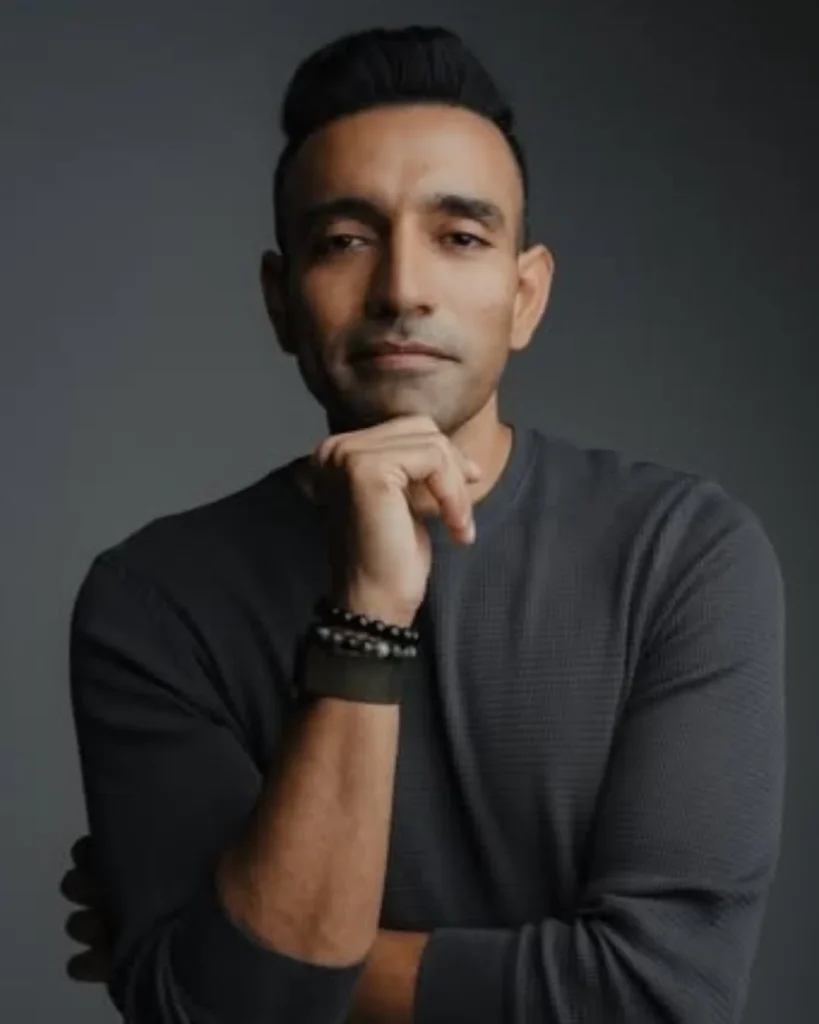
The people being recruited to run these franchises are also making the format’s case in their own terms. Robin Uthappa, the 2007 T20 World Cup winner appointed Team Director of Yas Lions, puts it directly: “I have long believed T10 can be a gateway for new fans into the sport.” On what the format demands of players, he is specific: “T10 cricket rewards players who can function under pressure rather than avoid it, and that is exactly the mindset we want running through this squad.”
Yas Lions owner Jeetu Kataria, whose background is in capital markets and fintech, describes the appeal in governance terms rather than sporting ones. “The Abu Dhabi T10 gives us an outstanding platform to build a franchise with a real identity, one grounded in process, governance and respect for players and partners,” he says.
That is what the 10-year licence is designed to buy: owners who talk about year five.
What success looks like, and what it could mean for T10
Boucher’s own definition of a successful first season is notably unglamorous, and all the more credible for it. “Success this year is having these new owners in place at the start line. Strong teams, reliable teams,” he says. “Strong anti-corruption units from the ICC in partnership with us. Making sure we are not making any mistakes — the easy mistakes that we do not want to be making.”
No attendance target. No viewership figure. The ambition for year one is to run a clean tournament with owners who are still there at the end of it — which tells you how low the bar had fallen, and how deliberately he is setting it. Only after that does measurement begin: “We’ll get into the wrap-up, and see if those audience stats worked, and then how we can do a little bit better in 2027.”
What Abu Dhabi has bought is the tournament, not the format. T10 Sports Management had also launched events in Zimbabwe, Sri Lanka and the United States; ADCSH’s ownership extends to the Abu Dhabi event alone. “We’re interested in the Abu Dhabi event and doing the best job we can for cricket, the players, sponsors and stakeholders,” Boucher says.
Which raises the question the rest of the circuit will be watching for an answer to: can one well-run tournament create a halo effect for the format as a whole? Not by evangelising for it, but by demonstrating that T10 can be governed properly, funded properly and played by the best available cricketers — and that the problems which defined it were never really problems with ten overs a side.
There is a reasonable argument that this is exactly how formats become established — not through advocacy, but through one property being run well enough, for long enough, that the rest of the industry has to account for it. T20 was not legitimised by a committee. And the Abu Dhabi T10’s real competition for attention is not other T10 leagues; it is the rest of the emirate’s calendar. Formula 1 is in Abu Dhabi. The HSBC golf championship runs the same week. UFC and the NBA are arriving. In that company, Boucher says, “cricket has definitely a place at that top table, which it’s never had before.”
What the format still lacks is the thing Abu Dhabi cannot supply. There is no T10 World Cup, no ICC pathway, no reason for a national board to build towards it. A well-governed, well-funded, well-attended league in one emirate does not change that. It only makes the absence more conspicuous.
But it does establish a reference point, and the sport has not had one. For eight years T10 has been judged by its worst-run tournaments, because those were the ones generating news. Since November 7, there has been a version of the format with a government behind it, a federation licence underneath it, ten-year owners around it and rosters of star international players competing.
If that works, the argument about T10 changes — not because anyone won it, but because the evidence changed.