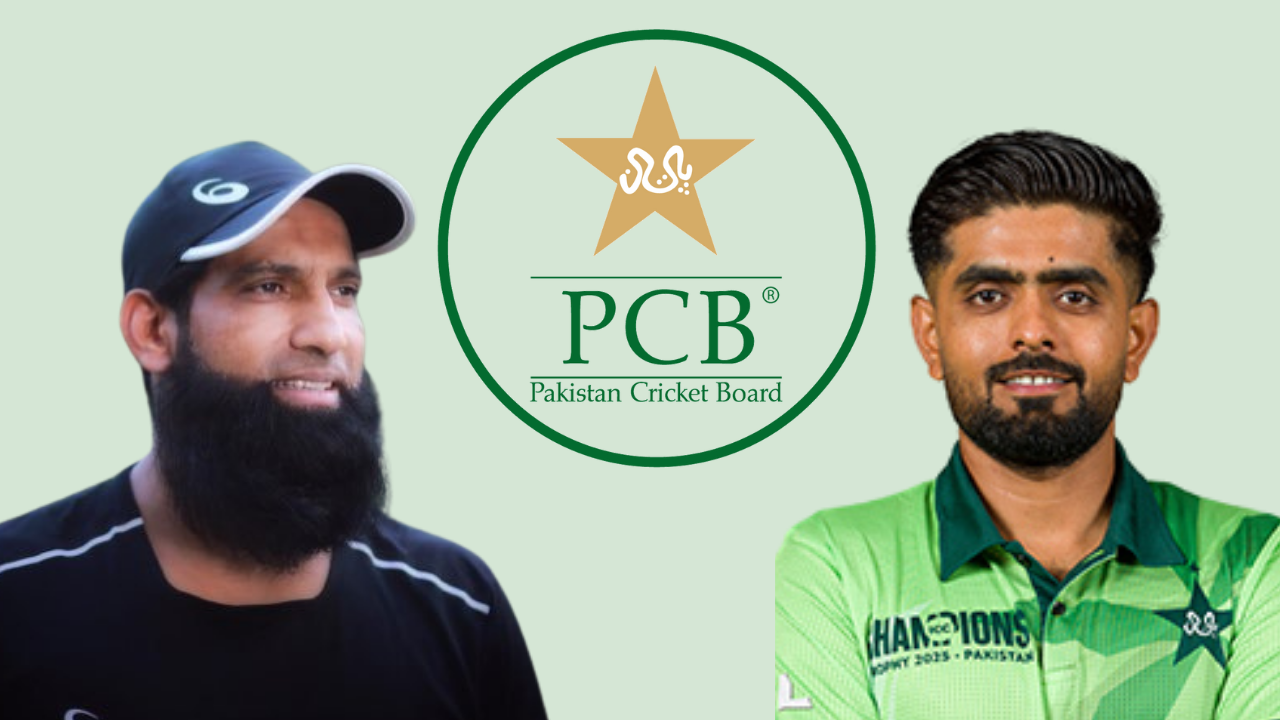
Pakistan’s turbulent T20 World Cup 2026 campaign has triggered a fresh internal reckoning, with former Selector Mohammad Yousuf lifting the lid on what he claims were deep-rooted issues within the national setup. Speaking on the ‘How Does It Work?’ podcast, Yousuf detailed why he stepped down from his role and why he believes the current crisis has been years in the making.
At the centre of his revelations was Babar Azam’s prolonged slump and the resistance Yousuf faced when he proposed bold corrective measures.
‘I had to resign’: Inside the Babar debate
Pakistan’s 61-run defeat to India in Colombo intensified scrutiny on senior players, with Babar managing just 66 runs across three matches in the tournament. But according to Yousuf, concerns over the former captain’s technical decline stretch back much further.
“I’ve been saying this for 2-3 years that Babar’s technique has gone for a toss. I’ve been hearing that he is out-of-form, but he is not. A player can only be out-of-form for two to three series and he has not scored runs for the past two-three years. The moment I suggested resting Babar, everyone suddenly turned against me. I had to resign because of this. He was eventually dropped a couple of series later,” Yousuf said on the ‘How Does It Work?’ podcast.
He described how internal resistance escalated quickly once he raised the idea of giving Babar a break. “You will drop Babar, you will rest Babar.” Yousuf recalled hearing repeatedly during discussions.
Frustrated by the pushback, he said he made his position clear: “I told them, ‘I will resign, you do whatever you want.’”
Yousuf has maintained that a temporary break and technical work at the academy level could have helped Babar regain consistency, rather than allowing the downturn to continue under mounting pressure.
Skill over mindset
Beyond individual form, Yousuf challenged what he sees as misplaced emphasis on mental conditioning.
“The churan of mindset is being sold very wrongly. Until you don’t have the skill, the mind can’t do anything. If you don’t have the skill, what will the mind do?” he argued, insisting that technical foundations must come before psychological narratives.
He also drew sharp comparisons with past Pakistan greats. “Inzy Bhai and Saeed Bhai’s level can’t be matched. They can’t be matched. They were very big players. Zaheer Abbas…. These four players were of different categories and levels. Babar is nothing in front of them.”
The comments add another layer to an already heated debate about generational standards and expectations within Pakistan cricket.
‘Time’s up’: Call for T20 overhaul
Following the heavy defeat to India, Yousuf went further on social media, posting: “Time’s up for Shaheen, Babar and Shadab. Pakistan’s T20 team needs new performers, not empty wins against weaker sides.”
Time’s up for Shaheen, Babar, and Shadab, Pakistan’s T20 squad needs new performers, not empty wins against weaker sides #T20worldcup
— Mohammad Yousaf (@yousaf1788) February 15, 2026
Pakistan’s record against India has tilted heavily in recent years. Since 2017, Pakistan have managed just three wins over their rivals — the 2017 Champions Trophy final, the 2021 T20 World Cup league match in Dubai, and one Asia Cup victory in 2022. India’s latest 61-run triumph marked their sixth consecutive T20I win since October 2022.
For Yousuf, however, the roots of decline trace back to that historic 10-wicket win in Dubai in 2021 — Pakistan’s first World Cup victory over India across formats.
“Fortunately, or unfortunately, the match that we won by 10 wickets against India, we began to think there’s no one better than us. Everyone became disrespectful. When the Head Coach was speaking, someone would either look at their phone or stare elsewhere. It all began after that match. This is never a good thing for any player. You need to be grounded, which we saw with Inzamam bhai, Saeed bhai… they were big players. Still, they always listened to what the coaches had to say,” Yousuf said on the ‘How Does It Work’ podcast.
After the 2021 win against India most of the players thought no one is better than them, they became big headed and disrespectful, wonder who’s he talking about ?! pic.twitter.com/g6eteM7zWM
— Ghumman (@emclub77) February 17, 2026
He suggested that complacency and a breakdown in discipline gradually replaced hunger and humility within the squad.
Dressing-room divide exposed
Less than 24 hours after Yousuf’s remarks circulated, Vice-Captain Shadab Khan appeared to push back against criticism from former players during a post-match press conference following the win over Namibia.
“Our ex-cricketers have their own opinions. They have done well for Pakistan, and at the end of the day, they have also never defeated India in the World Cup. We were the ones who defeated India in the 2021 World Cup. In World Cups, we have beaten India only once. Yes, they are legends, but they have never done anything remarkable against India in the World Cup,” Shadab said.
The response underlined the generational tension now playing out publicly, as past and present figures clash over standards, accountability and direction.
A defining Super 8 test ahead
Pakistan have progressed to the Super 8 stage, where they are grouped with New Zealand, England and Sri Lanka. They face New Zealand on February 21 at the R. Premadasa Stadium in Colombo — a fixture that could define whether this tournament becomes a turning point or deepens the crisis.
Historically, Pakistan have won five of seven T20 World Cup matches against New Zealand, including a seven-wicket semi-final victory in Sydney during their most recent meeting.
For now, Pakistan’s campaign continues. Yet the questions raised about leadership, accountability and technical standards are unlikely to fade once this World Cup concludes.