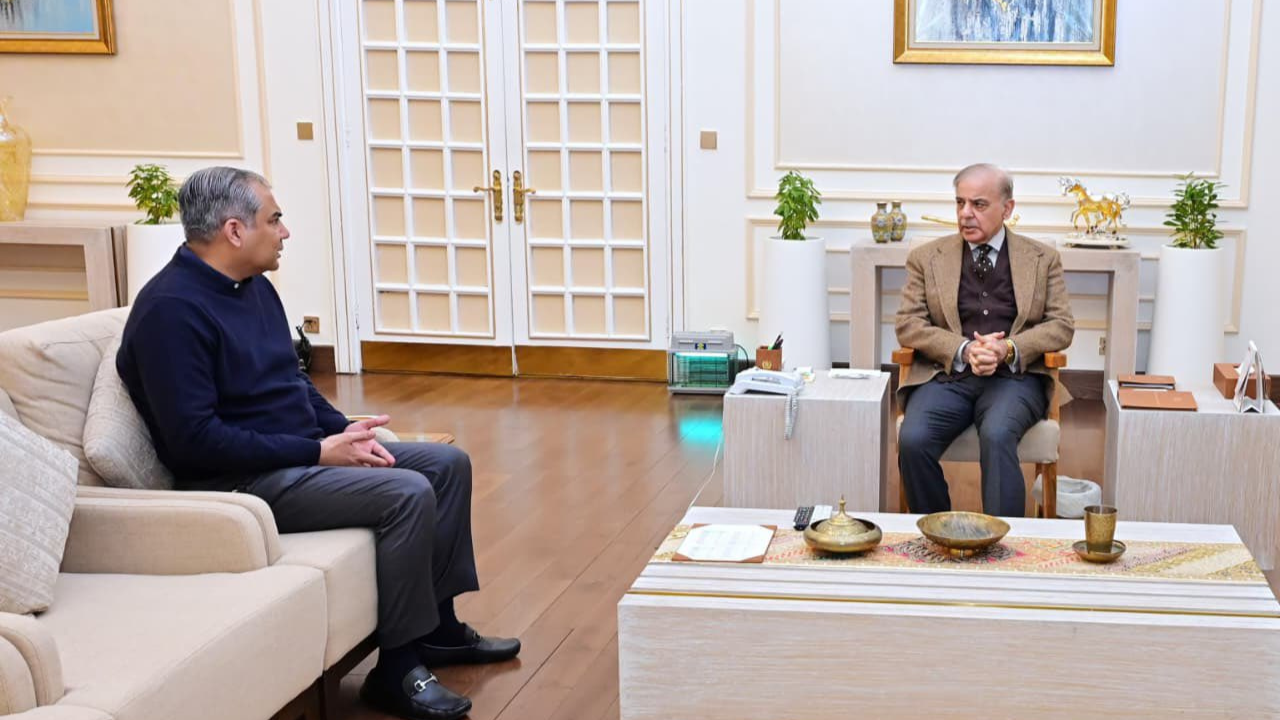
Pakistan’s potential withdrawal from the 2026 ICC Men’s T20 World Cup has entered a critical phase, with PCB Chairman Mohsin Naqvi confirming that a final decision will be made by the end of this week or early next. The update came directly from Naqvi following a high-level meeting with Prime Minister Shehbaz Sharif on Monday, where Pakistan’s response to recent ICC actions — particularly the removal of Bangladesh from the tournament — was a central topic.
Had a productive meeting with the Prime Minister Mian Muhammad Shahbaz Sharif. Briefed him on the ICC matter, and he directed that we resolve it while keeping all options on the table. It was agreed that the final decision will be taken either on Friday or next Monday. pic.twitter.com/6SOvNdLceW
— Mohsin Naqvi (@MohsinnaqviC42) January 26, 2026
In a tweet after the meeting, Naqvi said he “had a productive meeting with the Prime Minister Mian Muhammad Shahbaz Sharif.” He added, “Briefed him on the ICC matter, and he directed that we resolve it while keeping all options on the table. It was agreed that the final decision will be taken either on Friday or next Monday.”
ICC decision on Bangladesh continues to fuel controversy
The latest developments follow the ICC’s move on Saturday to replace Bangladesh with Scotland in the T20 World Cup. Bangladesh had requested their group-stage matches be shifted outside India due to security concerns and escalating diplomatic tensions. However, the ICC denied the request, concluding that “the ICC’s assessments concluded that there was no credible or verifiable security threat to the Bangladesh national team, officials or supporters in India.”
That decision sparked outcry from both Bangladesh and Pakistan. Bangladesh responded by withdrawing from the tournament, leading to their official replacement by Scotland. The PCB, meanwhile, launched its own internal review of Pakistan’s continued participation — especially in solidarity with Bangladesh.
Naqvi’s earlier statements placed final decision with the government
As cricexec reported previously, Naqvi had already hinted at a potential withdrawal over the weekend, speaking to reporters at Gaddafi Stadium in Lahore. At the time, he made it clear that any action from Pakistan would be contingent on government instructions. “I will follow the instructions of the government of Pakistan. The Prime Minister is not in Pakistan at the moment. We will give you a final decision when he returns,” he said.
Naqvi also emphasized that the PCB operates under state authority rather than independently from international bodies. “We are more under the Government of Pakistan than the ICC, so we have to do what the government of Pakistan says,” he told reporters.
Further addressing the possibility of withdrawal, Naqvi clarified that the responsibility to decide lay squarely with the federal government: “Look, if the government of Pakistan says that they don’t want to play, then they [the ICC] can bring the 22nd team. But this decision has to be taken by the government of Pakistan. This is what the government of Pakistan has to say, whether they make a final decision.”
Pakistan critical of ICC’s “double standards” over Bangladesh
Naqvi has been outspoken in his criticism of the ICC’s handling of the Bangladesh situation, calling the decision unjust. “I think there has been injustice with Bangladesh, and I said the same in the ICC board meeting [on January 21]. You can’t have double standards. You can’t say that for one country you can make a decision whenever you want, and for another country you can make a totally opposite decision. That’s why we have taken this stand – there is injustice with Bangladesh,” he said.
He reiterated Pakistan’s position that Bangladesh should never have been excluded from the tournament. “Bangladesh has been treated unfairly. They are a major stakeholder. This kind of injustice should not happen, and Bangladesh should be allowed to play the World Cup in any case,” Naqvi told reporters.
Political tensions and tournament implications
The current crisis traces back to deteriorating political and cricketing ties between Bangladesh and India. The situation escalated after Mustafizur Rahman, despite being signed by Kolkata Knight Riders, was excluded from the IPL reportedly under pressure from the Indian cricket board — a move that triggered strong backlash in Bangladesh. In response, Bangladesh imposed a nationwide ban on IPL broadcasts and demanded that its World Cup matches be played outside India, citing both sporting and political concerns.
These tensions have now spilled over into the ICC’s global events, prompting comparisons to earlier standoffs in South Asian cricket. For both the 2023 Asia Cup and last year’s Champions Trophy, hybrid hosting models were implemented to accommodate India’s refusal to play in Pakistan. In contrast, the 2025 Asia Cup — initially scheduled to be hosted by India — was played in the UAE after Pakistan declined to travel. Under the current ICC agreement, which runs through 2027, both India and Pakistan are assigned neutral venues for ICC events hosted by the other. As a result, Pakistan’s fixtures for the upcoming T20 World Cup — which is being co-hosted by India and Sri Lanka — are scheduled to take place in Sri Lanka.
The fallout from Bangladesh’s removal and Pakistan’s ongoing protest has the potential to disrupt both the sporting and commercial fabric of the tournament. Pakistan are scheduled to begin their campaign on February 7 against the Netherlands in Colombo, with matches against the United States, India, and Namibia to follow. The India-Pakistan clash, scheduled for February 15, remains the tournament’s marquee fixture in terms of global audience and revenue.
Any decision by Pakistan to withdraw or boycott specific matches would have far-reaching implications for the ICC, its broadcasters, and global stakeholders.
With all eyes now on Islamabad, the cricketing world awaits the final word — one that Mohsin Naqvi has confirmed will come from Pakistan’s highest political office within days.