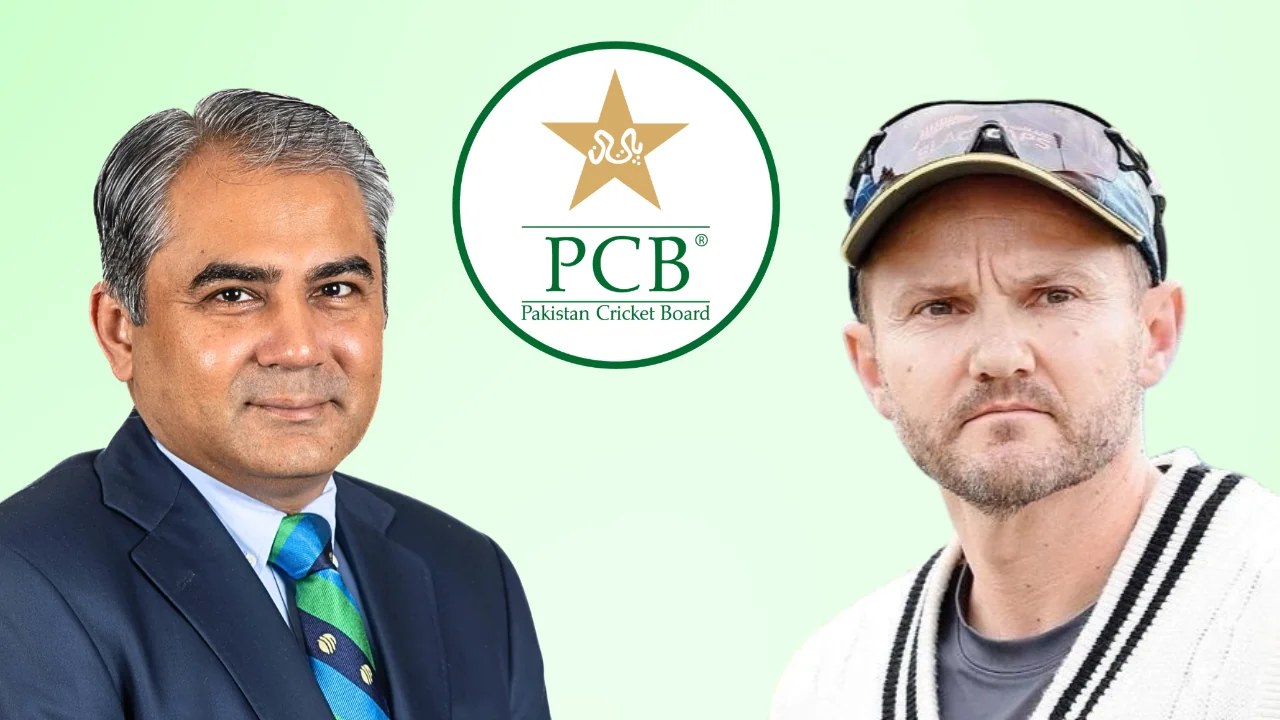
Pakistan Cricket Board (PCB) Chairman Mohsin Naqvi has reportedly handed Head Coach Mike Hesson extensive authority to restructure Pakistan’s national team, signalling a significant shift in the board’s approach to team management, player selection and long-term development.
According to a report by PTI, Naqvi has assured Hesson that “nobody would question his authority as head coach”, empowering the New Zealander to make major personnel decisions as Pakistan looks to reverse years of underperformance at ICC tournaments.
The move could effectively bring an end to the international careers of several established Pakistani cricketers, with Hesson reportedly determined to implement sweeping changes to the national setup.
Hesson’s rebuilding strategy puts senior players on the sidelines
The PCB’s recently announced central contracts list offered a strong indication of the direction in which Hesson intends to take Pakistan cricket.
Mohammad Rizwan, Shan Masood, Imam-ul-Haq and Noman Ali were among the notable omissions, raising significant questions over their international futures.
While Hesson has publicly maintained that central contracts and national team selection are separate matters, the report claims that the Head Coach has privately communicated to Naqvi and the PCB that the excluded senior players have “played their last matches for Pakistan”.
The report further suggests that even strong performances in domestic cricket are unlikely to secure their return to the national team during Hesson’s tenure.
Rizwan and Imam were sent home midway through Pakistan’s recent tour of England and subsequently faced an investigation by the country’s national cybercrime agency, which operates under the Interior Ministry also headed by Naqvi.
Masood, meanwhile, lost the Test captaincy following a disappointing run of results, with Babar Azam appointed as his successor.
Babar Azam remains central to Hesson’s plans
Despite the apparent move away from several experienced internationals, Hesson is not pursuing a complete departure from Pakistan’s senior playing group.
Babar Azam reportedly continues to enjoy the full confidence of the Head Coach, despite having gone four years without scoring a Test century.
Hesson has repeatedly defended Babar in public, and the report indicates that the former all-format captain remains an important component of his rebuilding strategy.
The contrasting treatment of Babar and other established players suggests that Hesson’s overhaul is centred on selective personnel changes rather than a wholesale generational transition.
Saim Ayub faces a different challenge
The restructuring has also affected younger members of Pakistan’s national setup, with Saim Ayub another prominent absentee from the central contracts list.
While the PCB’s position is that the young batter has requested a “break”, Hesson has reportedly informed Ayub that he must “earn a comeback” by improving his skills.
Unlike the senior players whose international futures appear increasingly uncertain, Ayub seemingly retains a pathway back into the national team.
PCB places its faith in Hesson to rebuild Pakistan cricket
Naqvi’s reported decision to grant Hesson considerable autonomy represents a significant commitment by the PCB leadership to the Head Coach’s vision for Pakistan cricket.
Pakistan have struggled for consistency at major international tournaments since winning the ICC Champions Trophy in 2017, with repeated difficulties progressing to the knockout stages.
The board is now reportedly looking to leverage Hesson’s international coaching experience to undertake a more fundamental restructuring of the national team.
Beyond the immediate implications for individual players, the decision raises broader questions about the distribution of authority within Pakistan cricket, particularly the Head Coach’s influence over selection, central contracts and squad development.
With Naqvi firmly backing Hesson, the success of Pakistan’s rebuilding project could increasingly become a defining measure of both the Head Coach’s tenure and the PCB leadership’s strategic direction.