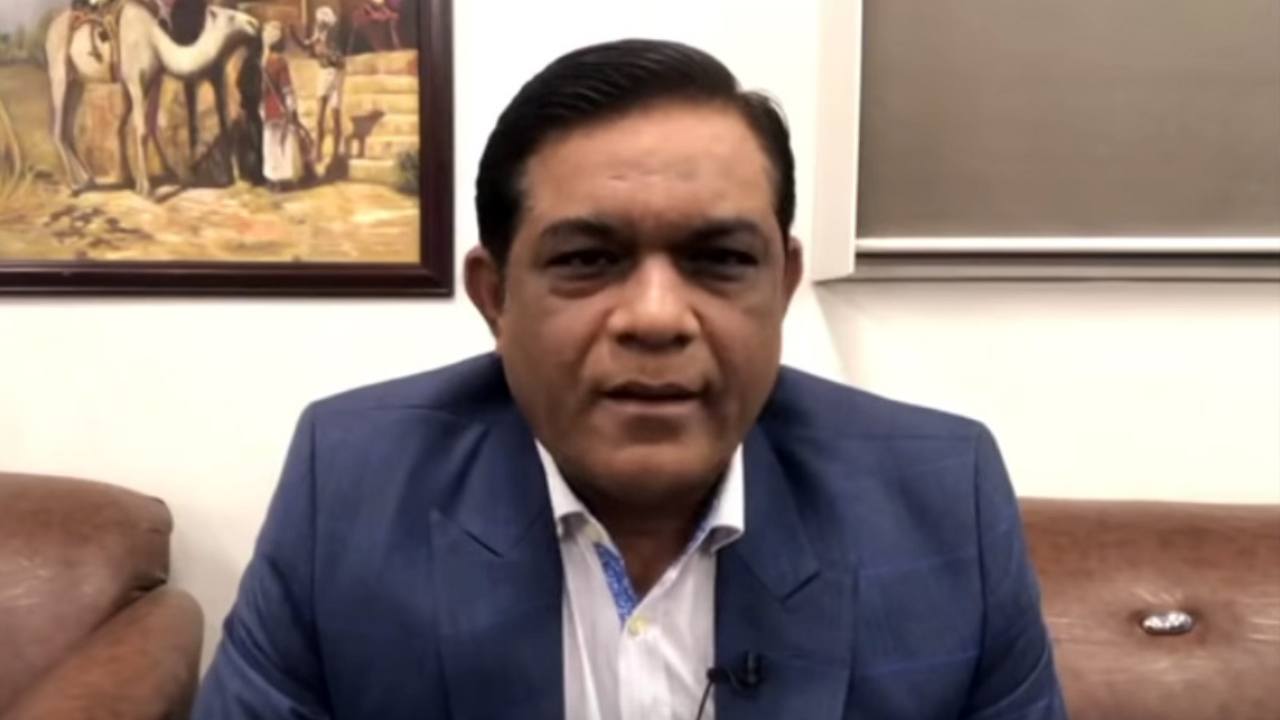
Rashid Latif issues detailed apology after PCB backlash
Rashid Latif’s contentious comments on the Pakistan Cricket Board’s (PCB) handling of Mohammad Rizwan’s ODI captaincy and surrogate advertising policies have culminated in a public apology — and ignited a war of words between two of Pakistan cricket’s most prominent administrators.
Latif’s remarks stirred immediate debate within the cricketing and social media circles. By linking a player’s political stance to a professional decision, he touched on a highly sensitive issue — blending sports administration with broader geopolitical narratives. The PCB responded firmly, underscoring the seriousness with which it viewed the allegations.
The controversy began when Latif suggested that Rizwan’s removal as captain was linked to his public support for Palestine. These remarks, made on social media and in interviews, drew swift reaction from the PCB, which filed a complaint with the National Cyber Crime Investigation Agency (NCCIA), summoning Latif for an appearance in Lahore on November 17. He subsequently challenged the inquiry in the Islamabad High Court, calling it unlawful.
Facing mounting scrutiny and a formal summons from the NCCIA, Latif sought legal relief and maintained that the investigation lacked lawful basis. However, amid the escalating tension, he chose to issue a public apology to clarify his position and mitigate the fallout.
In a detailed apology posted on X (formerly Twitter), Latif withdrew his remarks and acknowledged his misjudgment. “I write with reference to my recent comments made on social media and in interviews concerning surrogate advertising. My principal contention was related to potential violations of the advisories upon such advertising issued by the Government of Pakistan,” he wrote.
I write with reference to my recent comments made on social media and in interviews concerning surrogate advertising. My principal contention was related to potential violations of the advisories upon such advertising issued by the Government of Pakistan. At no point, whether…
— Rashid Latif | 🇵🇰 (@iRashidLatif68) November 22, 2025
He clarified that his statements were never meant to accuse any individuals in the PCB setup: “At no point, whether inadvertently or deliberately, have I ever sought or intended to implicate any individual including players, board members, or other stakeholders in wrongdoing.”
Latif then addressed the core of the controversy — his comments about Rizwan. “A further matter upon which I commented, and which I now consider an error of judgement, concerned the removal of Mohammad Rizwan as Pakistan’s One Day International captain,” he stated. “However, notwithstanding my intention to refrain from political commentary or unverified speculation, I acknowledge that I made an unwarranted reference to Mohammad Rizwan’s public support for Palestine as a potential factor in his removal from captaincy. Upon further reflection, I recognise that this assumption was inappropriate, unfounded, and not supported by any credible evidence.”
He extended an apology not only to the PCB but to the broader public as well. “I deeply regret any distress or offence that my comments may have caused to the general public, or more specifically, to the Pakistan Cricket Board (PCB) and its officials. I offer my sincere apologies for any unintended harm arising from my remarks which I withdraw unconditionally and affirm that no such harm was ever intended.”
Latif’s apology appeared aimed not just at defusing the immediate controversy, but at repositioning himself as a credible and principled voice in cricket commentary. By stressing his intentions and values, he attempted to draw a line between constructive criticism and unfounded speculation.
Reaffirming his commitment to responsible discourse, Latif added, “Going forward, I shall endeavour to ensure that my public commentary remains measured, evidence-based, and free from conjecture, particularly when addressing matters of sensitivity or issues that may carry significant implications.” He also emphasised his values, stating, “I am an advocate of responsible broadcasting, research-based journalism, and objective analysis. Having had the honour of serving as captain of the Pakistan national cricket team, I hold the reputation and dignity of the country in the highest regard and would never intentionally act in a manner that could bring disrepute upon it. I endeavour to participate in public discourse in a manner that is fair, balanced, and constructive.”
Najam Sethi defends Latif, Mohsin Naqvi fires back
Latif’s apology, however, sparked further controversy. Former PCB Chairman Najam Sethi came to his defence in a post on X, calling the legal action against Latif excessive. Though the original tweet was later deleted, it prompted current PCB Chairman Mohsin Naqvi to respond publicly, sharing a screenshot of Sethi’s deleted message.
“[Najam Sethi], your comments are completely misplaced, ill-timed, and factually incorrect,” Naqvi wrote on X.
@NajamSethi, your comments are completely misplaced, ill-timed, and factually incorrect.
The PCB’s action against Rashid Latif was never about silencing criticism, it was about addressing the deliberate spread of false and defamatory allegations. Our proceedings have remained… pic.twitter.com/zyrx27ZXlA— Mohsin Naqvi (@MohsinnaqviC42) November 22, 2025
PCB defends its legal action while accepting apology
While acknowledging Latif’s apology, Naqvi defended the board’s position and rationale. “Rashid Latif has apologised in his tweet today, clearly affirming the Board’s stance. We welcome his apology and offer a clean slate.”
He continued, “The PCB’s action against Rashid Latif was never about silencing criticism, it was about addressing the deliberate spread of false and defamatory allegations. Our proceedings have remained fully within the law and focused solely on protecting the integrity of Pakistan cricket and its players.”
Reinforcing the board’s broader stance, Naqvi added, “We do not use any other means to silence those who criticise the Board. We protect Pakistan cricket and its assets.”
Sethi doubles down in response
Sethi was not silent in the face of Naqvi’s critique. Quoting Naqvi’s post, he responded with a sharp rebuttal: “No sir, my concern is not misplaced. I don’t think PCB should use the FIA to silence critics even if their views are misplaced or factually incorrect!”
No sir, my concern is not misplaced. I don’t think PCB should use the FIA to silence critics even if their views are misplaced or factually incorrect! https://t.co/VXxmTcDJRu
— Najam Sethi (@najamsethi) November 22, 2025
The entire episode has sparked fresh debate over free expression in Pakistan’s cricketing discourse, and whether institutions like the PCB are justified in pursuing legal routes when faced with public criticism.