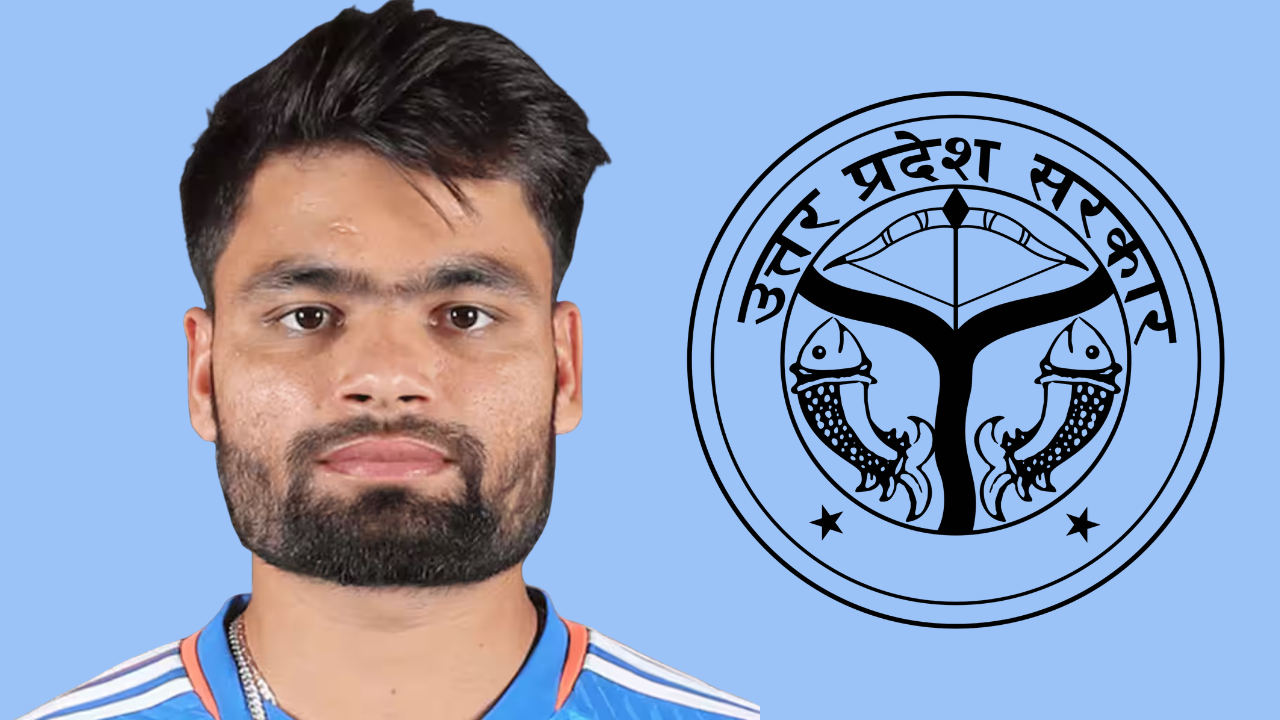
A growing push to integrate elite athletes into governance roles has taken another step forward, with the Uttar Pradesh government continuing to formalise pathways that extend beyond on-field success.
That approach was reinforced this week as Rinku Singh was appointed as a Regional Sports Officer, marking a significant addition to the state’s athlete employment programme.
State initiative places athletes into public roles
The announcement came during a felicitation event led by Yogi Adityanath, the Chief Minister of Uttar Pradesh, where multiple athletes across disciplines were recognised and offered government positions, although Rinku was unable to attend due to prior commitments with his IPL franchise.
Highlighting the broader vision behind the move, Adityanath said, “UP is the first state in the country to give athletes priority in government service. So far, we have provided appointment letters to over 500 athletes for various police positions… For his performance in cricket and the Asian Games, Rinku Singh has been given an appointment letter as a Regional Sports Officer. He is already a part of a camp (KKR camp in the IPL), so he has gone there. Many other players have also got appointment letters here today.”
Rinku’s appointment forms part of a wider policy framework aimed at rewarding international-level athletes with structured roles in administration, alongside similar recognitions for medallists across hockey, athletics, and Paralympic sport.
Defining the Regional Sports Officer role
As a Regional Sports Officer, Rinku is expected to take on responsibilities that include overseeing sports infrastructure, promoting grassroots participation, and supporting talent identification across the state.
The position — classified as a Class-2 gazetted role — typically involves operational management of facilities and programmes, while also contributing to the development pipeline for emerging athletes.
Officials have indicated that the role will be structured in a way that allows Rinku to continue his professional cricket commitments, ensuring flexibility between administrative duties and playing responsibilities.
Rinku responds after missing ceremony
While the appointment was formalised in Lucknow, Rinku was unable to attend the ceremony due to his commitments with Kolkata Knight Riders ahead of the IPL season.
In a video message shared on social media, he said, “I thank the Uttar Pradesh government and Hon’ble Chief Minister Yogi Adityanath for appointing me to the post of Regional Sports Officer,”
🎉 Big win for Rinku Singh!UP govt announces ₹3 crore reward & Sports Officer job for the cricketer. Missed the event, but sent a heartfelt video thanking CM Yogi Adityanath pic.twitter.com/3OwKSRaz3P
— indiainlast24hr (@indiain24hr) March 25, 2026
He also addressed his absence from the event, adding, “Due to my commitment with KKR, I wasn’t able to attend the appointment ceremony. I will soon receive my letter from CM Yogi and seek his blessings,”
Balancing cricket career with administrative responsibilities
Rinku’s elevation comes at a time when his on-field career continues to rise, having established himself as a key figure in India’s white-ball setup and a central presence in the IPL.
His trajectory — from breakout performances in franchise cricket to representing India on the global stage — has positioned him as one of the more prominent examples of late-blooming success in the modern game.
The dual role now presents a new dimension, where active players are increasingly being integrated into administrative frameworks without stepping away from competition.
A broader shift in athlete recognition
The Uttar Pradesh government’s approach reflects a wider trend of states using public-sector roles to both reward and retain sporting talent, while embedding athletes within the system that develops future generations.
For Rinku, the appointment adds an institutional layer to a rapidly evolving career — one that now spans both performance and governance, and signals how cricketing success is being leveraged into long-term roles beyond the boundary.