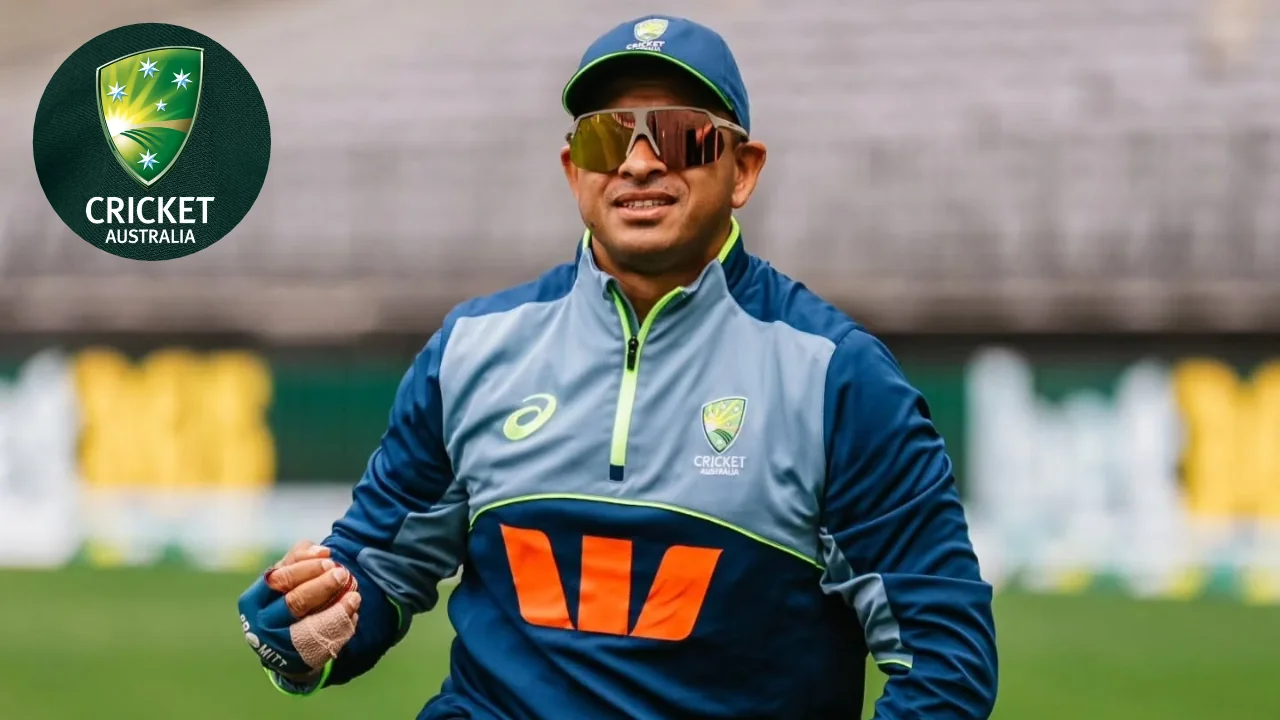
Cricket Australia is facing renewed pressure to investigate the 2018 Sandpapergate scandal after Peter Collins, who helped conduct an independent review of the national team’s culture following the controversy, called for a fresh inquiry into allegations made by former Australia opener Usman Khawaja.
Collins believes the governing body’s decision not to reopen the case risks prolonging uncertainty over the conduct of players who were part of Australia’s 2018 tour of South Africa. His intervention follows Khawaja’s claims that knowledge of the ball-tampering operation extended beyond the three players sanctioned at the time, an account publicly supported by David Warner.
According to an exclusive report by Nine, Collins wants investigators to examine notes Khawaja says he made during the South Africa tour, rather than allow conflicting accounts of the scandal to remain unresolved.
Former reviewer challenges Cricket Australia’s decision
Collins, who worked alongside former Australia Test opener Rick McCosker on the independent review of the team’s on-field culture, believes the latest allegations warrant a separate examination of what happened in South Africa.
The review followed the Cape Town Test in March 2018, when Cameron Bancroft was caught attempting to alter the condition of the ball with sandpaper. Cricket Australia’s internal investigation resulted in 12-month suspensions for then-Captain Steve Smith and Warner, while Bancroft received a nine-month ban.
The original internal investigation was completed over two days between the third and fourth Tests. A separate, broader review of Australian cricket’s culture continued for several months and concluded in October 2018.
Collins now wants the evidence behind Khawaja’s version of events tested independently. Speaking to Nine, he said: “We need to have a further investigation.”
He identified Khawaja’s account of the events and the records he says he kept at the time as a starting point, adding: “Khawaja needs to be interviewed, and his contemporaneous notes need to be reviewed.”
Cricket Australia Chief Executive Todd Greenberg has indicated that the organisation will not launch another investigation. Collins, however, believes that position leaves the governing body unable to provide a definitive response to the new allegations.
He said: “Cricket Australia cannot just hope it all goes away. Failing to investigate won’t resolve the issue.”
Collins warns of consequences for Australia’s players
The former reviewer is particularly concerned about the reputational implications for players whose knowledge of the sandpaper operation has been questioned.
Pat Cummins, Mitchell Starc, Josh Hazlewood and Nathan Lyon have previously denied knowing that sandpaper was being taken onto the field. Smith, meanwhile, was among those sanctioned following Cricket Australia’s original investigation.
Collins believes the continuing dispute is unfair to players whose involvement has not been established, particularly while the allegations remain untested.
“The tragedy for me is Cummins, Mitchell Starc, Josh Hazlewood, Nathan Lyon and Smith are all great players, and this very different version of events provided by Khawaja and backed by Warner shouldn’t be allowed by Cricket Australia to hang over their heads.”
His proposed inquiry would also differ from the internal process conducted in 2018. Collins believes Cricket Australia’s board should appoint independent investigators capable of examining the available evidence without being constrained by the conclusions of the earlier inquiry.
“It can’t be an internal Cricket Australia investigation … It’s got to be independent people who come in and say, ‘Just tell us what happened and let’s get to the truth of the matter’. Then we can all move on.”
Collins has suggested that investigators could examine the creation and revision history of Khawaja’s notes, along with drafts supplied to his publisher, to assess whether his recollections were recorded at the time.
The current Cricket Australia board is entirely different from the board that oversaw the original investigation. Former Australia batter David Boon is serving as interim Chair.
What Khawaja and Warner have alleged
As previously reported by cricexec, Khawaja’s autobiography, _Sabr_, challenges the conclusion that responsibility for the 2018 scandal rested with Smith, Warner and Bancroft alone. He alleges that sandpaper had already been used during the preceding Test in Port Elizabeth and questions why he was not interviewed by Cricket Australia’s investigators despite sitting beside Bancroft in the Cape Town dressing room.
Khawaja has argued that the touring party should have accepted collective responsibility for the scandal, while maintaining that knowledge of the activity extended beyond the three sanctioned players. Warner has publicly endorsed his former teammate’s account and criticised the scope of the original investigation.
Those allegations remain disputed. The four bowlers issued a joint statement in 2021 denying prior knowledge of sandpaper being taken onto the field, while former Australia Head Coach Darren Lehmann has rejected the suggestion that everyone in the touring party knew about its use.
The dispute has now expanded beyond the original sanctions to encompass the reliability of Cricket Australia’s investigation and the extent to which its findings can be reconciled with the accounts emerging years later.
Chris Broad questions Lehmann’s accountability
Former England cricketer and match referee Chris Broad has also challenged the treatment of Lehmann, who resigned as Australia’s Head Coach in the aftermath of the scandal but received no formal sanction.
Broad questioned whether Lehmann could reasonably have been unaware of the activity taking place within the team he was responsible for overseeing.
Speaking on Track Radio, Broad said: “Darren Lehmann surely knew all about it.”
😡 “He took the moral high ground against my son Stuart, he said he wanted to make him cry… but he’s the coach of a team who knew about sandpaper gate’
👀 Chris Broad, Father of @StuartBroad8 , is ‘angry’ at the hypocrisy of Ex-Australia head coach Darren Lehmann https://t.co/3gp7MIikfX
— Track Radio (@wearetrackradio) November 10, 2026
He continued: “And if he did not, he should not have been the coach at the time. I think he has got away lightly OK, he left his job a few months later, but he did not get any sanctions.”
Broad’s criticism also reflects a longstanding grievance involving his son, former England fast bowler Stuart Broad. During the 2013 Ashes, Lehmann publicly criticised Stuart after he did not walk despite edging a delivery to the slips, and subsequently warned that Australia would make him cry during England’s next tour.
The former match referee contrasted that episode with Lehmann’s position during Sandpapergate.
“And here he is, the coach of the Australian cricket team that brought sandpaper out onto the field of play and denied any knowledge of this happening. I am very angry at Darren Lehmann in this respect.”
Warner subsequently responded to Broad’s comments on X, writing: “I could not agree more, and that’s hard for me to say!”
@wearetrackradio @StuartBroad8 @markpougatch I couldn’t agree more and that’s hard for me to say!
— David Warner (@davidwarner31) November 10, 2026
Lehmann has maintained that he did not know about the sandpaper operation beforehand. Cricket Australia’s investigation did not establish his involvement, although he accepted responsibility for the team’s culture when announcing his resignation.
Former batting coach rejects Khawaja’s account
Not everyone who worked with Australia’s touring party accepts Khawaja’s description of the team’s collective awareness.
Former Australia Batting Coach Graeme Hick, who served on the coaching staff from 2016 to 2020, has rejected the suggestion that the entire support staff knew about the activity.
Speaking to The Sydney Morning Herald, Hick said: “Khawaja puts it simply: ‘It was all of us. Not the batters, not the bowlers, not the staff. All of us’. To me, what Khawaja is implying here is absolutely false.”
Hick said he had no knowledge of discussions about using sandpaper in Port Elizabeth or Cape Town and first became aware of the incident when footage appeared on the stadium screen during the Cape Town Test.
Australia batter Peter Handscomb, who was part of the touring squad, has declined to offer further substantive comment on the renewed controversy. Mitchell Starc has also denied prior knowledge of sandpaper being used.
Their responses illustrate the central difficulty facing anyone seeking to establish a definitive account: Khawaja’s allegations have received support from some former teammates but are contradicted by others who were present on the tour.
Cultural review leader says he may have been misled
Further questions have emerged from Simon Longstaff, who led the separate cultural review conducted by The Ethics Centre after the scandal.
In a column for the Australian Financial Review, Longstaff explained that the review’s terms of reference specifically excluded investigating the ball-tampering incident itself, because Cricket Australia had already completed that process.
Nevertheless, his team encountered suggestions that the public account might not be complete. Longstaff said the reviewers returned to some interviewees to give them an opportunity to revise their earlier statements.
He wrote: “I am bound by ongoing duties of confidentiality not to name the people with whom I subsequently spoke. All I can say is that if what Khawaja alleges turns out to be true, then I was also lied to. In the face of explicit denials that there was anything more to be said on the matter, we were left with “whispers” … and nothing more.”
Longstaff’s comments introduce a distinction between the two reviews conducted in 2018. The internal investigation addressed the specific misconduct and produced the sanctions, while the independent cultural review examined broader organisational problems without the authority to reopen the incident.
That separation is now relevant to Collins’ demand for an inquiry specifically designed to assess the evidence behind Khawaja’s allegations.
Hussain and Atherton criticise the original investigation
Former England Captain Nasser Hussain has questioned both the decision to use sandpaper and Cricket Australia’s subsequent response.
Speaking on the Sky Sports Cricket Podcast, Hussain described the handling of the affair as “I think it’s a complete mess.”
He also criticised the failure to interview Khawaja, particularly given his proximity to Bancroft in the dressing room.
“Then to lie about it after and for Cricket Australia not to speak to every player, not to speak to Khawaja who was sitting next to Bancroft. It just feels like a right mess.”
Former England Captain Michael Atherton has offered a different perspective on whether the case should now be reopened. Although critical of Cricket Australia’s original disciplinary process, Atherton does not believe Khawaja’s disclosures necessarily justify another investigation.
He argued that the combination of lengthy suspensions and unanswered questions created lasting problems for the governing body.
“They handed down unbelievably heavy sanctions – I thought hard-to-justify sanctions – and left three players to take the rap. But it left questions unanswered, left the door open for it to come back to haunt them, which it is doing now.”
Atherton has also suggested that the controversy reflects deeper concerns about the Australian team’s culture and the failure of players to support one another during the fallout.
England batter Joe Root, meanwhile, has avoided drawing conclusions about what happened inside Australia’s dressing room during the 2018 South Africa tour. Speaking ahead of England’s ODI series against Australia, Root also rejected the suggestion that ball-tampering was widespread across international cricket at the time, saying: “I can only speak from my own experiences and that’s not how I feel, no.”
Root said he had no firsthand knowledge of the events surrounding Sandpapergate and preferred to concentrate on England’s upcoming matches rather than speculate about the allegations.
Cricket Australia maintains its position
Cricket Australia’s current leadership has not committed to reopening the Sandpapergate investigation despite the allegations in _Sabr_ and the subsequent public debate.
Greenberg has said there is no compelling reason to launch another inquiry, while the governing body has maintained confidence in the integrity process that produced the original findings.
Collins is seeking a different outcome: an independent examination of Khawaja’s account, including the notes he says he recorded during the 2018 tour, with relevant individuals given an opportunity to respond.
The disagreement leaves Cricket Australia facing a choice between standing by its existing findings and commissioning the additional scrutiny sought by a former member of its independent cultural review.
For now, the governing body’s decision remains unchanged, and no fresh investigation has been announced.