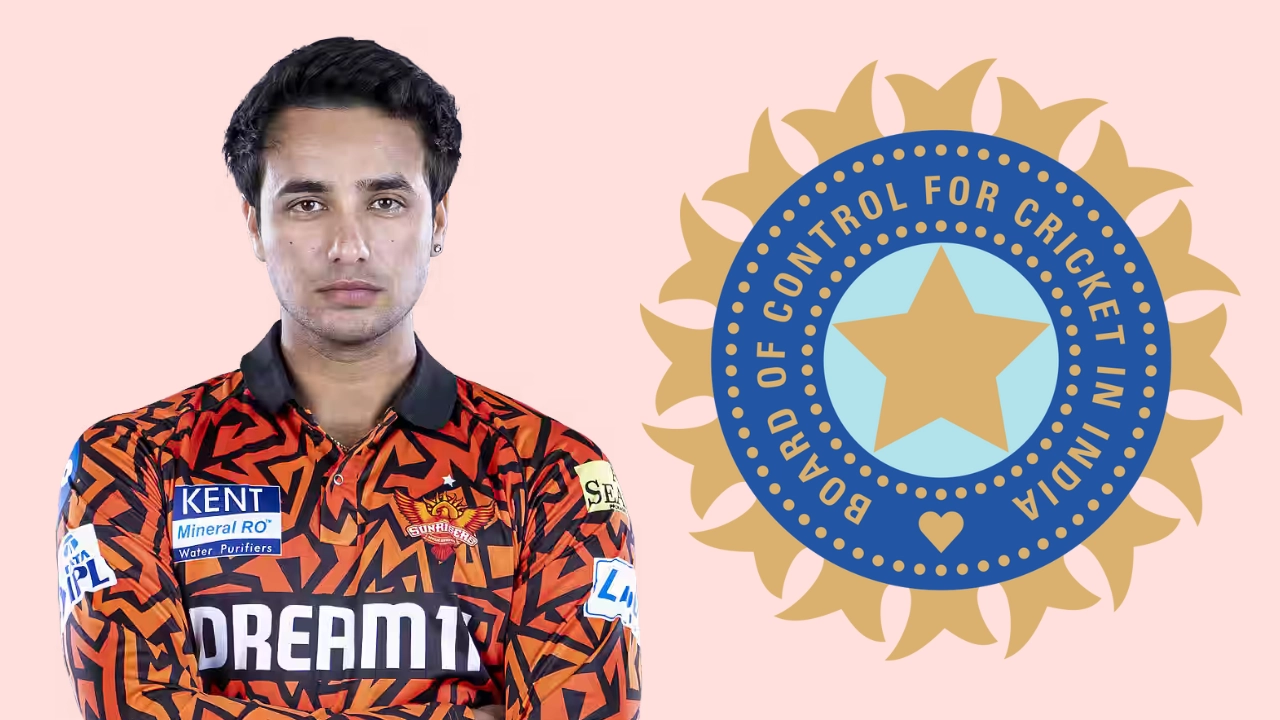
India’s young batting star Abhishek Sharma has become a talking point far beyond Indian borders, following a stunning start to his Asia Cup 2025 campaign. But it wasn’t just Indian fans celebrating—Shoaib Malik, former Pakistan captain, took the opportunity to deliver a scathing critique of the Pakistan Cricket Board (PCB), saying the system cannot produce players like Sharma due to structural flaws.
The 23-year-old left-handed opener, known for his fearless batting, smashed a six off the very first ball on debut and followed it up with a blistering 30 off 16 deliveries against the UAE. Former pacer Wasim Akram has already dubbed him the “Sixer King.”
“Clarity brings confidence”: Malik takes aim at PCB system
Appearing on PTV Sports during a pre-match panel, Shoaib Malik praised Sharma’s aggressive playing style but used it to draw attention to deeper problems within Pakistan’s cricketing system.
“Abhishek Sharma has scored 565 runs in 17 innings, striking at 193.49. He’s hit 44 sixes. That’s clarity and confidence,” said Malik. “Our players have talent, but they lack clarity. And clarity brings confidence.”
Malik emphasized that the issue isn’t a lack of talent in Pakistan but a systemic failure to support and develop young cricketers.
“You will give him confidence by giving him clarity,” Malik added. “But if he doesn’t know where he stands after two matches, how can he perform?”
PCB’s handling of youth under scrutiny
The former all-rounder did not mince words when criticizing how Pakistan’s cricket structure sidelines players without explanation, leaving them confused and demoralized.
“Our system doesn’t bring out the best in youth. They couldn’t even get the best out of our older players. Without any answer, they get sidelined. The same is happening to the younger ones.”
According to Malik, players in Pakistan aren’t given the same support and long-term backing as their Indian counterparts, making it difficult for even the most talented cricketers to succeed.
India’s structure earns praise as Sharma shines
Abhishek Sharma’s T20I stats already include:
- 565 runs in 17 innings
- Strike rate: 193.49
- 44 sixes
- 2 centuries and 2 fifties
His early success has drawn comparisons to Hardik Pandya, though teammates like Shivam Dube argue Sharma brings his own unique strengths.
For Shoaib Malik, Sharma’s rise is evidence of the systemic clarity and player-first approach in Indian cricket—a model that allows talent to flourish without fear of early rejection or lack of direction.
System vs. talent: A regional contrast
As India continues to produce fearless, high-impact cricketers, Malik’s comments have sparked debate within Pakistani cricket circles. Many see his remarks as a call for urgent reforms within the PCB’s player development pipeline.
While India reaps the rewards of a clear, confident, and consistent structure, Malik’s criticism underscores a growing concern that Pakistan is falling behind—not for lack of skill, but because of a system that fails to nurture it.
“It’s not about talent. It’s about how the system gives that talent a path,” said Malik. “And right now, our system doesn’t.”