A Boxing Day Test that unravelled at speed
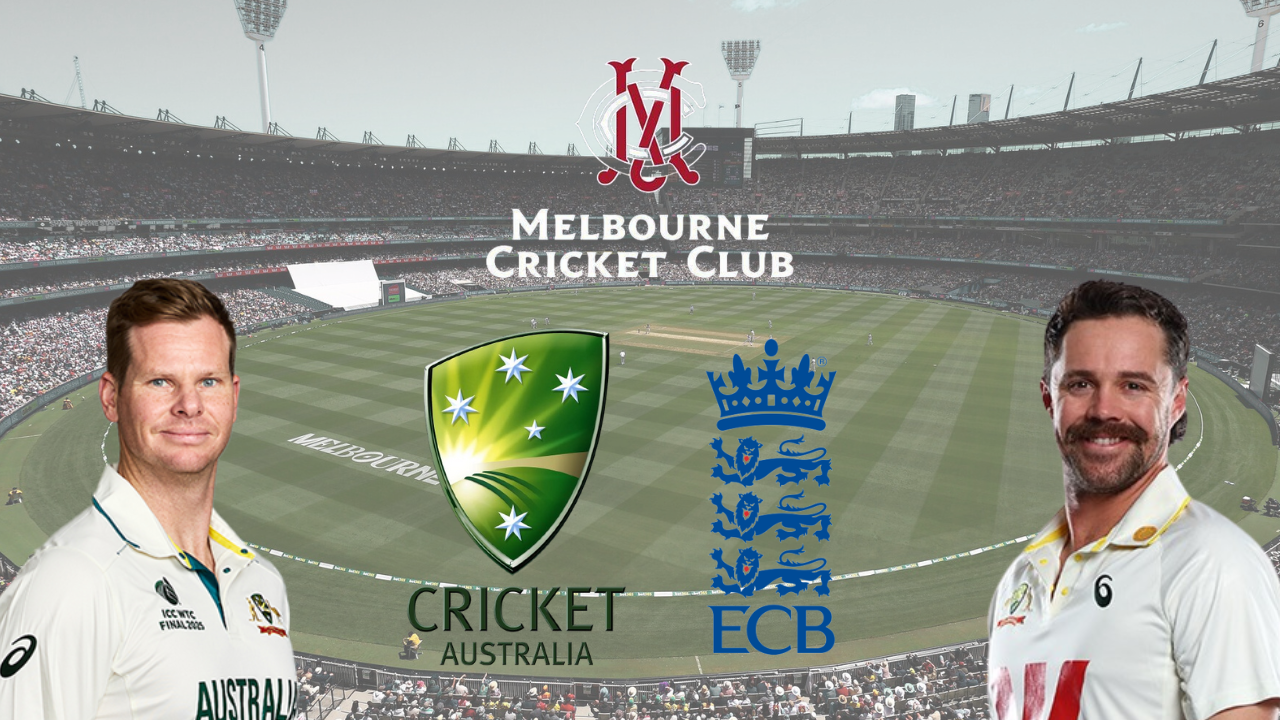
What was meant to be a centrepiece of the Australian summer instead became a moment of reckoning. The fourth Ashes Test at the Melbourne Cricket Ground, played in front of expectant Boxing Day crowds, was over in less than two days, with 36 wickets falling across just 142 overs. England’s four-wicket win marked their first Test victory in Australia in nearly 15 years and only the second time in 148 years that a Test at the MCG had finished inside two days.
The pace of the match, combined with the significance of the venue and occasion, ensured the fallout would stretch far beyond the boundary rope.
Grass, margins and immediate player reaction
Attention quickly turned to the pitch, which had been prepared with 10mm of grass amid forecasts of extreme heat later in the match. From the Australian camp, the first note of public critique came with reflection rather than accusation. Steve Smith, speaking after the defeat at the post-match press conference, pointed to the fine line between contest and excess, saying, “It probably offered just a little bit too much… Maybe if you took it from 10 to 8mm, it would have been a nice challenging wicket – maybe a little bit more even.”
The match statistics told their own story. Twenty wickets fell on the opening day alone, the most on day one of a Boxing Day Test since 1909, and neither side managed an innings total beyond 200.
Curator speaks amid scrutiny and disbelief
As criticism mounted, MCG head curator Matt Page took the unusual step of addressing the media following the Test’s conclusion. Visibly shaken by how events unfolded, he admitted, “I was in a state of shock after the first day, to see everything that happened, 20 wickets in a day.”
Page added: “I’ve never been involved in a Test match like it, and hopefully never involved in a Test match like it again.”
He stressed that intent and outcome had sharply diverged, explaining, “Every year is different and the margins are very small, but in the back of your mind, you’re always trying to provide that contest. We’re about trying to provide captivating Test cricket, that balance between bat and ball going four or five days.”
Taking responsibility, Page said, “We’ve produced a Test that’s been captivating, but it hasn’t gone long enough and we’ll take ownership of that. We’ll learn from it, we’ll grow, and we’ll make sure that we’ll get it right next year.”
Travis Head highlights the fine line
From the playing group, Travis Head was among those to publicly defend the groundstaff, emphasising how quickly perceptions can change in modern Test cricket. Drawing comparisons with recent matches, he told reporters, “Adelaide last week was probably one of the better batting wickets I’ve seen and I think we batted poorly on day one; England probably batted poorly [too].”
He underlined how expectations can swing overnight, adding, “When we went to bed on day one, everyone was talking 500-600, and if one team bats really, really well then goes big, we’d potentially see a draw in a batting-friendly game and go, ‘Oh, has it gone the other way?’”
Head returned repeatedly to the narrow margins involved in pitch preparation. “You’re 1-2mm [of grass] away from it going the other way and seeing a more bowler-friendly week… You’ve got to take the good with the bad. Everyone’s trying to evolve and get better.”
Referencing last year’s Boxing Day Test, he continued, “You look at the Test match last year, and India batted poorly on the last day… It probably looks like it’s going to a draw, and then there’s question marks around: are we going too far the other way?”
His empathy for Page was clear as he concluded, “I feel for him [Page]. It’s bloody tough. You leave 1-2mm on with high-quality bowling and you find yourself short, and you take 2-3mm off with high-quality batting and you leave yourself the other way.”
MCC leadership closes ranks
Behind the scenes, the Melbourne Cricket Club moved quickly to back its curator. Stuart Fox, the MCC chief executive, framed the debate around trust and long-term responsibility, speaking to reporters, “We brought Matt on eight years ago because he’s considered one of the best in the country – if not the best – and I still believe that and I always will,” he said.
Fox acknowledged the imbalance while also pointing to player approach. “It’s clearly favoured the bowlers, but I sat there, and you were all watching this Test. The batting was extraordinary to watch. It was entertaining, and they were having a go, weren’t they? There’s lots of debate around bat vs the pitch. It is what it is.”
Accepting that the outcome fell short of expectations, he said, “I can’t control that in any way other than our responsibility is to provide a pitch with good balance between bat and ball, and we just weren’t able to do that. I think it demonstrates the fine margins and the difficulty this guy here [Page] faces every week, so I’m here to support him.”
That support was reiterated repeatedly as the scale of the reaction became clear. “We’re obviously disappointed the Test has finished in two days,” Fox said, before adding, “That’s the feedback… We’ll work with Cricket Australia and I’m sure we’ll be able to respond.”
He later reinforced the club’s position: “I am here to support (Page), we’re disappointed, we deal with it and we move on.”
He stressed that the club’s support was not symbolic, but rooted in long-standing trust in Page’s professionalism and the effort of the broader groundstaff team.
Acknowledging the human toll, he added, “I still believe that and I always will, him and his team work tirelessly to get this right, you can see he’s disappointed today, he carries that responsibility.”
Summing up his leadership approach, Fox said, “My job as a leader to support people and when you believe in your people, you get behind them and support them, I know he’ll respond and his team will.”
Page looks ahead while acknowledging history
For Page, the criticism revived memories of the MCG’s troubled 2017 Boxing Day surface, which earned a rare “poor” ICC rating. Determined not to repeat past mistakes, he said, “We don’t want to go back to where we were in 2017.”
He defended the need for some movement, adding, “If we don’t have seam movement here at the MCG, we become very dull, very lifeless and very flat, which is no good for the players, no good for the spectators, and no good for the game.”
Reflecting on the emotional toll of the match, Page said, “It was a rollercoaster ride for two days to see everything unfold, but like I said we’ll learn from it, we’ll grow from it, get better from it just like we have over the past year.”
Looking ahead, he struck a note of resolve: “I have no doubt we’ll come back bigger and better and stronger than we have done.”
Former players and pundits weigh in
The speed and imbalance of the contest prompted widespread commentary from former players. Writing in his Sunday Times column, Alastair Cook injected humour into the debate, quipping, “I can only apologise to the two batting line-ups and people with day three and four tickets.”
He followed it up with a wry reflection: “It was the best I ever batted and yet after watching two days of it people decided they never wanted to see anything like it again!”
Speaking on BBC Test Match Special, Cook was more analytical. “We have to talk a little bit about this wicket. It’s been too heavily weighted towards the bowlers. They didn’t have to work that hard for wickets.”
He expanded on the challenge facing batters, saying, “Could both sides have batted better? Yes. But I was watching some of the bowling on that pitch and I was thinking: ‘How do you face that?’ Mitchell Starc was bowling round the wicket, some were nipping miles that way and some nipping miles the other way. I don’t know how you hit it. It’s a bit of an unfair contest.”
Stuart Broad, speaking on SEN Radio, was even more direct. “It has just done far too much,” he said, before adding, “The pitch is doing too much if I’m brutally honest. Test match bowlers don’t need this amount of movement to look threatening. Great Test matches pitches, generally, they bounce, but they don’t jag all over the place.”
Ricky Ponting, analysing the surface on Channel 7, focused on preparation details. “We found out there is 10mm of grass that has been left on this particular surface. Last year, which was a Test match that went late into day five, we believe there was only 7mm of grass on that one. That will be the question that is going to be asked of the groundsmen – why did you leave more grass this year than previous years?”
Glenn McGrath echoed those concerns on the BBC, saying, “This pitch has got far too much grass on it… That pitch has got too much life in it for Test cricket… The Australians bowled well [but] it’s hard to apply yourself on a pitch that’s doing plenty because if you’re looking to defend, one’s got your name on it. You’ve got to find that balance between somehow keeping balls out while still looking to score.”
Social media backlash intensifies
As wickets continued to tumble, criticism spilled onto social media. Michael Vaughan posted in real time, “This pitch is a joke. This is selling the game short. The players/broadcasters and more importantly the fans… 26 wickets in 98 overs!!!!!”
This pitch is a joke .. This is selling the game short .. The players / Broadcasters and more importantly the fans .. 26 wickets in 98 overs !!!!! #Ashes ..
— Michael Vaughan (@MichaelVaughan) December 27, 2025
Kevin Pietersen joined the debate with a broader comparison, writing, “India ALWAYS gets hammered when wickets fall like crazy on day 1 of a Test and so I hope that Australia gets the same scrutiny! Fair is fair!”
India ALWAYS gets hammered when wickets fall like crazy on day 1 of a Test and so I hope that Australia gets the same scrutiny!
Fair is fair!— Kevin Pietersen🦏 (@KP24) December 26, 2025
He followed up the next day with a sharper verdict: “Utter shambles and complete disrespect to the greatest form of the game!”
Utter shambles and complete disrespect to the greatest form of the game!
— Kevin Pietersen🦏 (@KP24) December 27, 2025
Ben Stokes on scrutiny and standards
Despite leading England to victory, Ben Stokes acknowledged the wider implications of the contest. Speaking on BBC Test Match Special, he said, “With 36 wickets in less than two days and no total over 200, I think you can read into that a lot. If that was another condition somewhere else and that happened, you probably would get a pasting.”
When pressed on comparisons, he replied cautiously, “Those are your words, not mine.”
Stokes then made his position clear, adding, “I’m pretty sure if that was somewhere else in the world there’d be hell on.”
Balancing criticism with pragmatism, he concluded, “It is not the best thing for games that should be played over five days but we played a type of cricket that ended up getting the job done.”
A defining moment for the MCG
As Cricket Australia assesses the financial and reputational cost of another two-day Test, the MCG faces a familiar challenge: preserving its identity as a venue that offers life and drama without tipping the contest too far in one direction. The debate sparked by this Boxing Day Test is unlikely to fade quickly — and the scrutiny on future pitch preparations will be sharper than ever.