A decision that reshaped the World Cup conversation
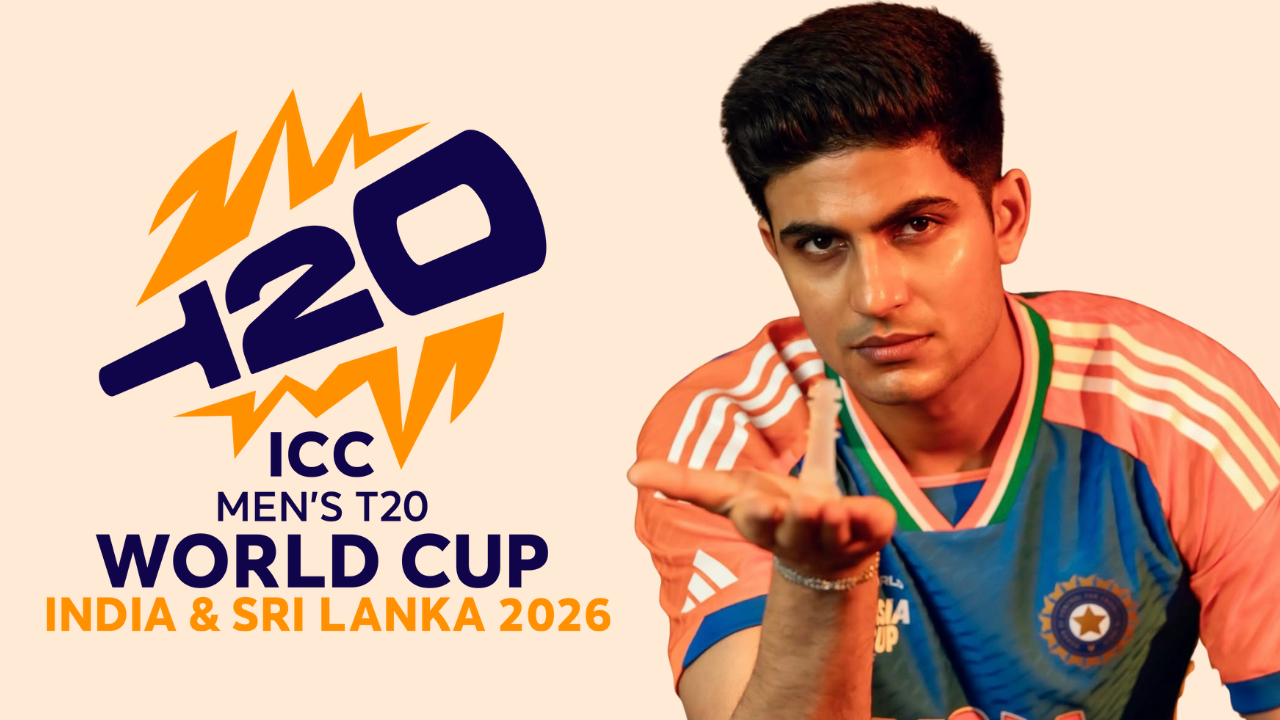
When India announced its T20 World Cup squad in December, the absence of Shubman Gill immediately became the dominant talking point. A player entrusted with leadership responsibility only months earlier was suddenly outside the frame for the sport’s biggest T20 stage, prompting debate that has since extended well beyond selection meetings.
Gill’s omission came after a turbulent year in the shortest format. Recalled to the T20I setup after a prolonged gap, he was elevated to vice-captain during the Asia Cup, forcing India to reshuffle a previously successful opening combination. The move did not deliver the desired returns, and the numbers eventually worked against him.
Yograj Singh questions the logic behind the call
Among the strongest reactions came from Yograj Singh, who openly challenged the selectors’ decision-making. Speaking to Ravi Bisht on a YouTube show, he questioned how a player carrying leadership status could be discarded after a brief dip in form.
“Shubman Gill is a vice-captain. What is the reason behind dropping him? Just because he failed in 4-5 innings? Indian cricketers have had so many players who have barely managed to perform in 10 matches out of 100 opportunities,” he said.
Yograj pushed the argument further, pointing to what he felt was a lack of patience shown to Gill compared to others in the system.
“They still played; you already know the reason why. Young Abhishek Sharma arrived a couple of years ago. If he fails four innings will you drop him as well?” he added.
Drawing on history to underline his point, Yograj invoked a past example involving one of Indian cricket’s most iconic figures.
“Let me give you an example of the ‘great’ Kapil Dev. When we toured Pakistan with Bishan Singh Bedi as captain, Kapil Dev continued to play matches despite failing with bat and ball. But Bishan Singh Bedi still took him on the subsequent tour of England.”
Numbers, roles, and a format that didn’t click
Gill’s T20I return coincided with experimentation at the top of the order. India broke up the Sanju Samson–Abhishek Sharma partnership to accommodate him, but the shift disrupted balance without delivering consistency. Across 15 T20Is, Gill scored 291 runs at an average of 24.25 and a strike rate of 137.26, without a single half-century.
His final assignment against South Africa summed up the struggle, with scores of 4, 0, and 28, before injury ruled him out of the last match. By the time selection decisions were finalised, India had turned back to domestic form, recalling Ishan Kishan after a strong Syed Mushtaq Ali Trophy.
Irfan Pathan sees long-term promise beyond the snub
Former India all-rounder Irfan Pathan framed the situation differently, arguing that Gill’s career trajectory should not be judged through a single-format lens. Speaking to JioStar, Pathan backed Gill’s potential to evolve into a defining figure for the next generation.
“He (Gill) has a lot of talent. There will always be comparisons. Virat was compared with Sachin and now Gill is being compared to Virat, who has scored those 25000-30000 runs. I think he is fully capable of it. He has a fine range of shots. The more responsibility and challenges he gets, he will grow as a cricketer. I have seen that he is always ready for cricket,” Pathan said.
That responsibility already exists in other formats. Gill continues as India’s Test and ODI captain and is set to lead the side in the upcoming ODI series against New Zealand, while also featuring in the Vijay Hazare Trophy.
Gill on leadership and internal dynamics
On the eve of the first ODI against Australia in October, Gill addressed the perception that leadership changes might alter dressing-room relationships. He stressed that his equation with senior players remained unchanged.
“I think the narrative outside is different, but among us, nothing has changed. Everything is the same as it was before, and that is very helpful. Whatever they feel—their experience, whatever they have learned, whether by reading the pitch or any situation—I go to them and ask what they think, how they would do it if they were in my place. I like knowing people’s thoughts and then, based on my own understanding of the game, I make my decisions accordingly,” he said.
Ricky Ponting’s surprise and the depth debate
The reaction wasn’t limited to India. Former Australia captain Ricky Ponting admitted he was taken aback by Gill’s absence when discussing the squad on ICC Review.
“I couldn’t believe that. I mean, I know his recent form hasn’t been great in white-ball cricket. The last time that I really saw much of him play was the Test series against England in the UK, where he batted as well as I’ve ever seen anybody bat. I think, one, I’m surprised, but two, it just shows the depth of Indian cricket,” Ponting said.
For Ponting, the omission was less an indictment of Gill and more a reflection of India’s talent pool.
“If you can think that someone as good as Shubman Gill doesn’t get picked in a World Cup squad, then it goes to show how many good players they do have,” he added.
He expanded on that point by underlining why India remain perennial contenders at global events.
“India’s depth around the country, as we know, is outstanding and every ICC event that comes up, you’ve got to put them right up near the top just because there are so many good players to choose from,” he said.
What the snub ultimately represents
Gill’s T20 World Cup omission has become a flashpoint because it sits at the intersection of form, leadership, and expectation. For critics, it highlights inconsistency in selection logic and a lack of patience. For others, it underscores the brutal competitiveness of Indian cricket, where even captains in one format can be expendable in another.
As India head into the World Cup, Gill’s journey continues on a parallel track—leading in Tests and ODIs, carrying the weight of comparisons, and waiting for another opening in a format that, for now, has moved on without him.