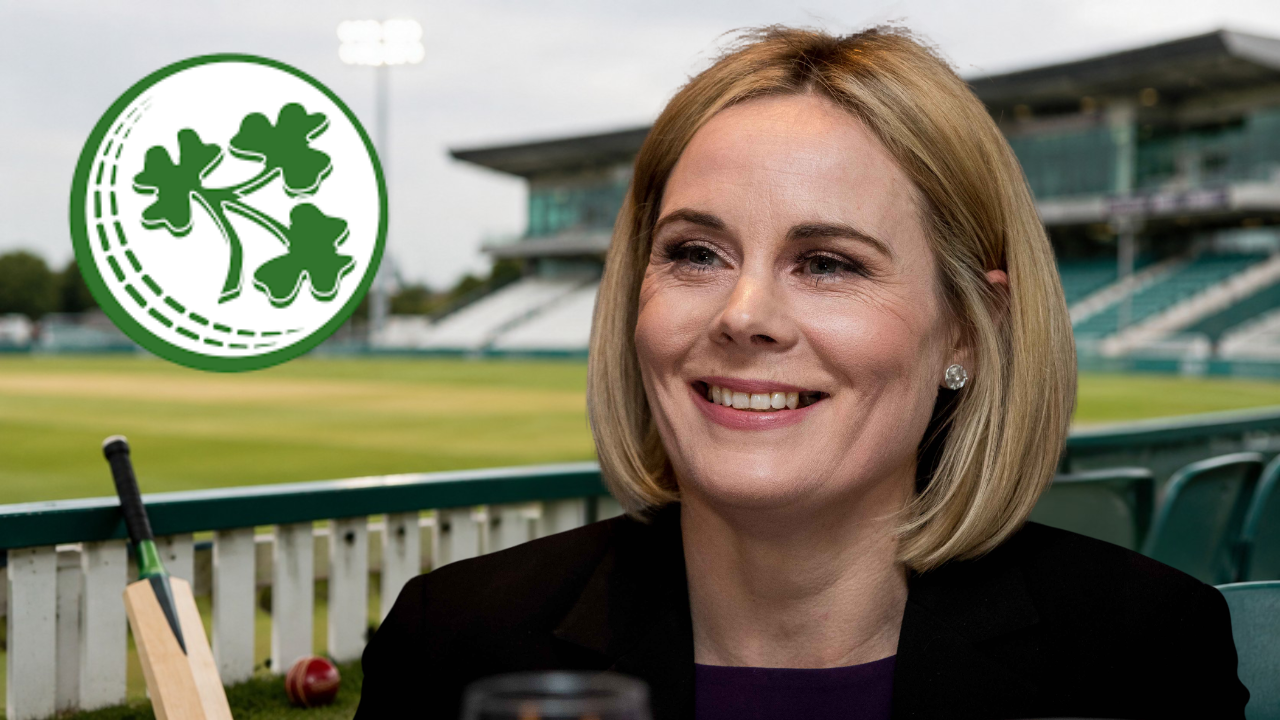
When Cricket Ireland set out to replace Warren Deutrom, the chief executive who led the organisation for nineteen years and oversaw its rise to Test status and full professionalism, it ran a global recruitment process and then did something that, on paper, looks counterintuitive. It hired someone who had never worked a day in cricket.
Sarah Keane took up the role in March, succeeding Deutrom after a search that the board’s chair, Brian MacNeice, described as ending in a unanimous ratification of her “unparalleled track record of transformative leadership and strategic vision.”
Most of the coverage that followed led, understandably, with the historic line: Keane is the first permanent female chief executive of any of the twelve ICC Full Member nations, a barrier previously approached only when Clare Connor served as the England and Wales Cricket Board’s interim chief in 2022 and 2023 before deciding against the role permanently.
That framing is accurate, and it matters. But spend any time with Keane and it becomes clear it is not the framing she finds most interesting about herself.
Not a cricket person — and that is the point
“It’s not my first time being the first female in sport in certain roles,” Keane says, with the matter-of-factness of someone for whom this is genuinely old news. She was the first Chief Executive of Swim Ireland, a post she held for over two decades. She was the first female president of the Olympic Federation of Ireland, elected in 2017 in the wake of the Rio crisis and the departure of Pat Hickey, and she led the organisation to Ireland’s best-ever Games medal haul in Paris 2024. To her, the appointment to Cricket Ireland “says a lot about Ireland and Cricket Ireland in terms of seeing me as the best person for the role, regardless of my gender.”
What she keeps returning to instead is a different distinction. “I don’t come from a cricket background,” which is more of what makes her an outlier, she feels, “than the fact that I’m female,” she says. It is the outsider’s vantage, not the gender, that she expects to define her early tenure — and it is the more revealing of the two, because it is the one that lets her see the sport without its inherited assumptions.
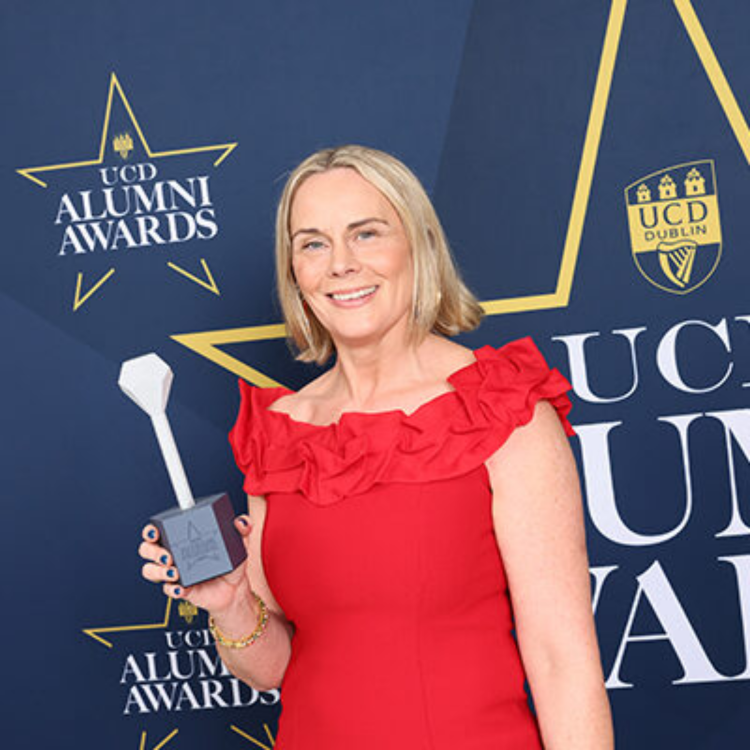
Her CV makes the point for her. Keane is a qualified solicitor who spent eight years at Matheson, one of Ireland’s leading commercial firms, before moving into sport. She holds law degrees from University College Dublin, sits as a non-executive member of the Central Bank of Ireland’s commission, serves on the boards of World Aquatics and European Aquatics, and chairs European Aquatics’ diversity, equity and inclusion commission. She is a former national-level swimmer and international water polo player. In 2025 she was named one of Ireland’s fifty Women of Influence in sport and received UCD’s Alumni Award in Law. MacNeice’s verdict at the time of her hiring — that Cricket Ireland was getting “a world-class sports administrator and more importantly an individual of the utmost integrity, character and high-performance mindset” — was, if anything, the conventional part of the story.
The unconventional part is what someone with that range of governance experience, and no cricketing muscle memory, notices when she walks into the sport cold.
The job, four months in
What she noticed first is that the economics are hard. “It is very expensive for us to play cricket currently in Ireland,” Keane says. “We have massive infrastructure challenges.” Those two facts compound each other. Ireland is one of the smallest Full Members by budget and by playing population — closer in resource terms to Afghanistan or Zimbabwe than to England or Australia — and the cost of staging cricket at home has consequences that run straight through to the field.
The bluntest of those consequences concerns the men’s team. “At the moment our men’s team in particular are not playing enough cricket,” she says, “and that goes to issues of performance and progress.” The response, she is clear, will be a matter for the board rather than a solo call — and she describes a chief executive and a board already pulling in the same direction. “The board has set a clear mandate for change, and we’re working very closely together to position Cricket Ireland to take advantage of the opportunities ahead,” Keane says. “There are big decisions ahead about how we get our men’s team playing more international cricket, and we’re actively weighing our options.” These are the kinds of hard calls — short-term pragmatism in service of long-term viability — that an administrator schooled in tight Olympic budgets is used to weighing.
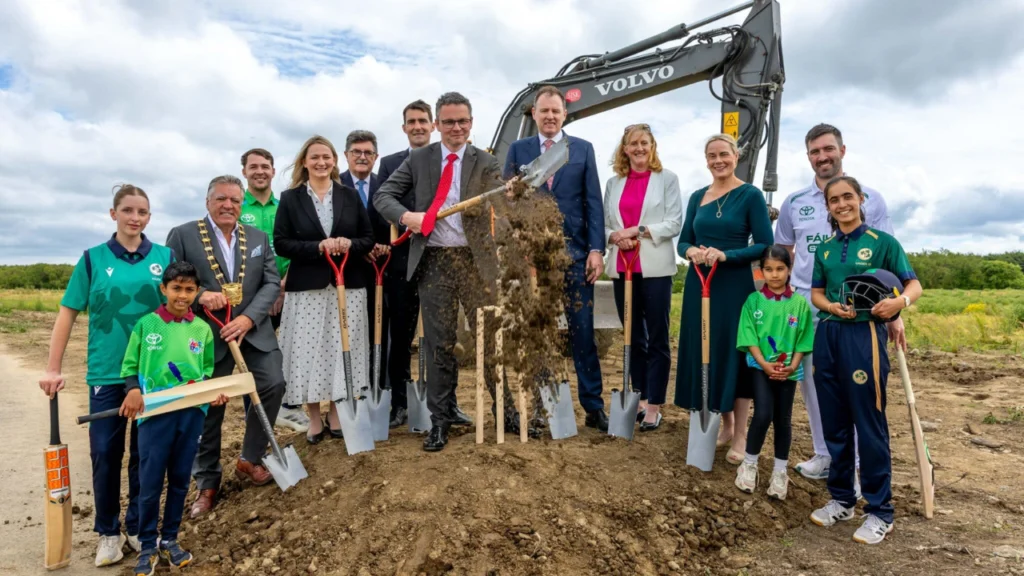
The opportunity side of the ledger is real, and much of it is bricks and mortar. After several years of pursuing the dream of a National Cricket Centre, Cricket Ireland has recently turned the first sod on a project to create Ireland’s first dedicated cricket stadium at the Sport Ireland campus in Dublin. Alongside this, at the end of last month approval was also announced on a significant redevelopment of the Stormont precinct in Belfast. These major investments by governments north and south of the border in Ireland greatly encourages Keane and her vision for the growth of the sport on the island: “We have a population and a community that are really behind cricket and will also look to put our own money in.” A facilities strategy already exists, she notes; the task now is to turn it into an action plan rather than a document.
Underneath all of it is an organisation in flux. “Cricket Ireland is evolving,” she says. “We are looking across the board at efficiencies, making some big decisions around formats, around the game, around what performance looks like.” Ireland is approaching a decade as a Full Member, a status she is keen to stress the board has no intention of treating as ceremonial. “We’re very proud to be a full member nation,” she says, “and we want to look forward to defining our own future within the global context.” The phrase she uses for the standard she will not accept is unambiguous: “We can’t allow the status quo to continue.”
A sport that struggles to plan past next year
The challenges, though, are not all Ireland’s to solve. The one that visibly unsettles Keane is structural, and it belongs to world cricket.
Coming from the Olympic movement, she is used to certainty about the calendar — to knowing, years out, what the fixtures and the funding will look like. Cricket offers her no such comfort.
She offers a single illustration. The workshop that will shape the men’s Future Tours Programme for 2027 has yet to take place; she has been advised it is expected in late August or early September, even though 2026 is already past its midpoint. The Future Tours Programme is the scaffolding on which a board like hers builds its seasons, its budgets and its performance pathways. Until it comes into focus, planning is far harder than it needs to be.
Her instinct is to refuse the paralysis. The bigger nations, she points out, have already set their own cricket for next year; the question is whether the smaller members can do the same, and whether the system will help them. “Can we make sure we’re bringing everybody with us,” she asks, “as opposed to just a couple of nations?” Beneath that lies a sharper observation about how competitive balance actually works. If a global sport wants to call itself global, she argues, it needs opponents who can compete on something other than spending power. “You don’t want to be winning just because you’ve got the most resources,” she says. “Competitive balance is a challenge in every sport, but more so in cricket, I think.”
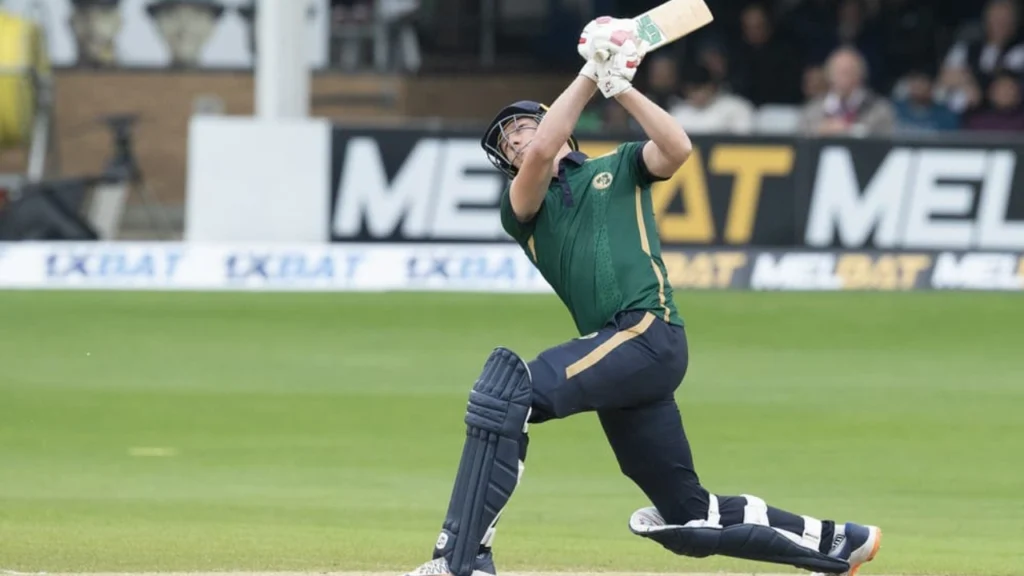
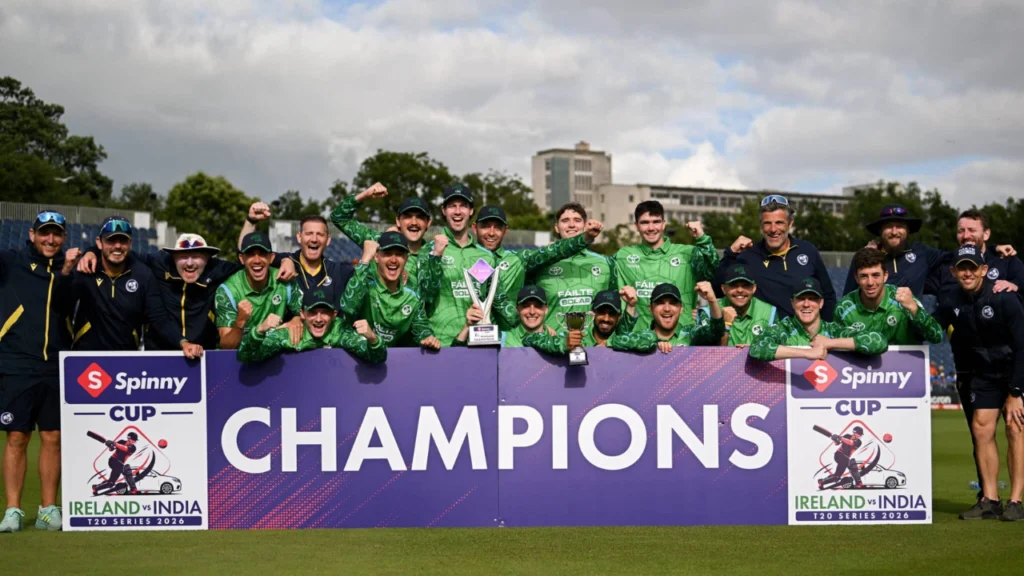
That point found an emphatic illustration recently. In late June, a much-changed Ireland men’s side — missing five first-choice players — beat the reigning T20 World Cup champions India in Belfast, sealing a 2-0 series sweep with a one-run win in the second match at Stormont. It was Ireland’s first-ever bilateral series victory over India, and it ended a run of sixteen successive T20I series wins the visitors had built since 2023.
Then comes the line that does the most to explain why she sounds energised rather than daunted. “If some big decisions are not made within the next year,” Keane says, “we have a lot of questions, potentially, around the future success of global and full member and associate member cricket. And that’s something I probably didn’t understand to the same degree before I came in.” It is a warning, delivered without melodrama, from someone four months into the building and already certain that the clock is the issue.
What cricket wastes
If Keane’s calendar critique is about timing, her deeper critique is about temperament — specifically, cricket’s habit of running a culturally varied world through a single template.
Here her cross-sport experience does its sharpest work. Swimming, she points out, operates across more than 200 member federations; in that environment, “there is a greater recognition that you’re dealing with a lot of different cultures, and that we have to respect those different cultures and try to find a way of working that works for everyone.” Cricket’s structure is different by design — more than a hundred member nations, but only twelve Full Members holding a distinct status. “That wouldn’t be the case in a lot of world sport,” she notes. The hierarchy is not, in itself, her concern. The behaviour it breeds is.
“We’re not necessarily respectful of the cultures of all of those different nations within how we make our decisions, within how we plan things, within how we do things,” she says. “And therefore, we’re wasteful.” The waste, in her reading, is not financial mismanagement so much as squandered potential: “The way we’re doing business, which may work for some nations, doesn’t work for others, and then we’re not giving them an opportunity to make the most of what they have.” She sees, in other words, “almost one way of doing things, which isn’t necessarily supporting how the wider world of cricket works.”
It is a striking diagnosis precisely because of who is making it. This is not an aggrieved Associate complaining from the outside; it is a Full Member chief executive, weeks into the job, arguing that the system leaves value on the table — and that the fix is closer to hand than people assume. “There’s a lot of efficiencies and a lot of easier wins that can be achieved,” she says, “just even recognising that certain cultures do things differently.” She is careful to balance the critique — and to credit those steering the wider conversation. “I really welcome the leadership the ICC is showing on the strategy work that’s under way,” she says. “There’s phenomenal experience and expertise — I can already see it — and I’m genuinely excited by the strategic discussions taking place.” The problem she is naming is not the talent, and not the intent at the top. It is the operating model.
The commercial case — and the new communities
For all the structural caution, the part of cricket that has plainly delighted Keane is the part she has never worked in before: the team structure, and the money and reach that move through it.
“I haven’t been involved in a professional team sport before,” she says, “and it’s phenomenal to see how much is based around certain nations.” She finds the broadcast and commercial architecture genuinely fascinating, and she is candid that part of her brief is to grow Cricket Ireland’s own commercial base — to “explore further avenues for commercial growth to ensure sustainable investment,” as she put it on her appointment. The instinct is consistent with her record: at the Olympic Federation she built a thriving commercial programme around Irish success.
Her commercial optimism is also geographic. Keane is a believer in cricket’s European opportunity, an area where the sport’s emerging structures — among them the planned European T20 Premier League being built with the Irish, Scottish and Dutch boards — give her a foothold to point at. “Europe would be very strong in Olympic terms,” she observes, drawing on the comparison she knows best, and she sees a parallel runway for cricket on the continent if the momentum holds.
Closer to home, the growth story is demographic, and it is the one she speaks about with the most warmth. “We have a lot of people coming into Ireland,” she says, “which is giving us a lot of opportunity to grow cricket — youth cricket, women’s cricket.” That diversity is, to her, cricket’s civic case as much as its commercial one. “Cricket at the moment in Ireland is hugely valued,” she says, “because it has an opportunity to change society from an inclusion perspective and welcome new communities in.” The constraint, predictably, loops back to the first challenge she named: capacity for that growth depends on the infrastructure being there to absorb it.
Why just one woman is never enough
It is against that backdrop — a sport she admires, critiques and intends to commercialise — that Keane’s point about women’s leadership should be understood. It is not a standalone cause bolted onto the job. It is, in her telling, a governance question of the same family as all the others.
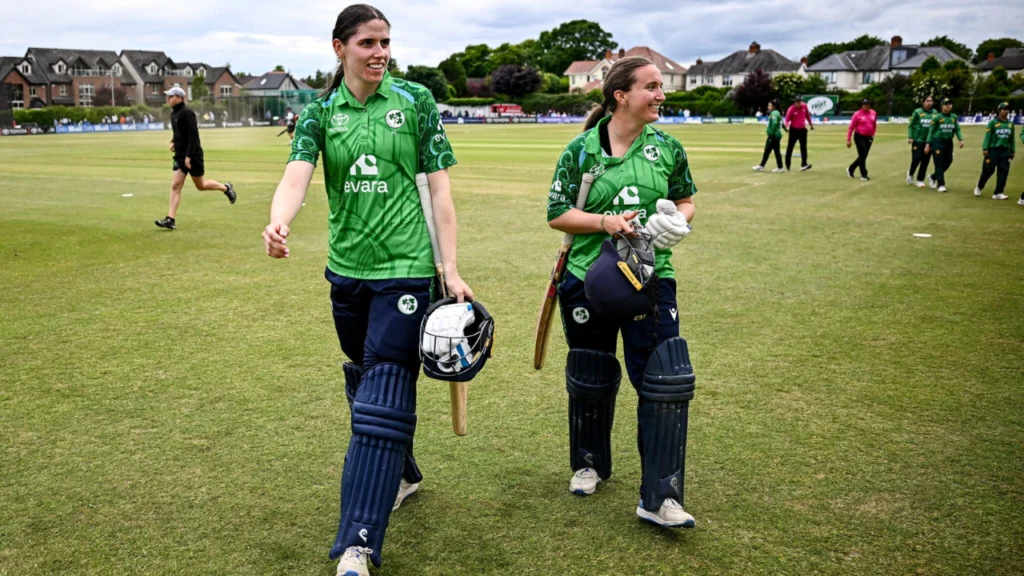
She does not pretend cricket is where it should be. “It is a little bit surprising to see the level of leadership with women in global cricket at the low levels it is,” she says. “It’s probably behind other sports.” But her real contribution to the conversation is to reframe what progress requires. Appointing a single woman, she argues, changes very little. “Putting one woman on a board is not enough either,” she says. “Normally, if you want to have a different voice, you need to have three” — particularly, she adds, around a table of twelve or fifteen. The benchmark she returns to is a familiar one in governance circles and a long way off in cricket’s: “What people talk about is having thirty percent as a minimum of a particular gender on a board. And we’re still a long way away from that, certainly in world cricket.” Her own organisation, she notes pointedly, is already there: “Ireland requires forty percent female on its boards, as do many of the member nations.”
The deeper argument is about who steps forward when the room is empty. Ask women to join a body where there are no other women, Keane warns, and you narrow the field to “a particular type of personality or background.” Real change depends on the opposite — on making leadership look attainable to a wide range of people, so that “lots of different types of leaders might think they could do these roles.” That, she suggests, is what visible representation is actually for.
The same logic extends beyond the boardroom, to the touchline and the middle. Female coaches, she says, are “a massive issue around the world, in all sports” — a gap she is now helping address through a World Aquatics task force on female coaching, and one she sees mirrored in cricket. There were bright spots: she points approvingly to the women’s officiating at the Women’s T20 World Cup just staged in England, where, she notes, the match umpires were once again women — “a good step forward for cricket.” But the trend lines, off the pitch, remain a worldwide challenge.
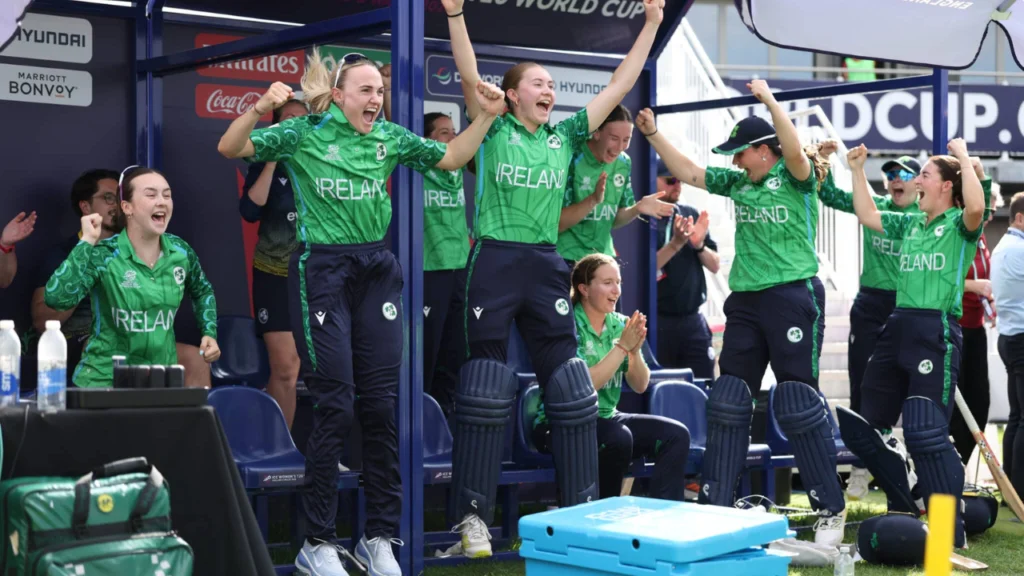
Keane’s hope is that the sport stops treating this as a side initiative. “Hopefully it will form a real critical pillar of the new ICC strategy,” she says — one that is “more than just what’s on the pitch; it’ll also be what’s happening off the pitch.”
That off-pitch work is no longer hypothetical for her. At the ICC’s annual conference in Edinburgh in July, the board appointed Keane — alongside independent director Dr Ros Rivaz — to a reconstituted task force charged with building a pathway for Afghan refugee women cricketers to reach ICC qualification events by 2030 — a concrete piece of exactly the off-pitch work she wants the sport to prioritise.
That strategy is arriving at a useful moment for the women’s game, which Keane is careful to frame as a business proposition and not merely a moral one. The progress, she says, has been “massive in a space of a number of years,” driven by rising standards and rising interest, and crucially by the realisation that it sells. “It’s not just being supported because it’s the right thing to do,” she says. “It’s being supported because it is a commercially viable product.” The Women’s T20 World Cup just staged in England bore that out: it drew record crowds, became the most-watched edition of the tournament on record, and opened with the cast of Wicked performing at the ceremony — a category visibly finding its commercial feet. Ireland’s own women’s team is on the same curve, if earlier along it: only a couple of years into professional contracts, young, several players still on education deals. And the structural bill is real. “You’ve got the same amount of money,” she notes, “but you’ve now got men’s and women’s programmes, men’s and women’s pathways, men’s and women’s teams” to fund from it.
The brutality of the chair
None of this, Keane knows, gets done without a fight. Sports governance, in her experience, is a contact discipline — and not because of the people who oppose change in bad faith, but because of the ones who care.
“Sports governance is difficult because you’re asking people to think about things they haven’t thought about before,” she says. “You’re asking people to change. And so often you’re asking people to step out to allow someone else to step in. And that’s very hard.” Reforms that look clinical on a slide — term limits, board renewal — feel intensely personal to the volunteers who have given years to a sport. “Governance changes in sport can feel incredibly personal to people,” she says, “which is why they can be very difficult to implement.” Her conviction, hardened over two decades, is that they are worth the friction anyway, because “those differences make our sports business decisions better.”
She traces her tolerance for that friction back to the pool. The 5 a.m. starts before school, the resilience, the work ethic, the capacity to hold several things at once — these, she says, are what sport gives almost everyone who plays it — not just the rare few who reach the international level. “I never saw myself working in sports administration,” she says, “because twenty years ago it wasn’t really a career option, certainly in this country.” Sport has “professionalised massively” since, and with that has come the central tension she now manages daily: a sector still built on a volunteer base, asked to operate to a professional standard. The passion that makes that hard is also, she insists, the thing worth protecting. “When you bring passion into it, you don’t always have people at their most rational,” she says. “But you wouldn’t really change that either, because that’s what’s magical about sport.”
Four months in, Keane is not promising answers so much as naming the questions clearly — the calendar that nobody can plan around, the resources that decide too many results, the cultures the system fails to properly honour, the boardrooms that need more than one different voice. She frames the difficulty as the draw. “It’s going to be phenomenally interesting in the next five to ten years,” she says, before adding the caveat that gives the whole conversation its edge: the most consequential decisions, in her view, cannot wait that long.
For now, she sounds less like a visitor and more like someone settling in for the work — the outsider, four months in, already reading the sport more clearly than many of the people who have spent their lives inside it.